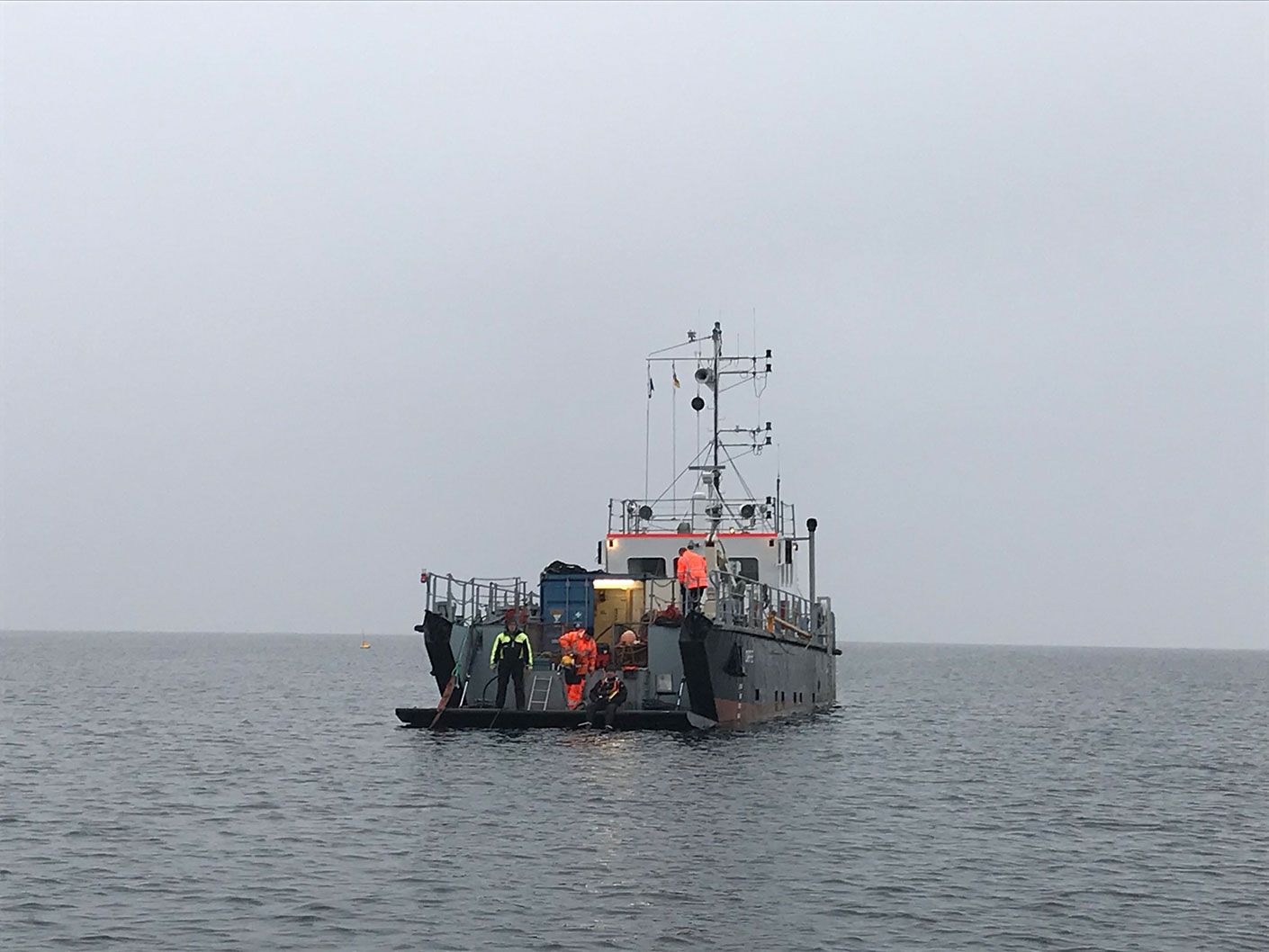
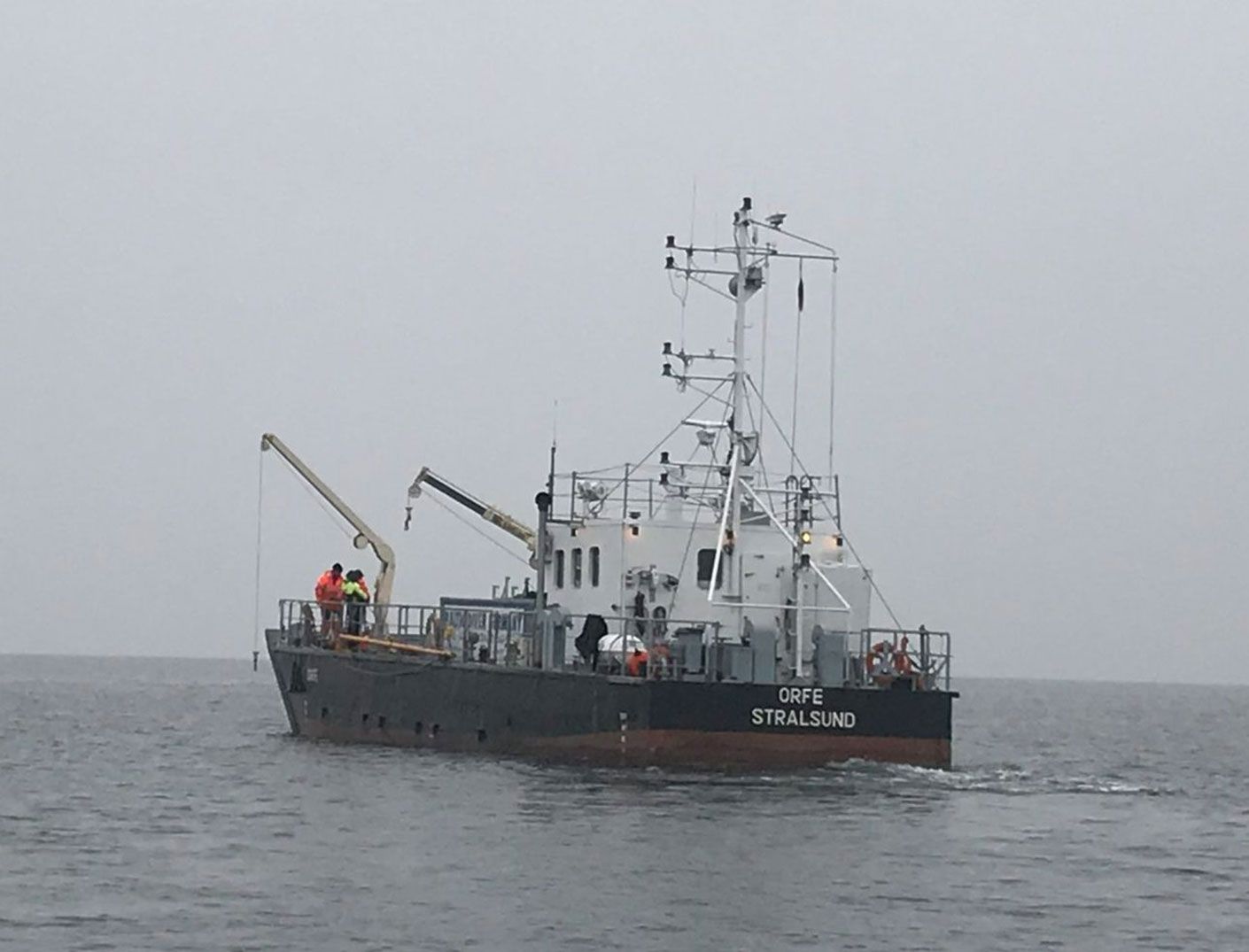
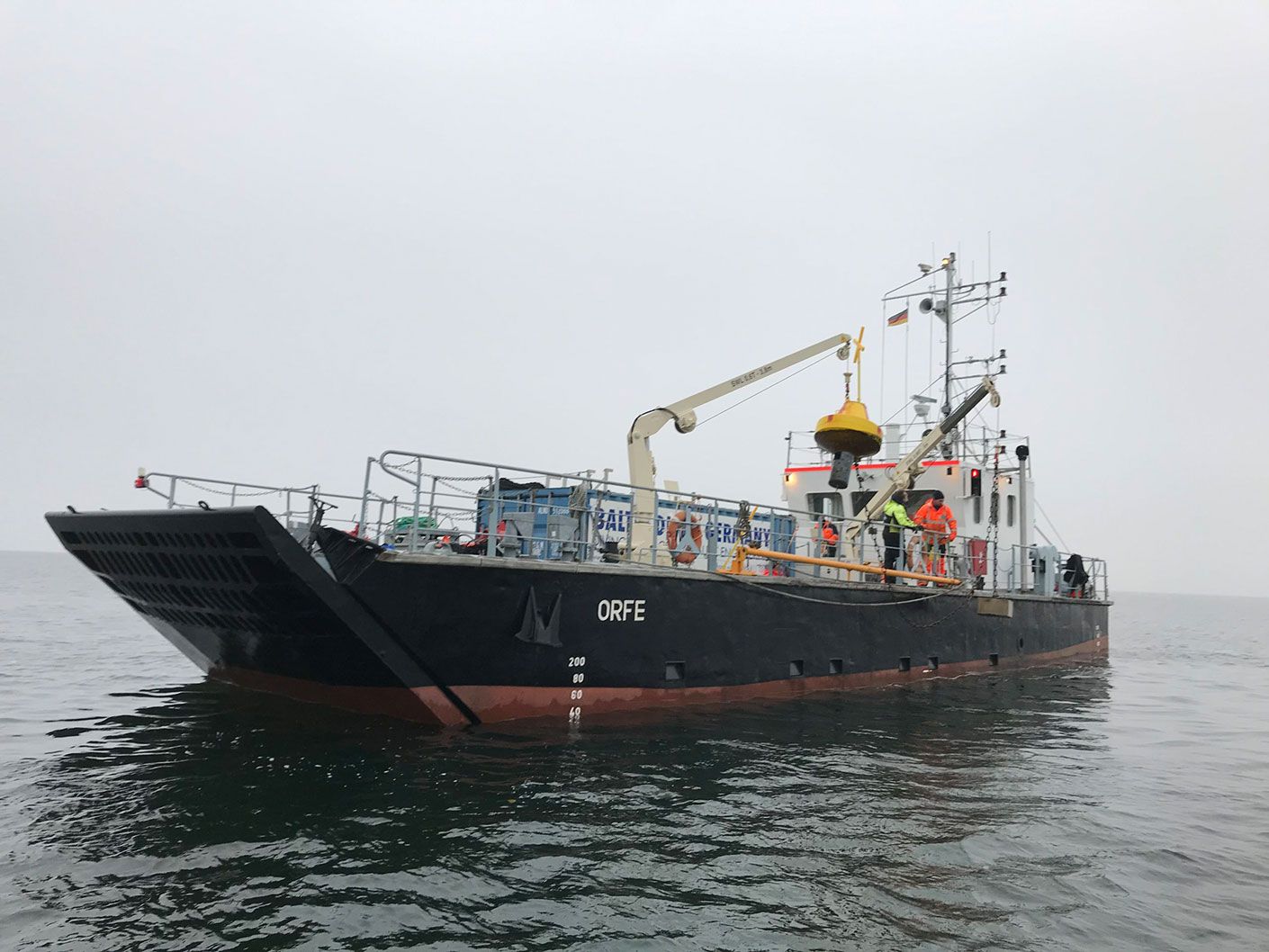
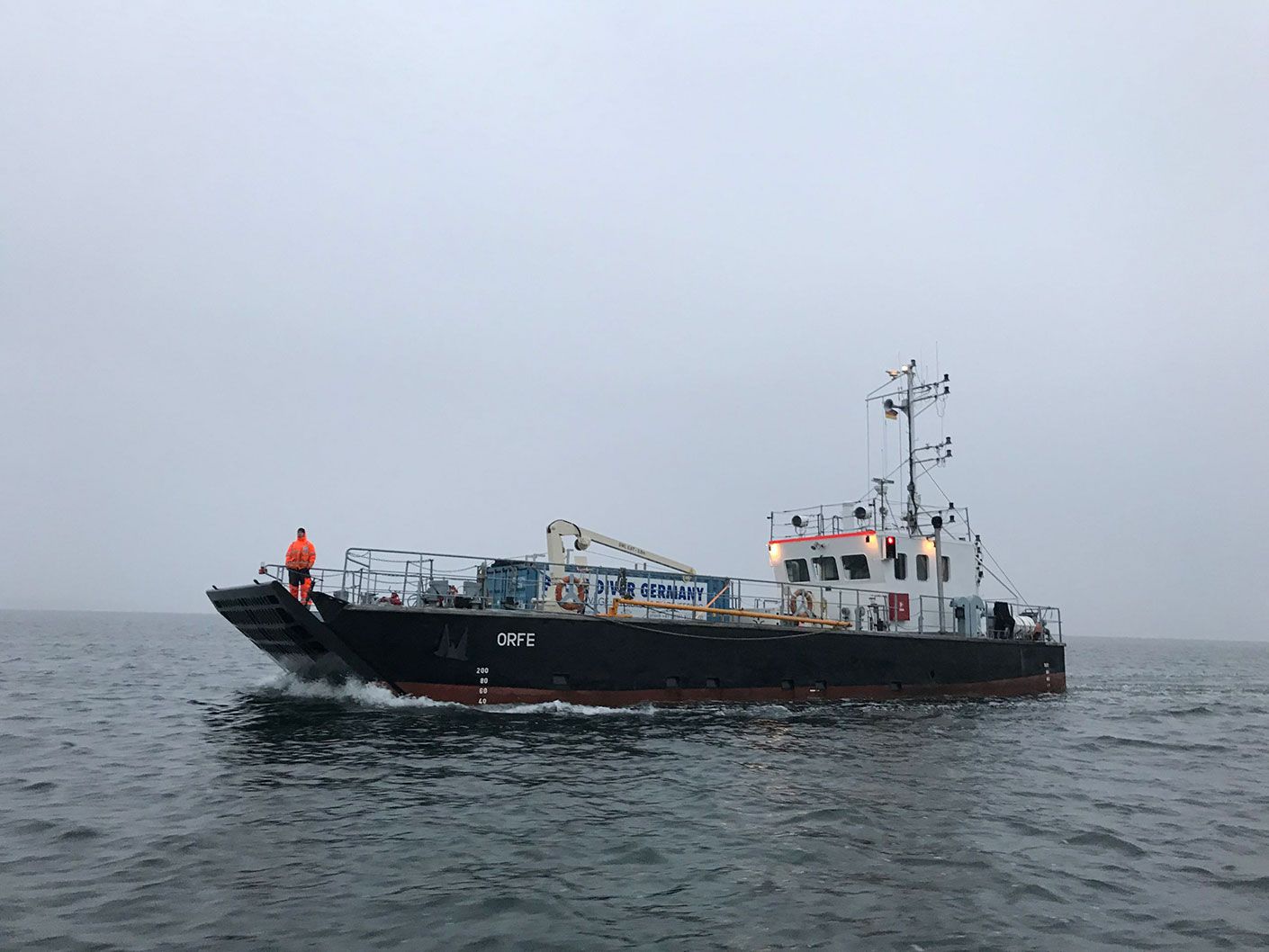
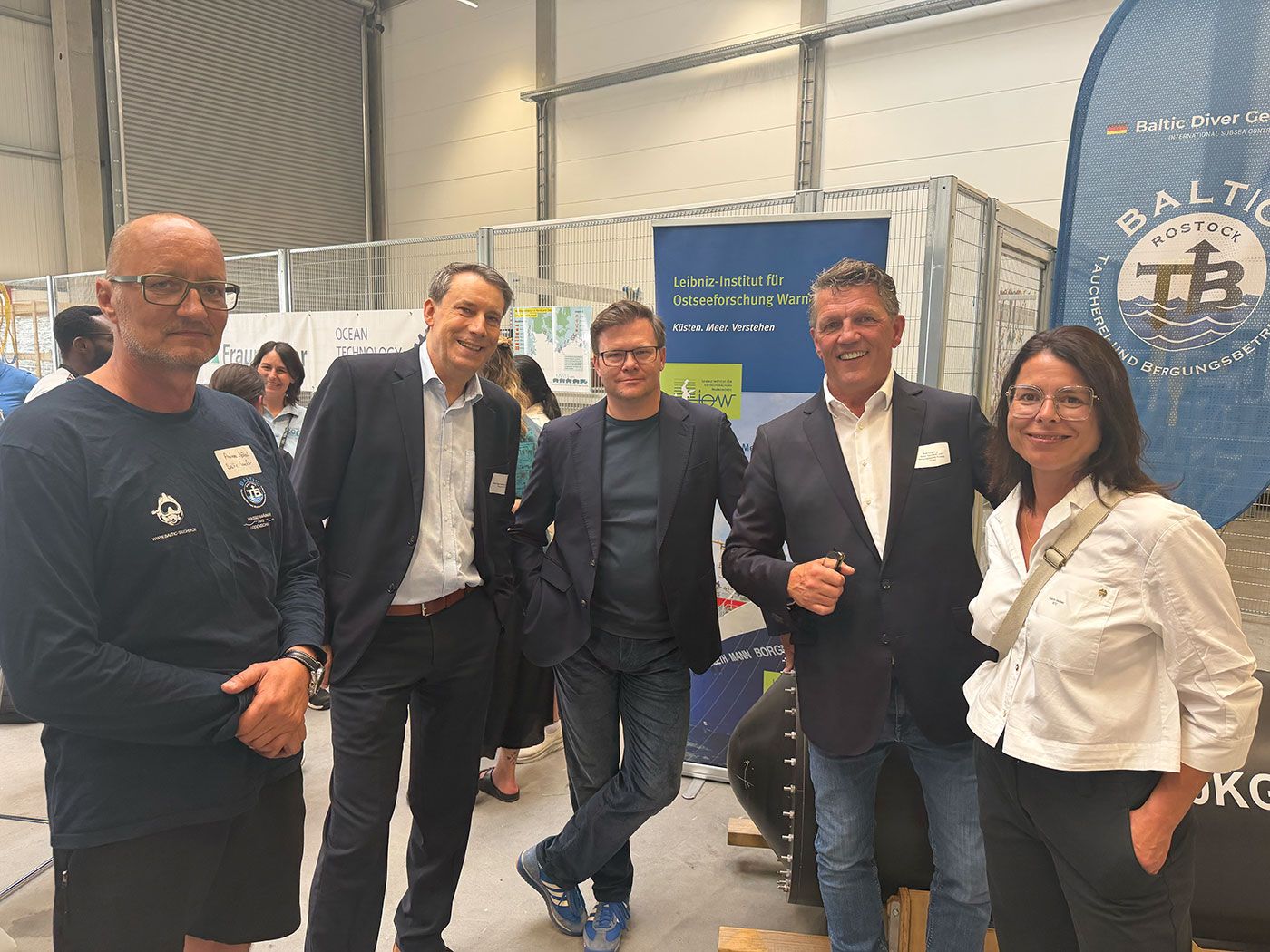
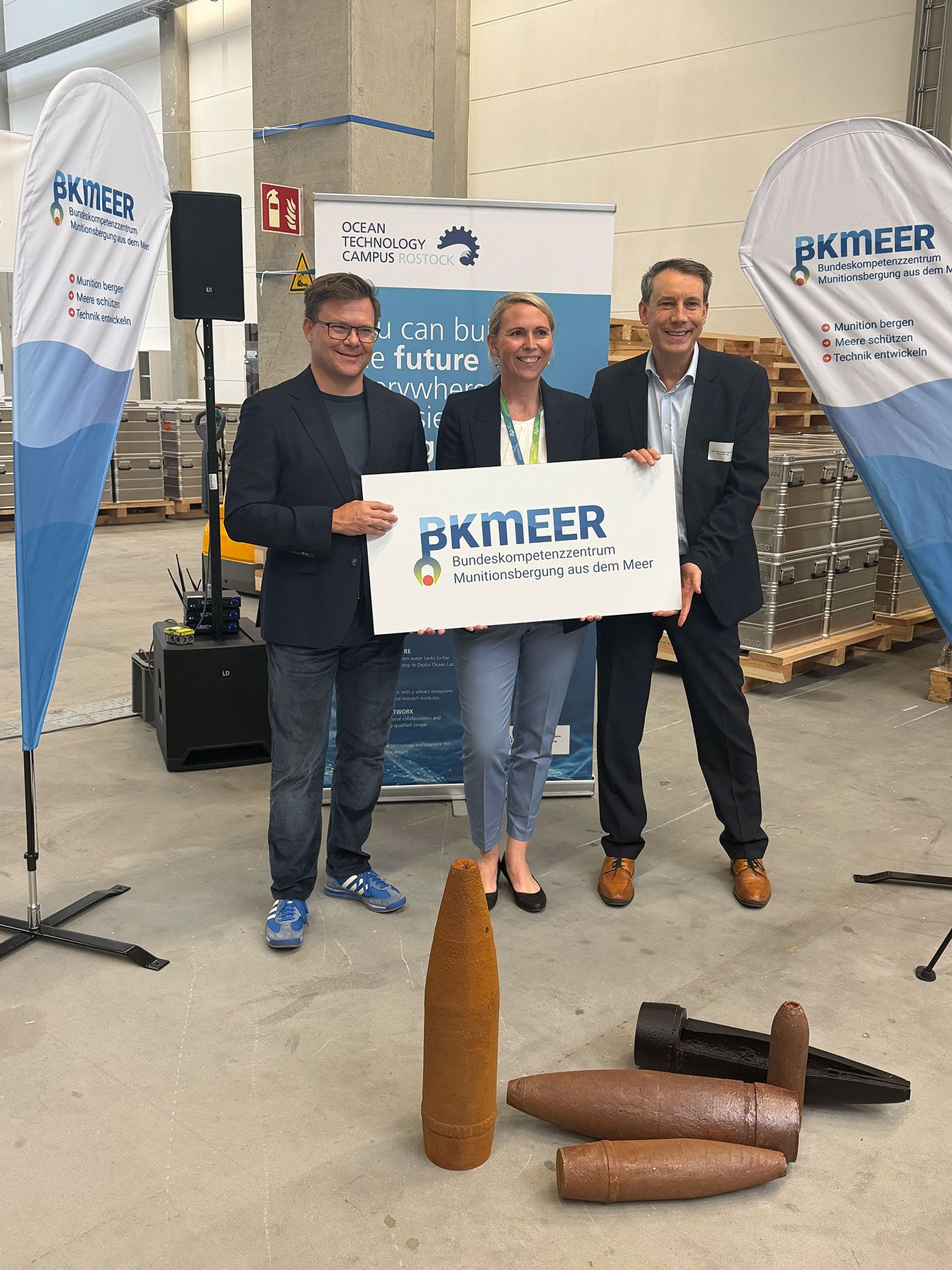
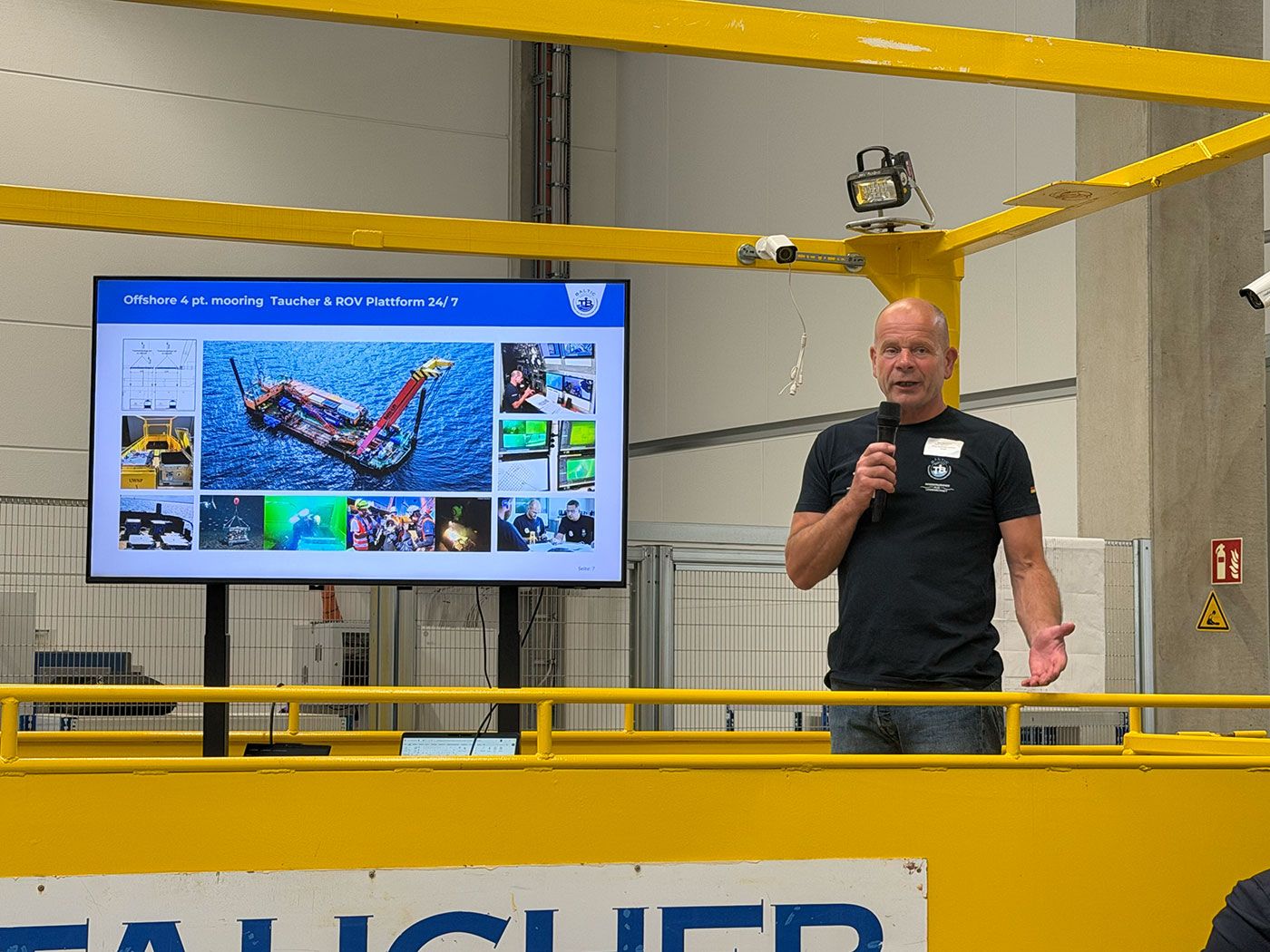
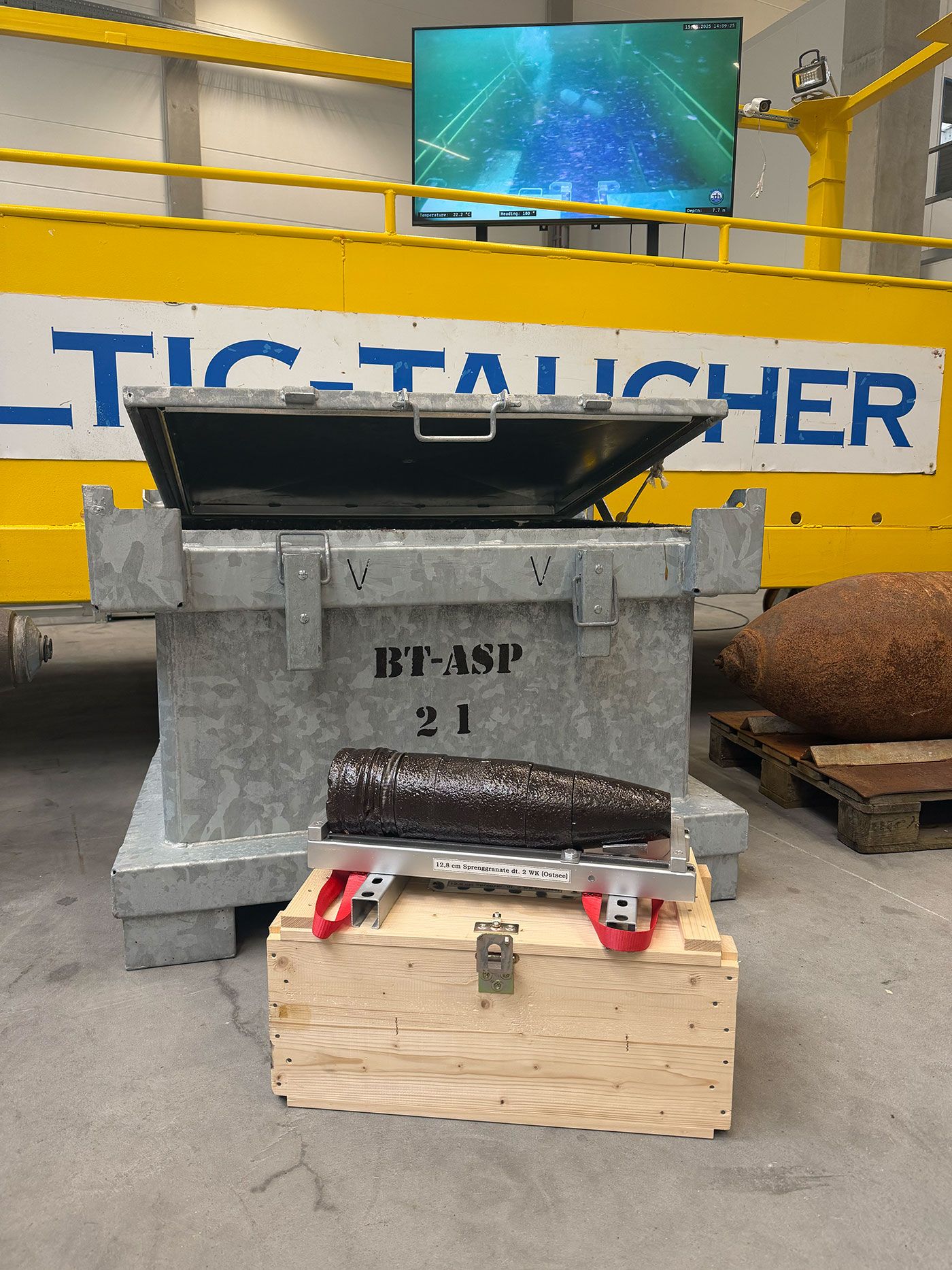
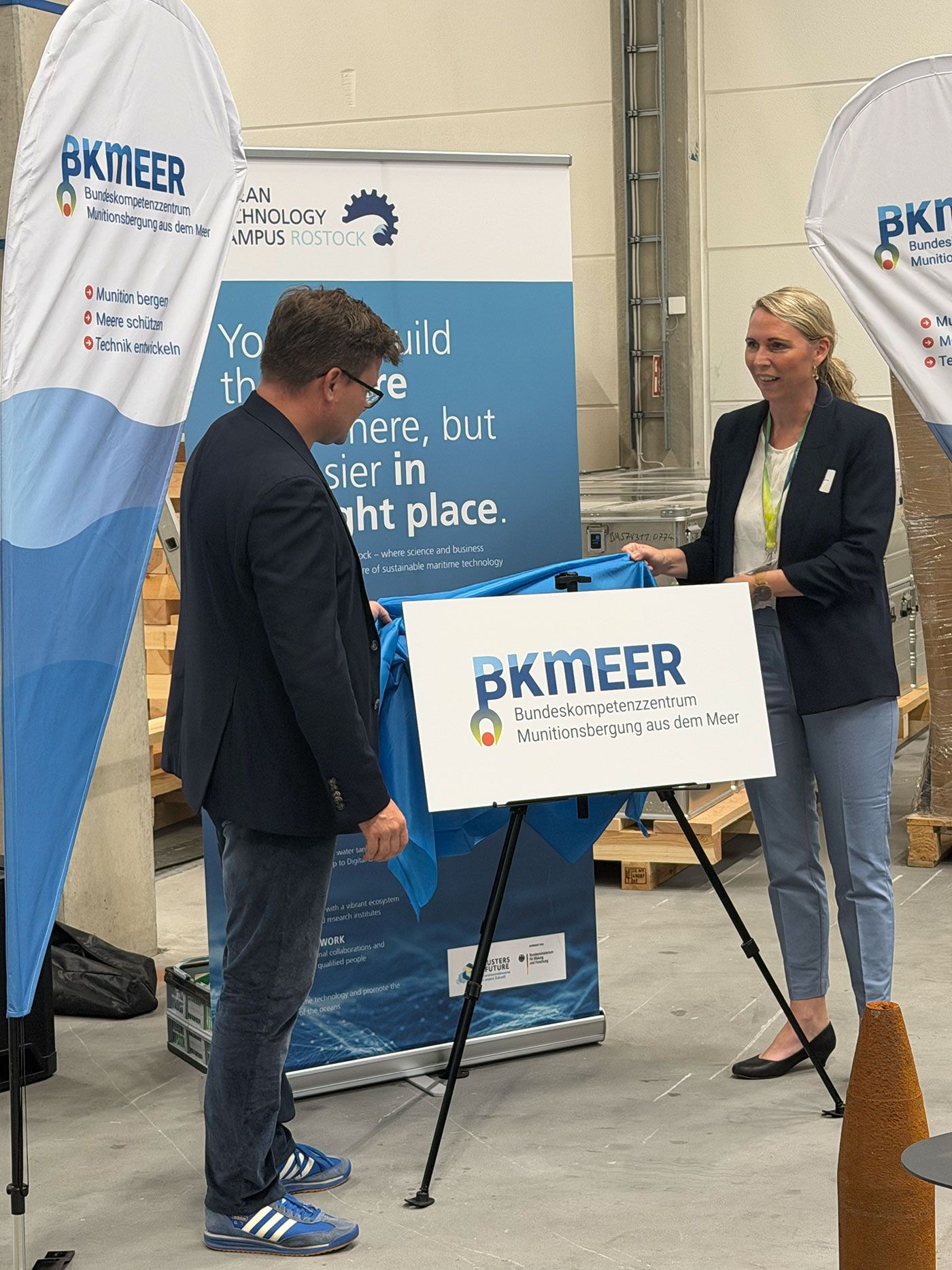
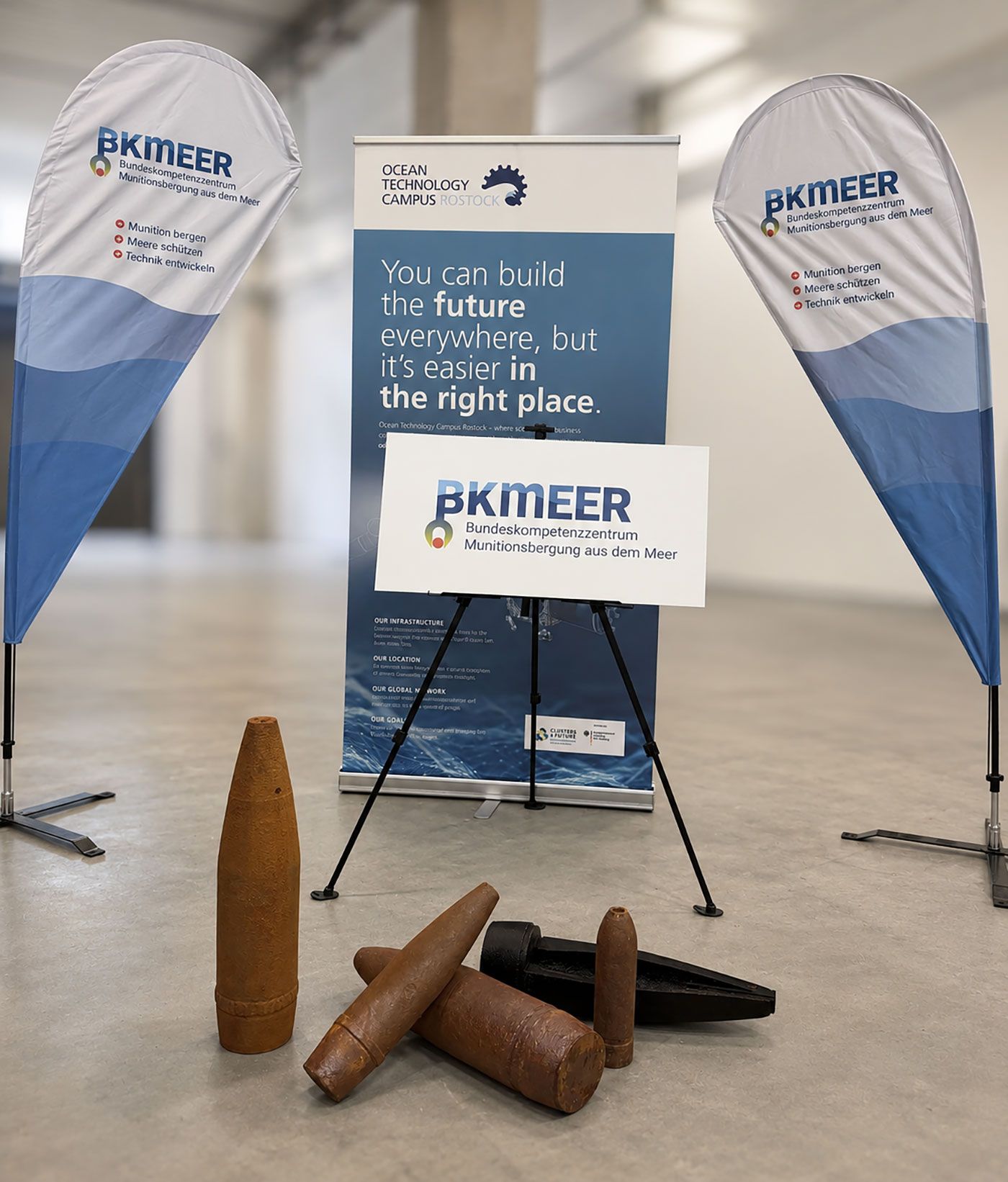
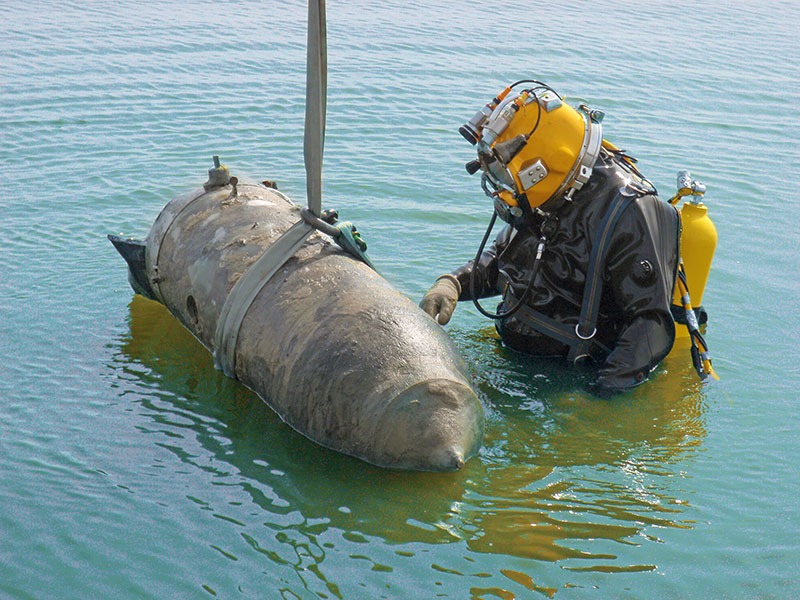
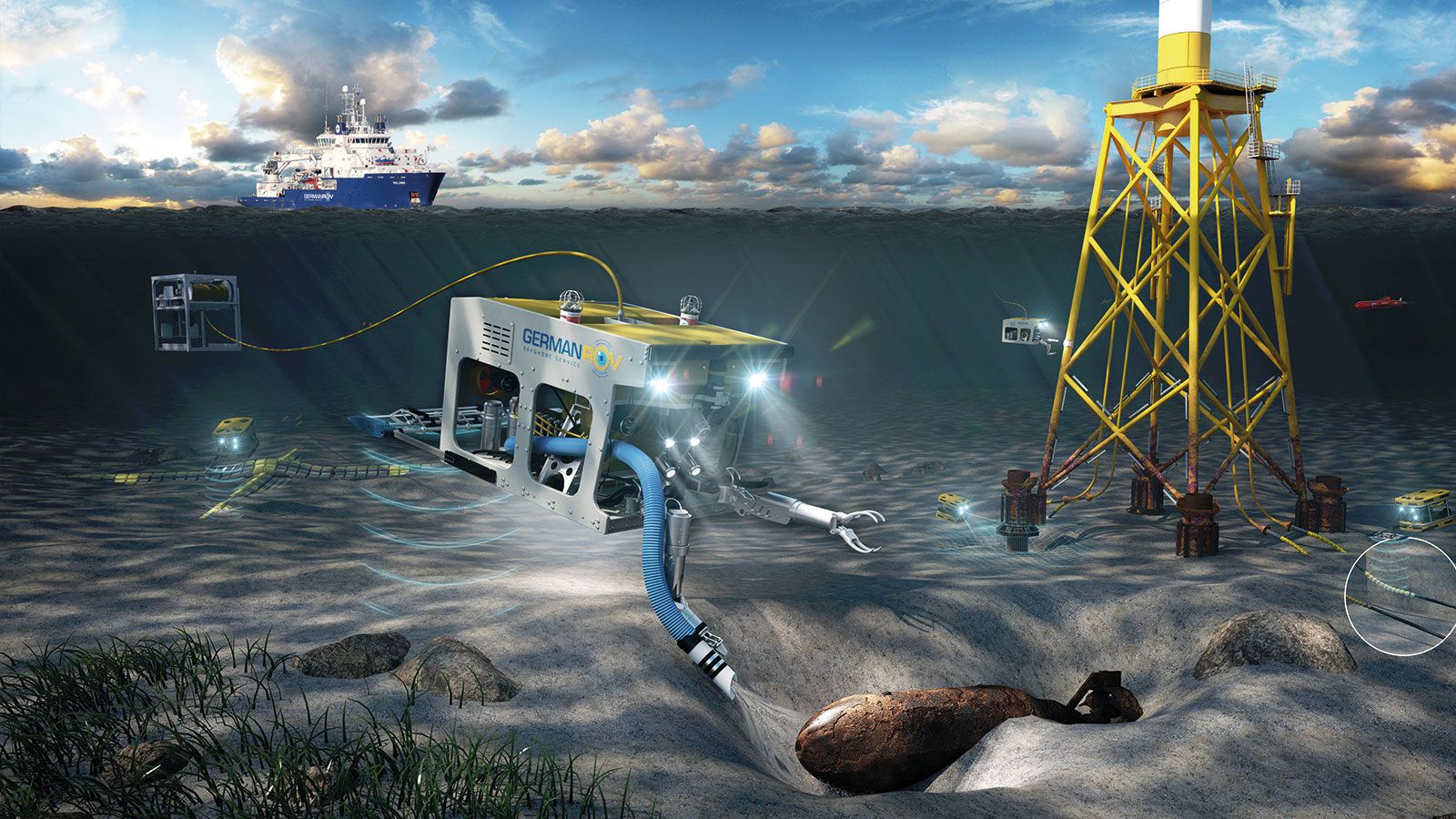
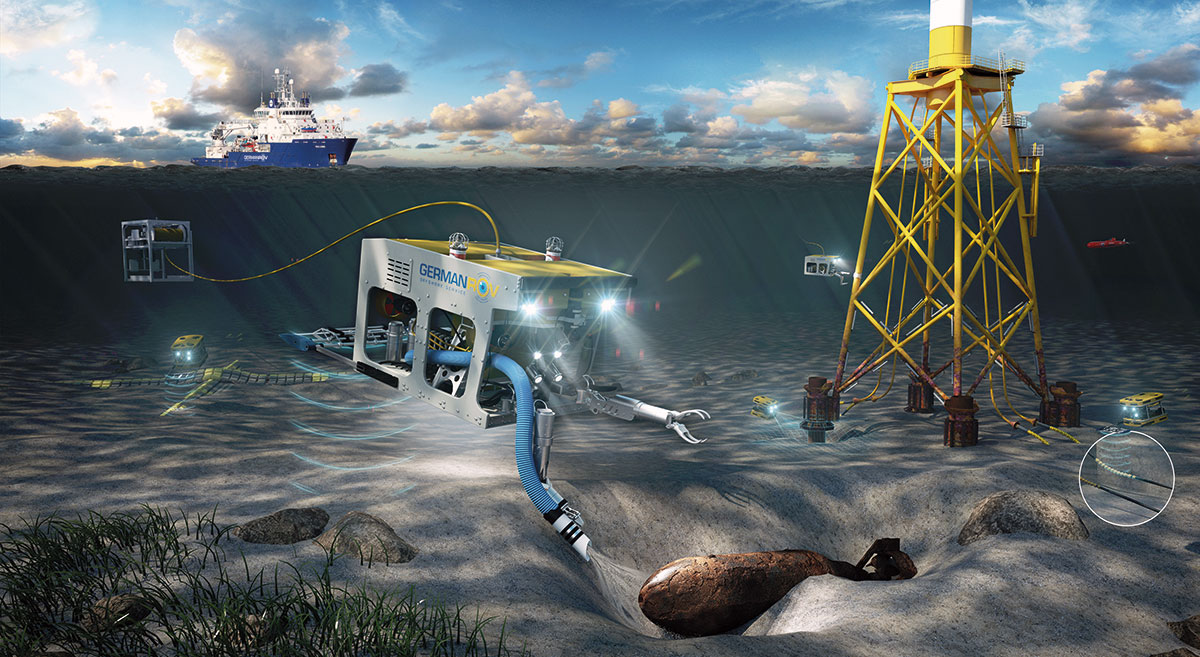
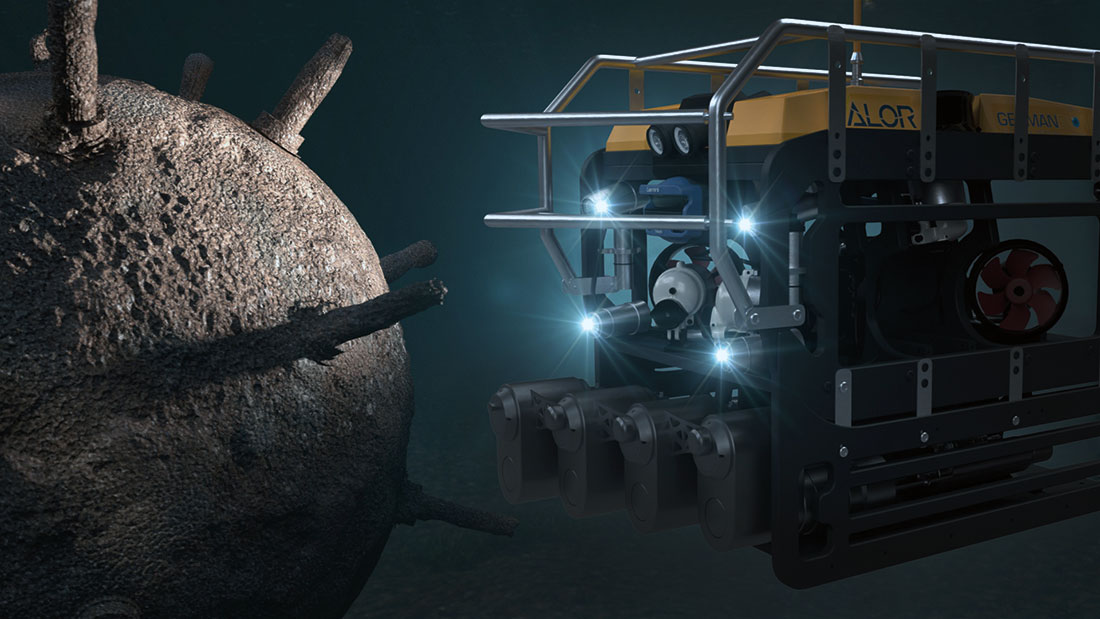
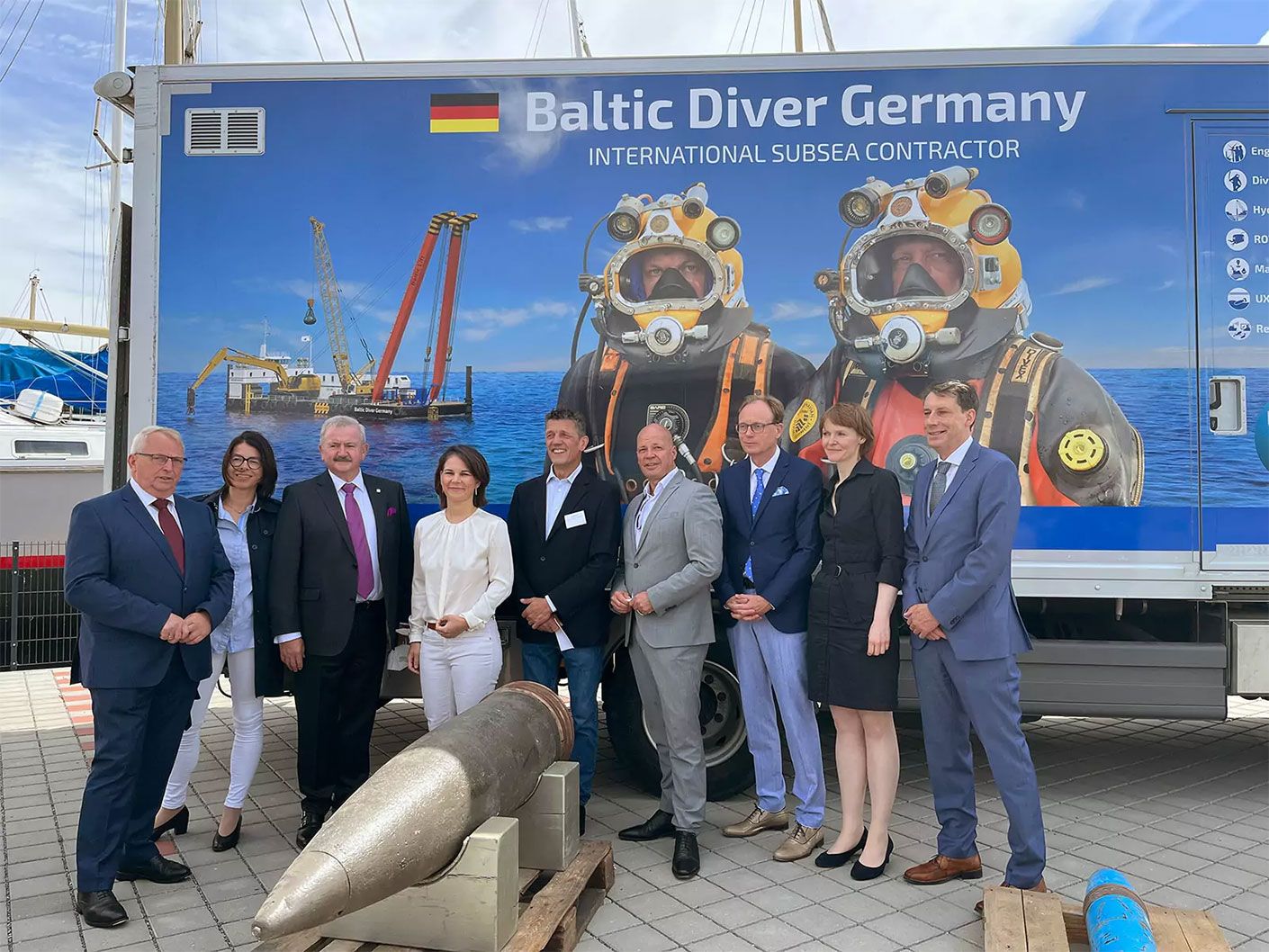
The recovery of munitions contamination from the North Sea and the Baltic Sea is receiving further political backing: with the establishment of the BKMEER, the new Federal Centre of Excellence for Munitions Recovery from the Sea, in Rostock, the federal government is creating a central platform to bring together expertise from research, public authorities and the maritime industry. The aim is to coordinate and accelerate, in the long term, the clearance of an estimated 1.6 million tonnes of abandoned munitions in German maritime areas.
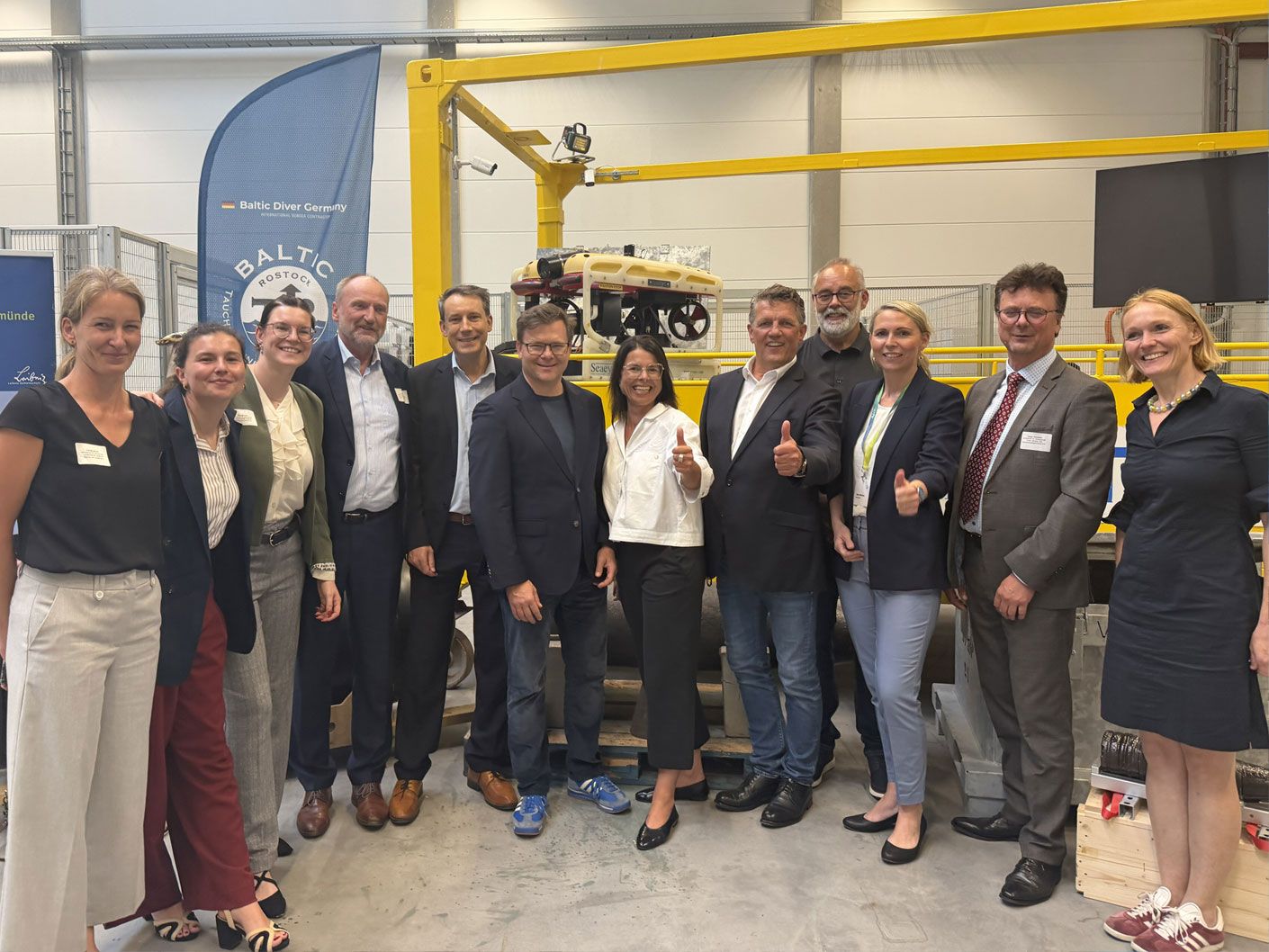
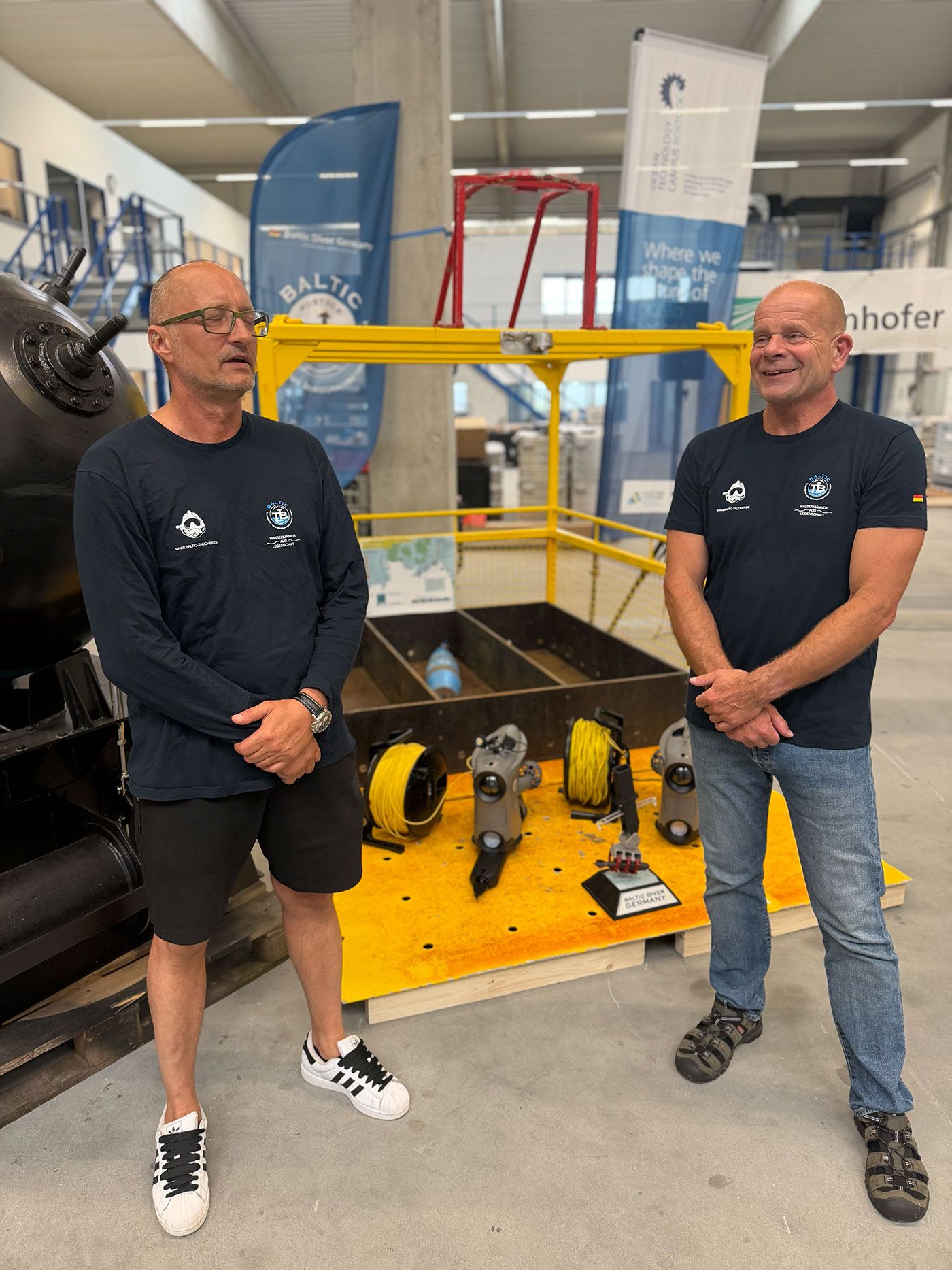
Why this is important
More than 80 years after the end of the Second World War, dumped bombs, shells and mines continue to pose a significant danger. Due to corrosion, harmful substances such as TNT and other explosive components are increasingly entering the marine environment. At the same time, the risks to shipping, offshore wind farms, cable routes, fisheries and coastal infrastructure are growing.
The centre of excellence is intended to bring together scientific findings, modern recovery technologies and practical experience more effectively in future. The federal government is focusing on innovative methods and building on the emergency programme for munitions recovery, which has already been launched and has been allocated 100 million euros. In the long term, industrial recovery platforms are also set to be deployed.
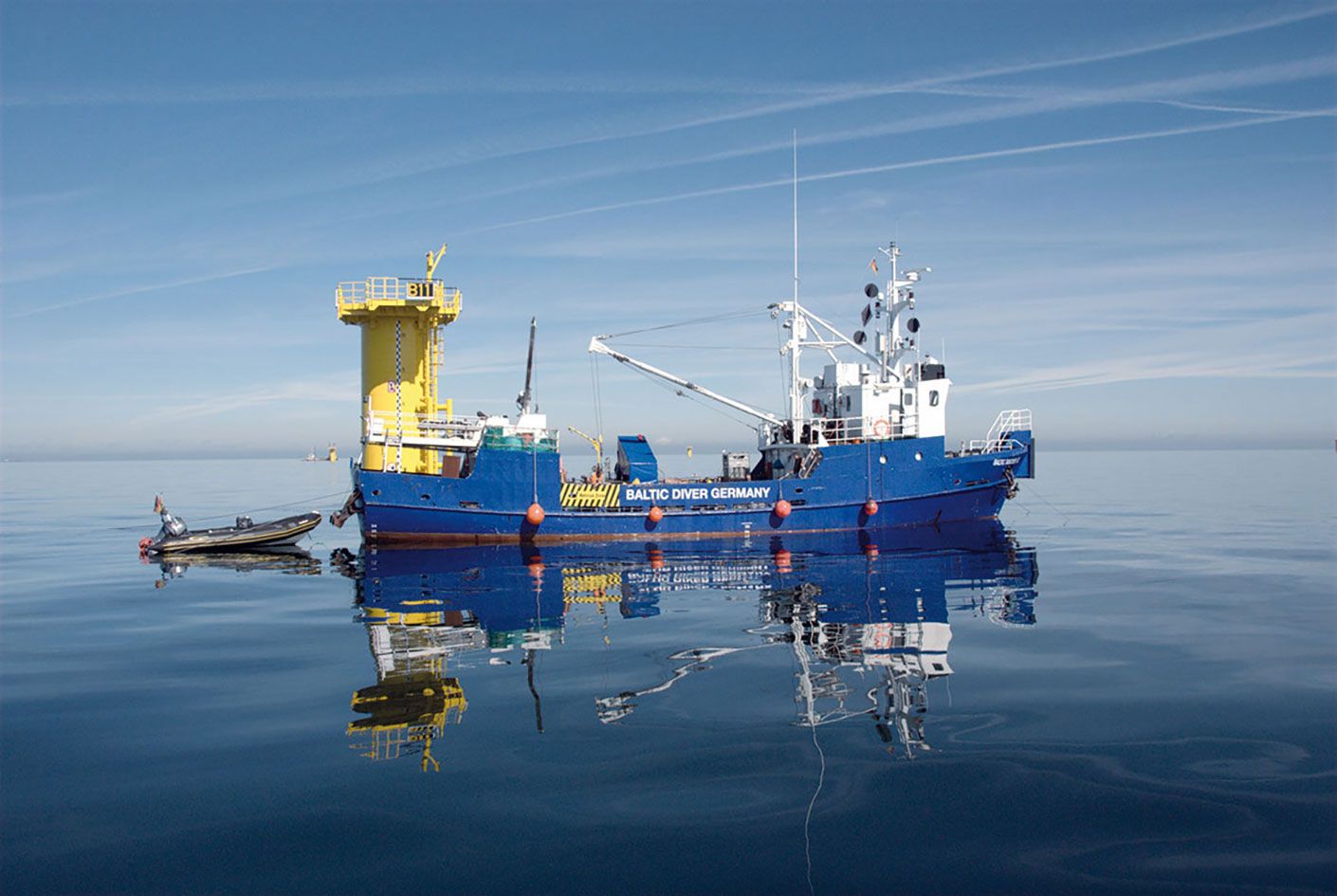
Significance for Baltic Diver Germany
For companies with maritime operations and recovery expertise, this sends a clear signal: munitions recovery is increasingly evolving from individual pilot projects into a long-term national task.
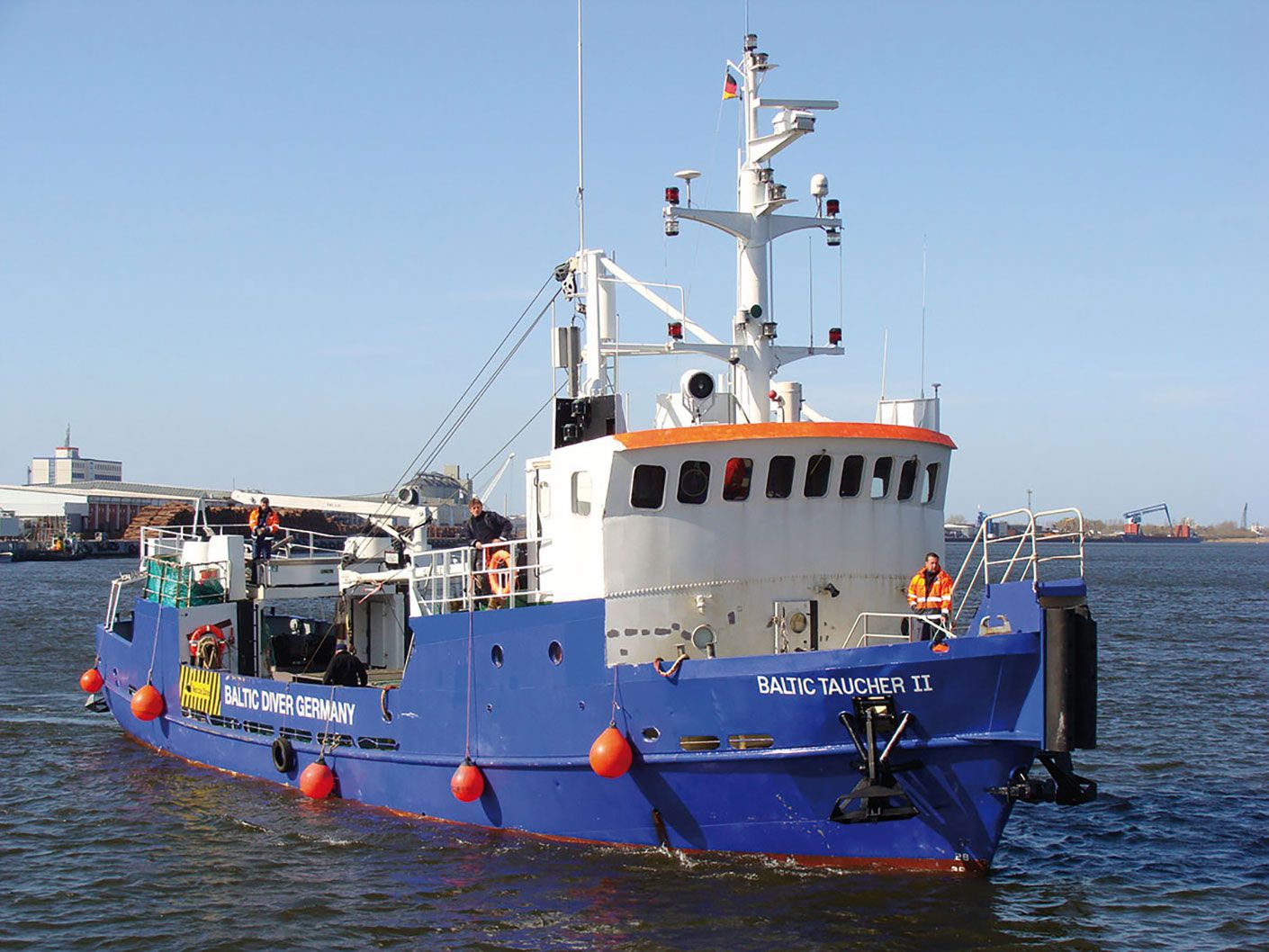
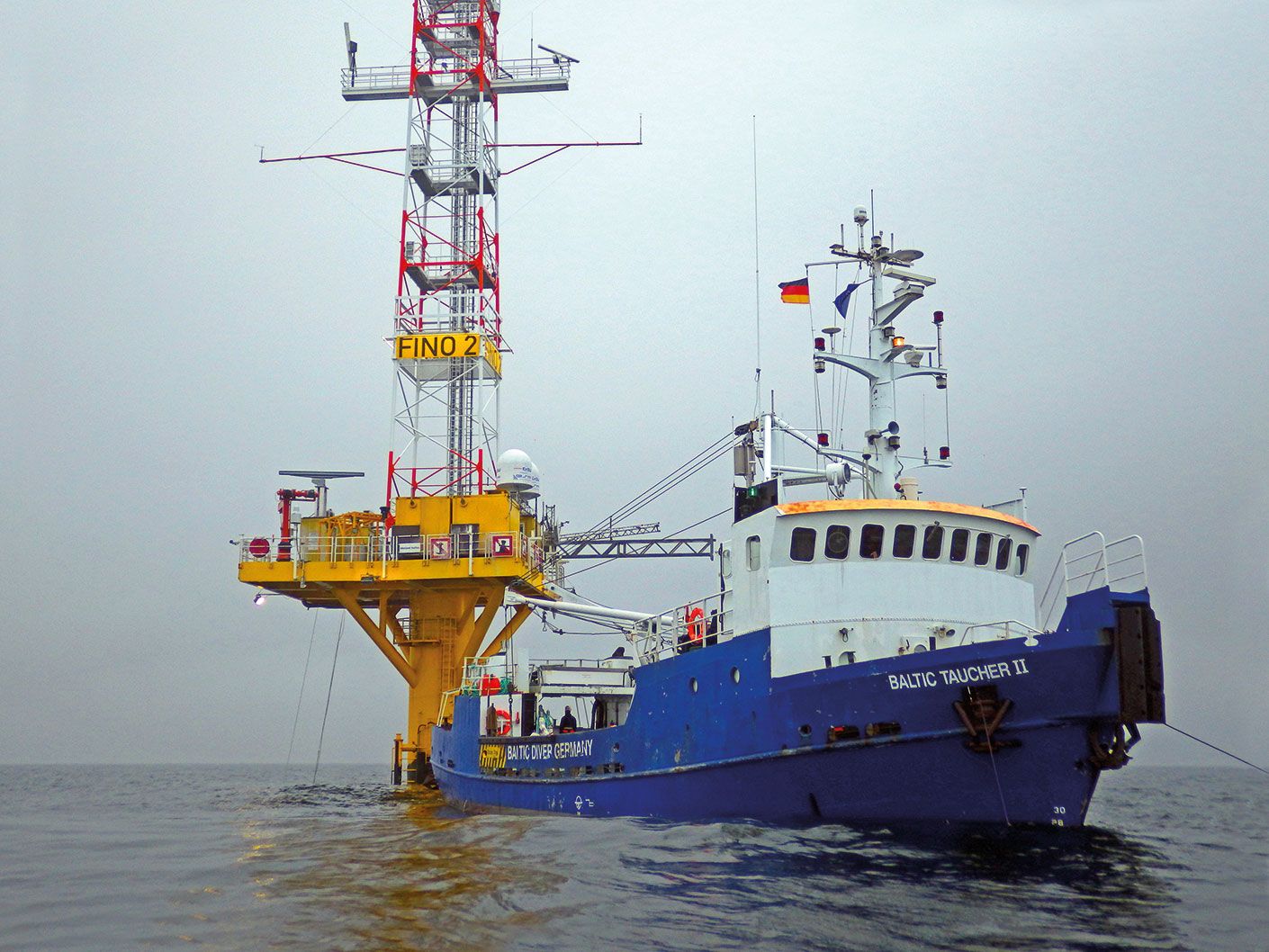
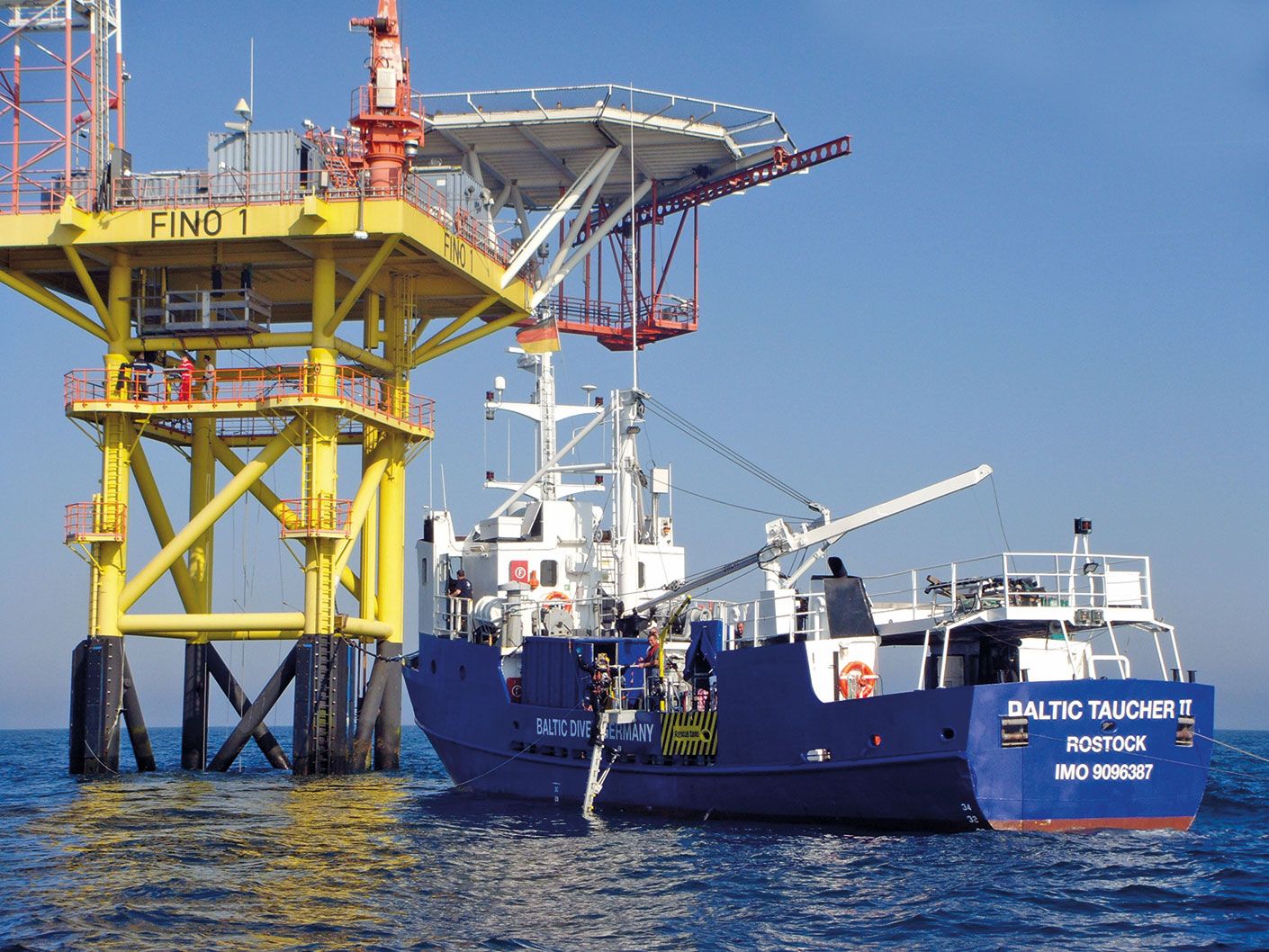
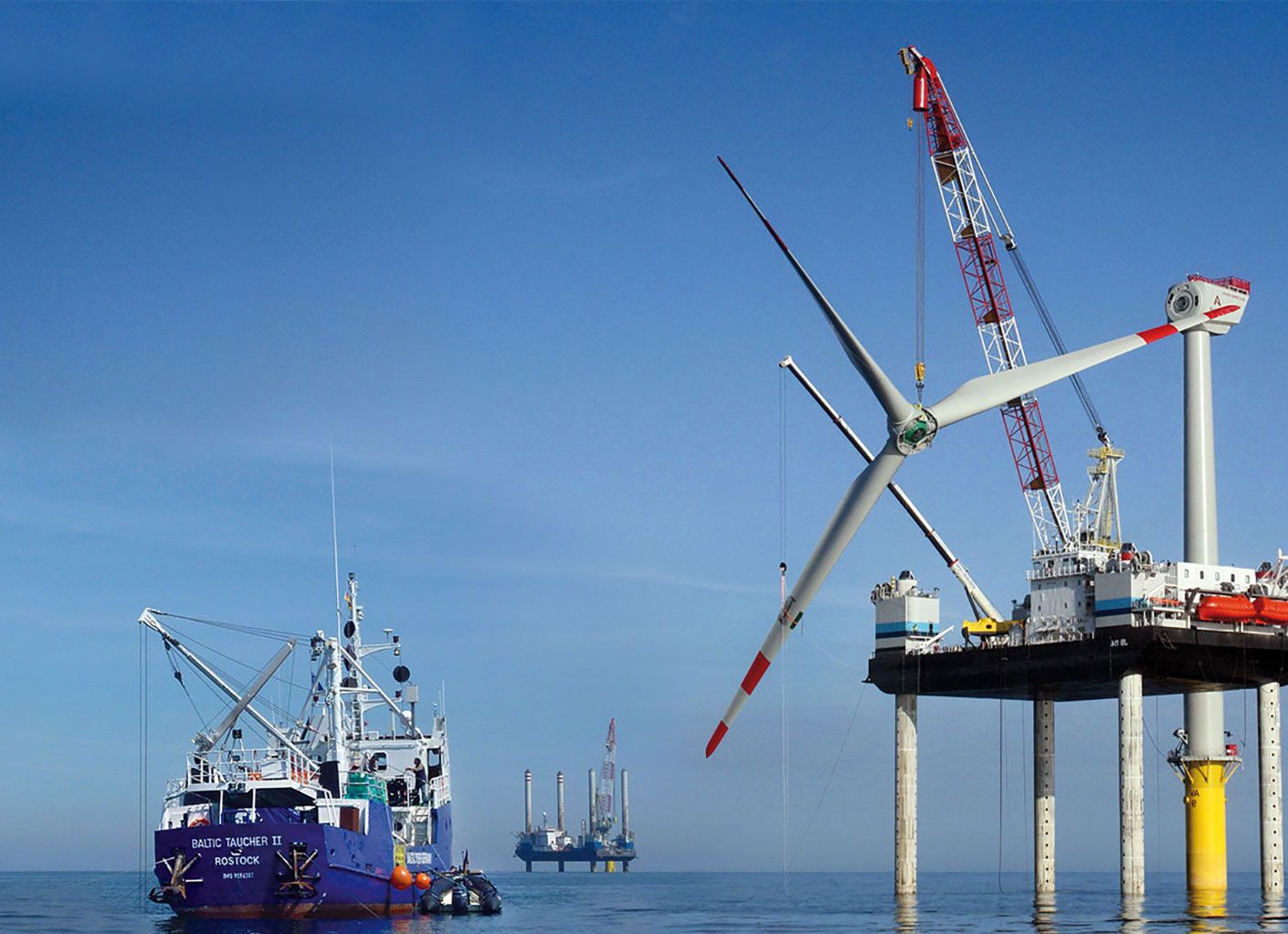
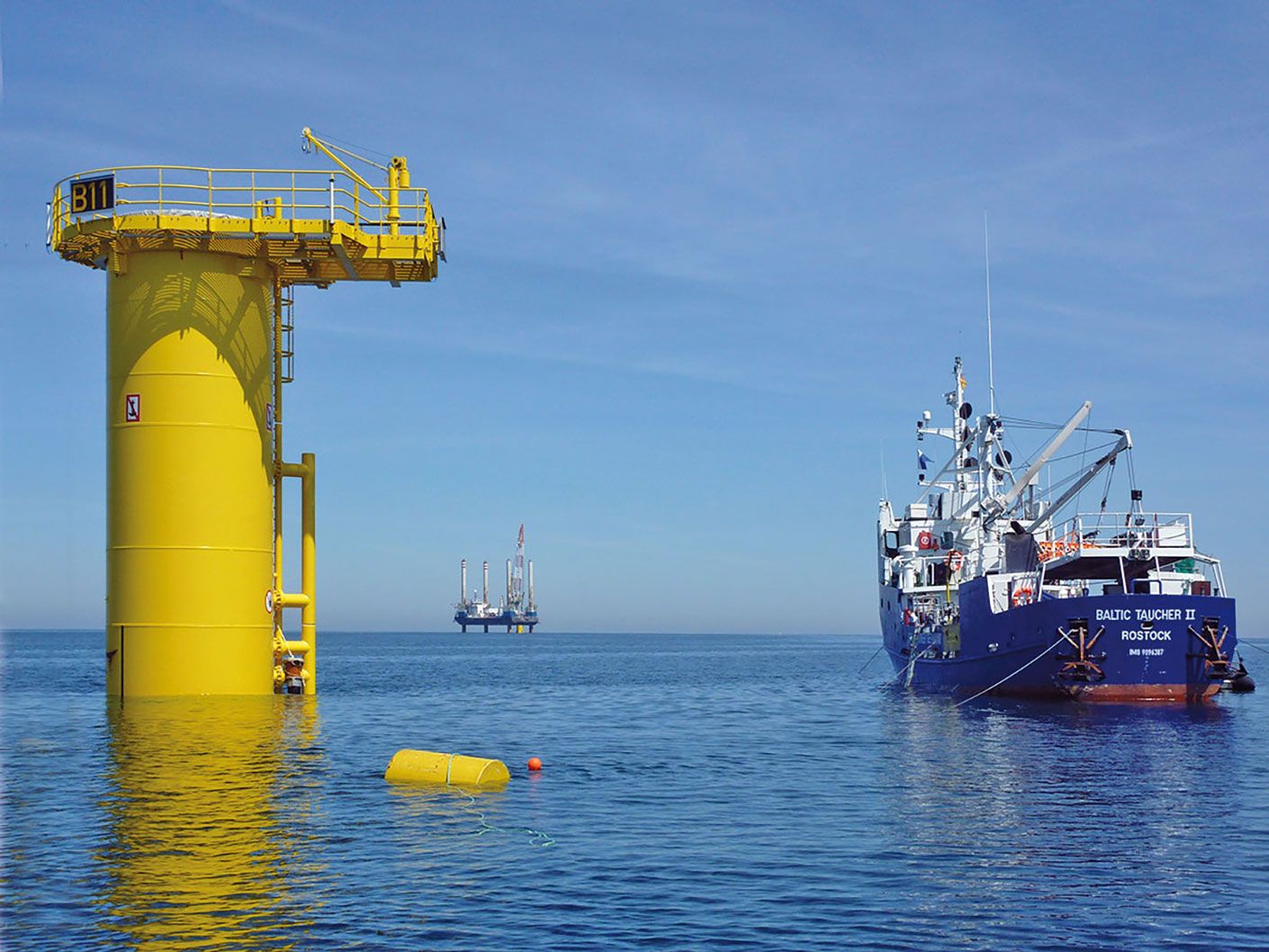
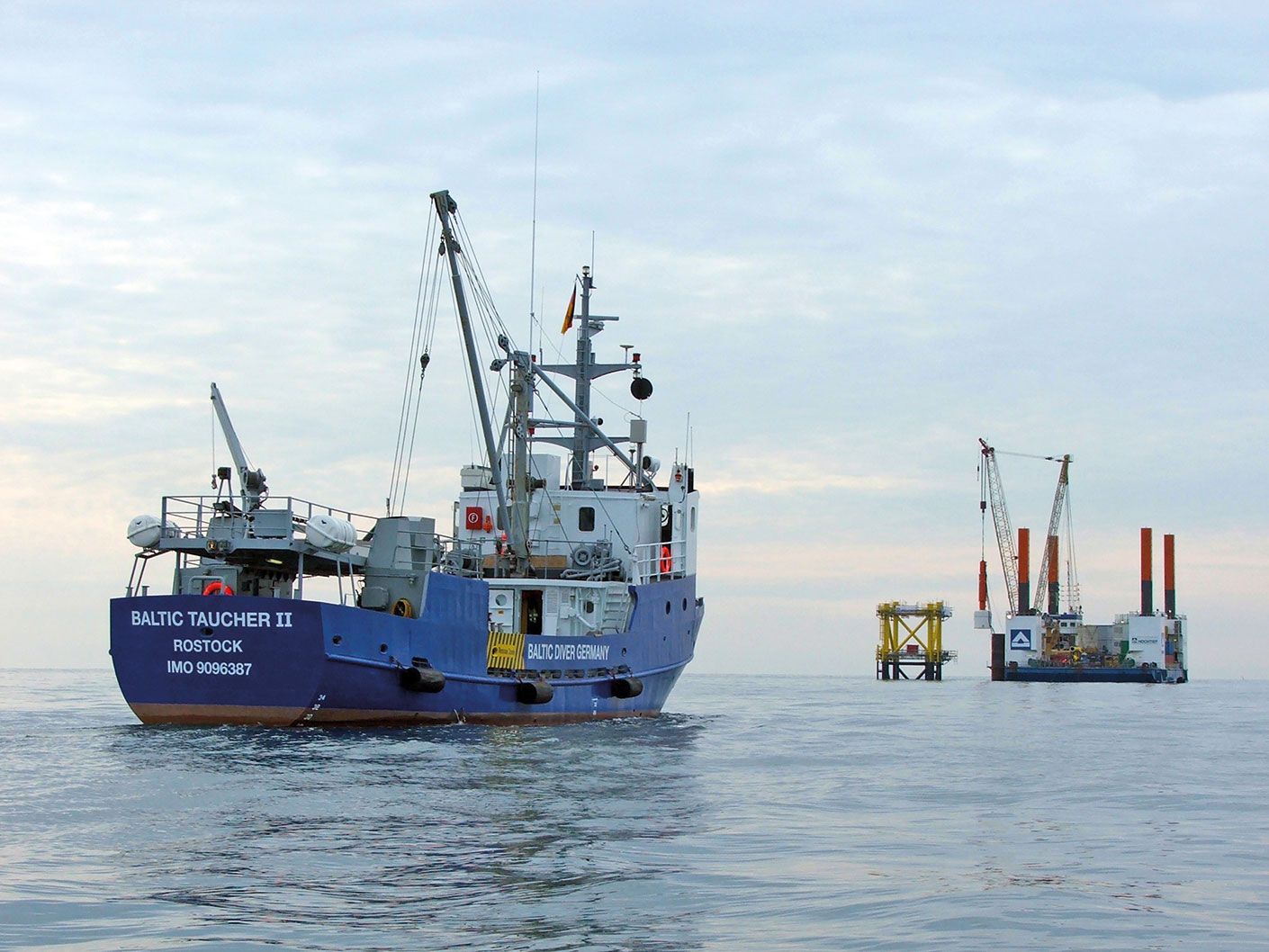
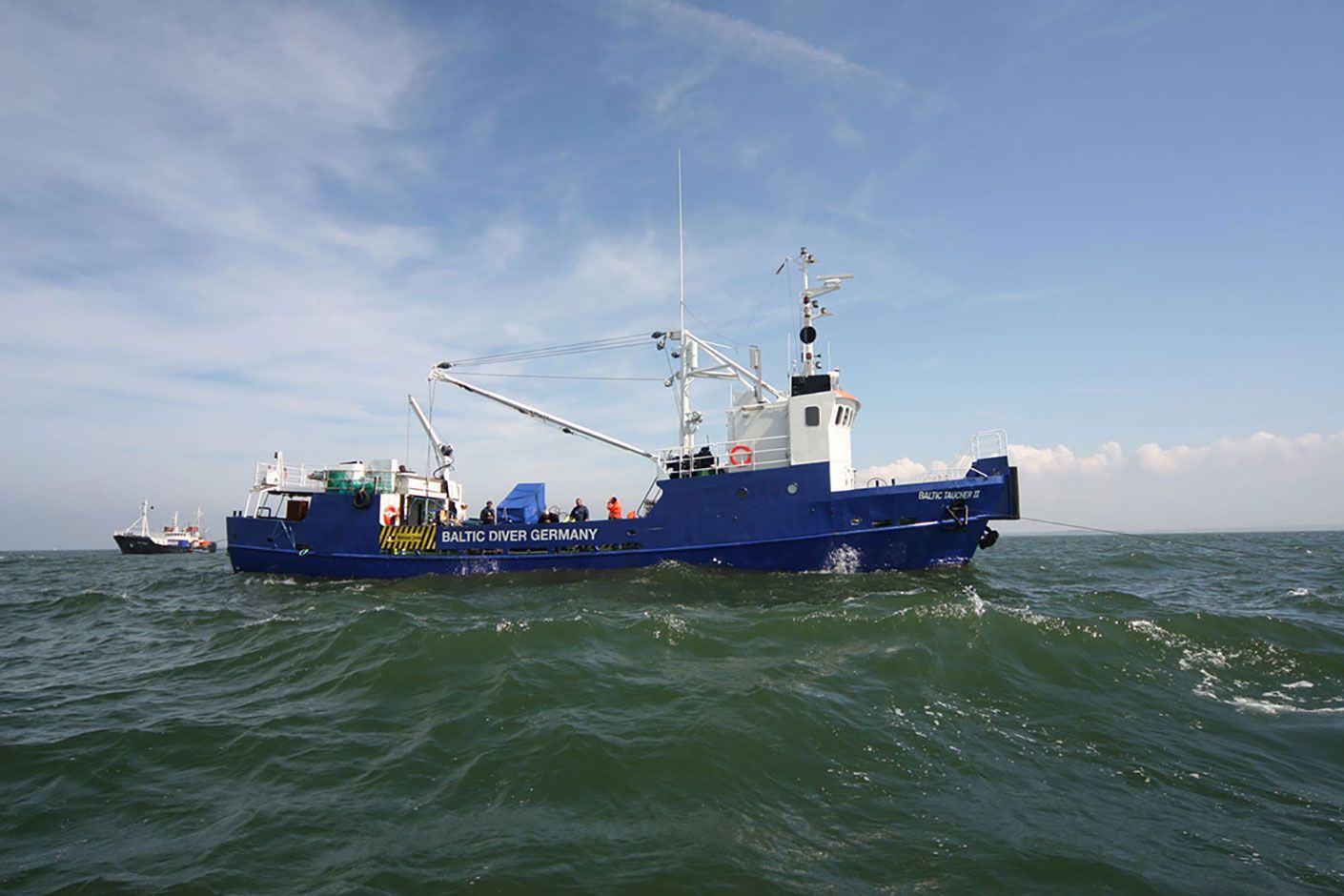
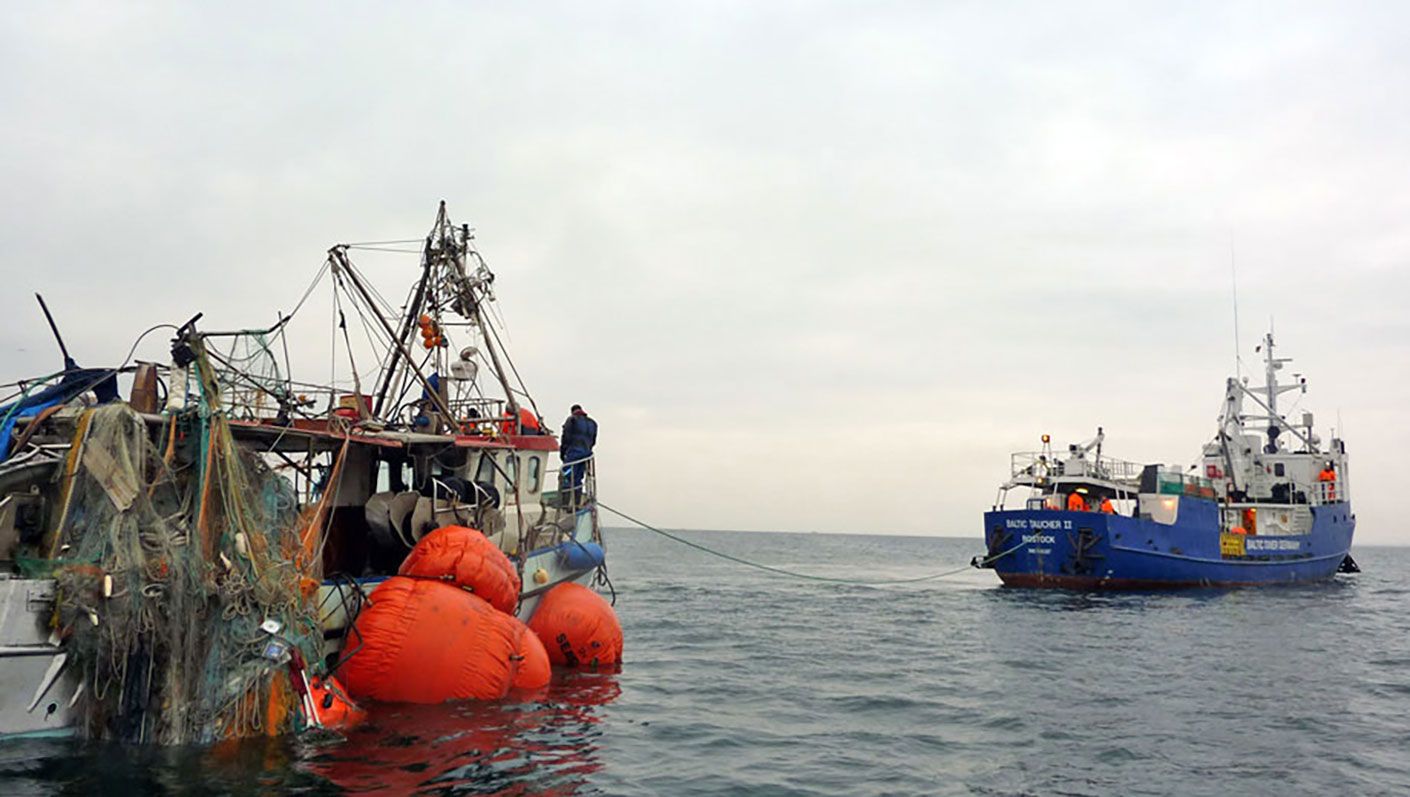
Baltic Taucher has extensive experience in demanding offshore operations, underwater work and dealing with complex maritime challenges. The further expansion of structures, technologies and partnerships opens additional opportunities to contribute existing expertise to future projects and to play an active role in shaping the development of innovative recovery methods.
Our conclusion
The establishment of the BKMEER in Rostock is far more than an organisational decision. It underlines that the recovery of abandoned munitions is becoming a long-term societal and maritime task for the future. For the entire industry, this creates new opportunities for innovation, collaboration and the expansion of technical expertise – developments that Baltic Diver Germany will closely monitor and actively help to shape.

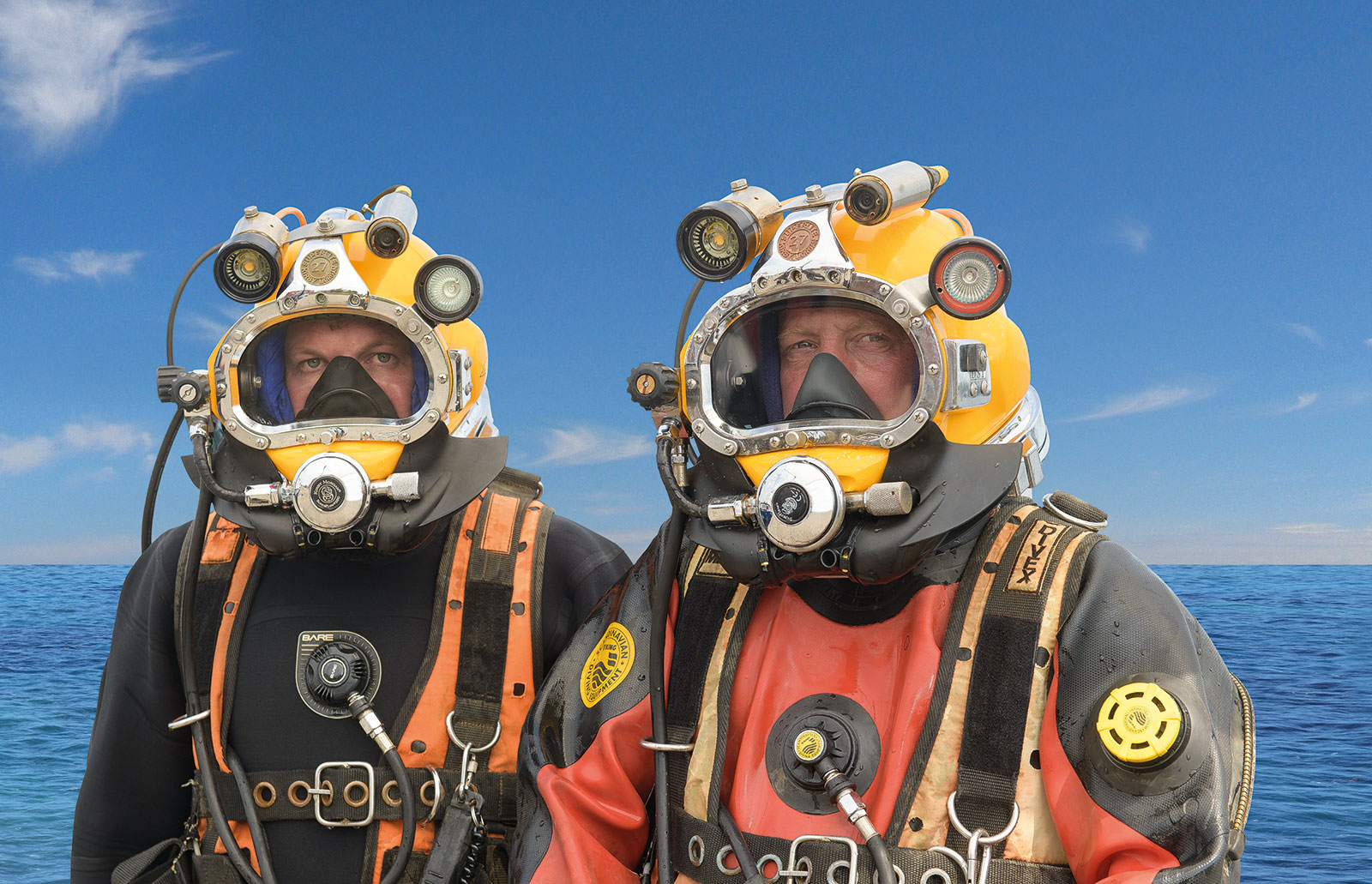
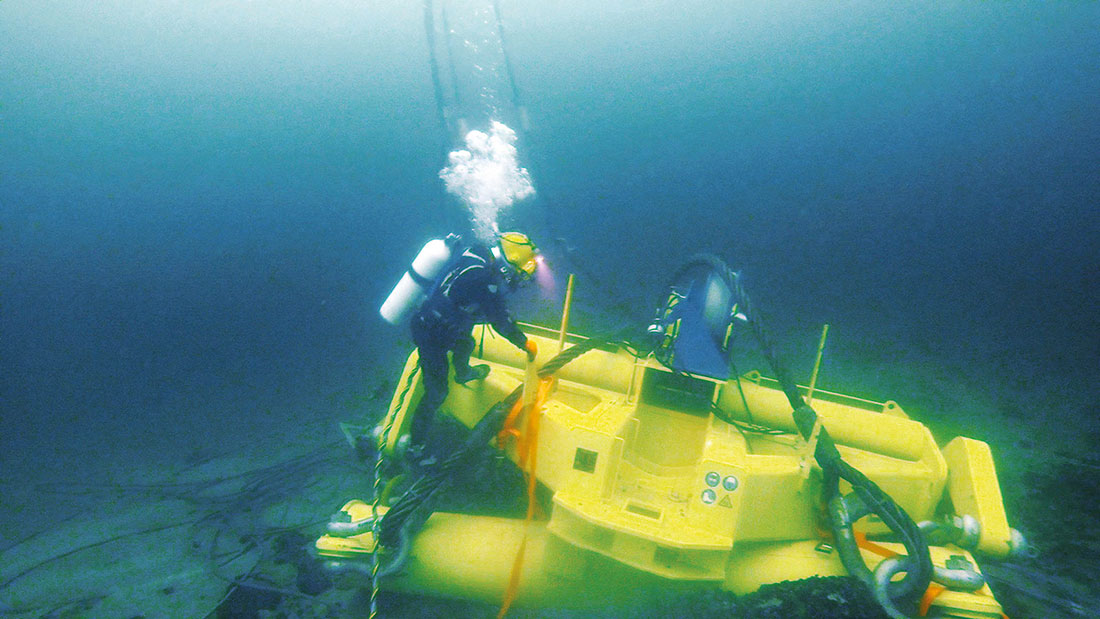
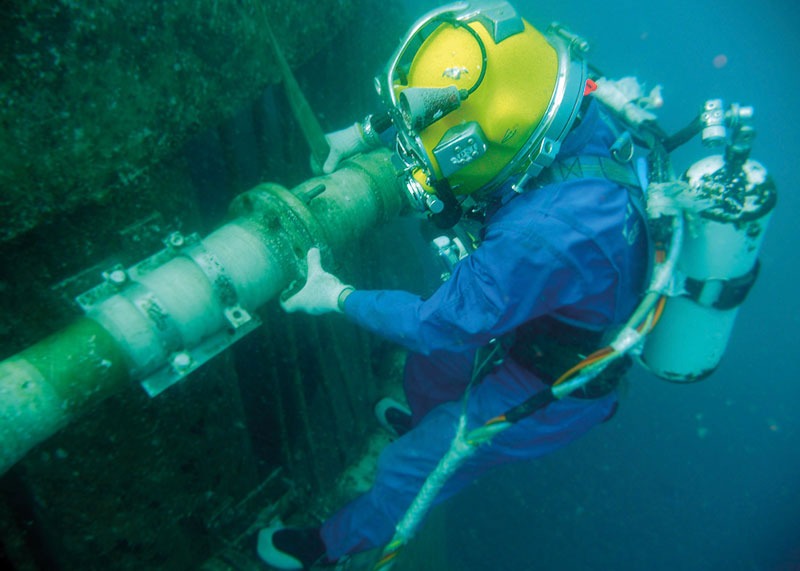
Independent project planning and execution of all kind of subsea operations. Our efficiency and quality-conscious work ethic has earned us an outstanding reputation amongst our clients as a valuable partner, both nationally and internationally.
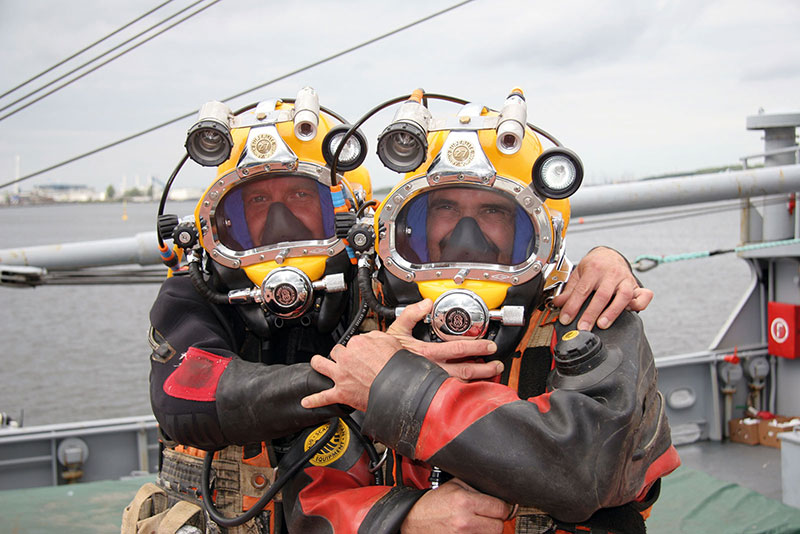

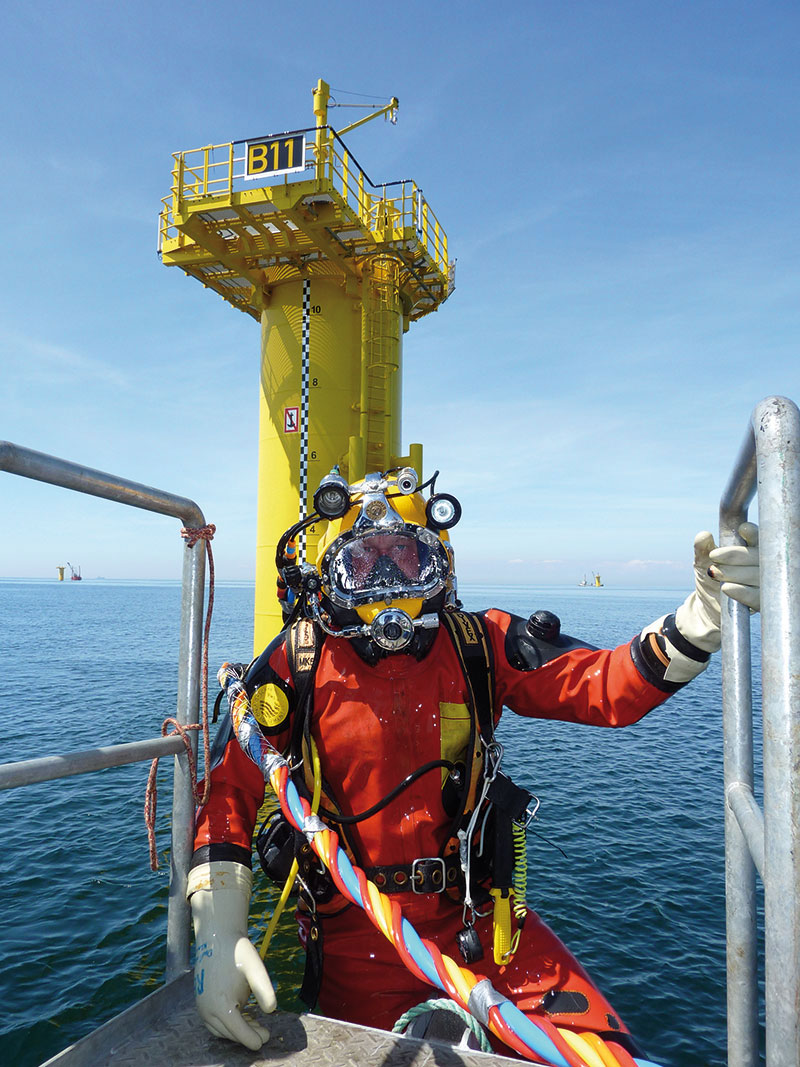
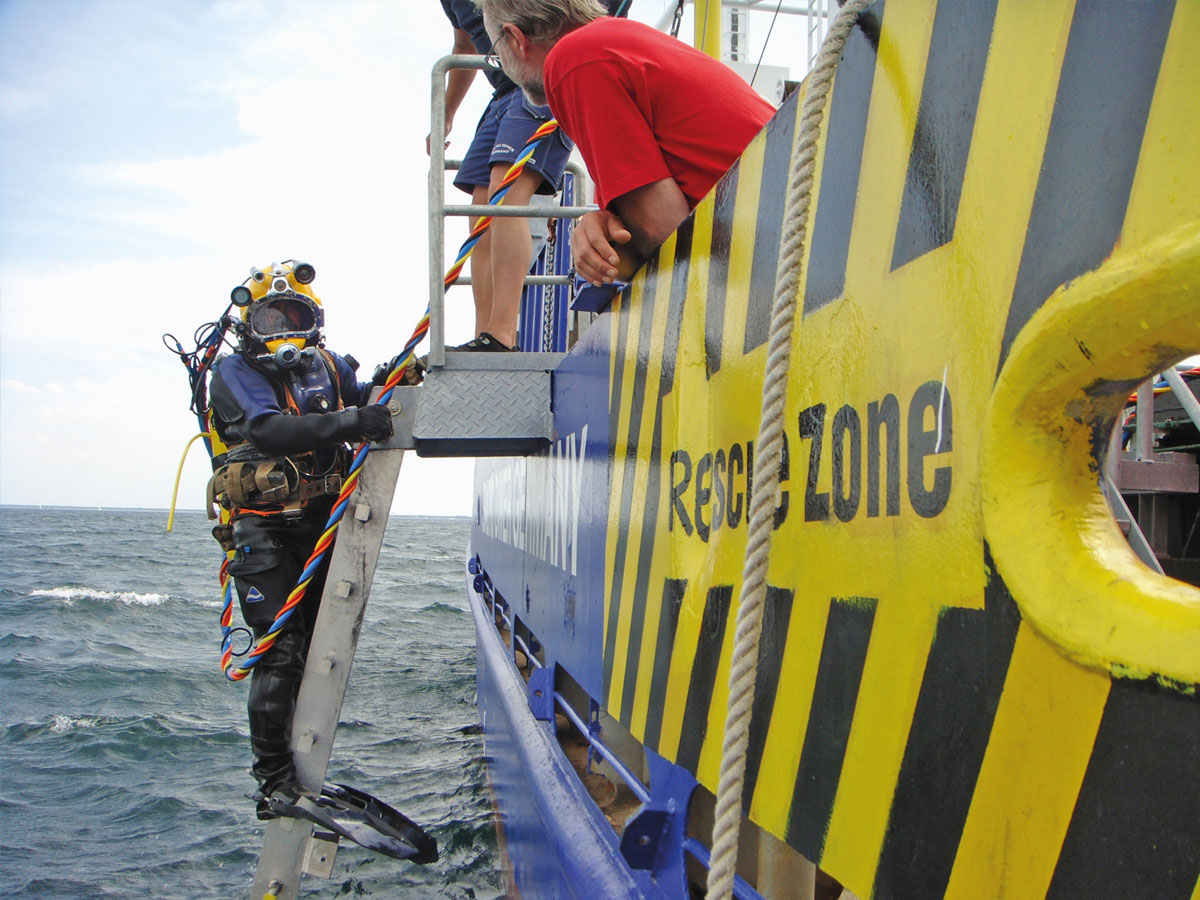
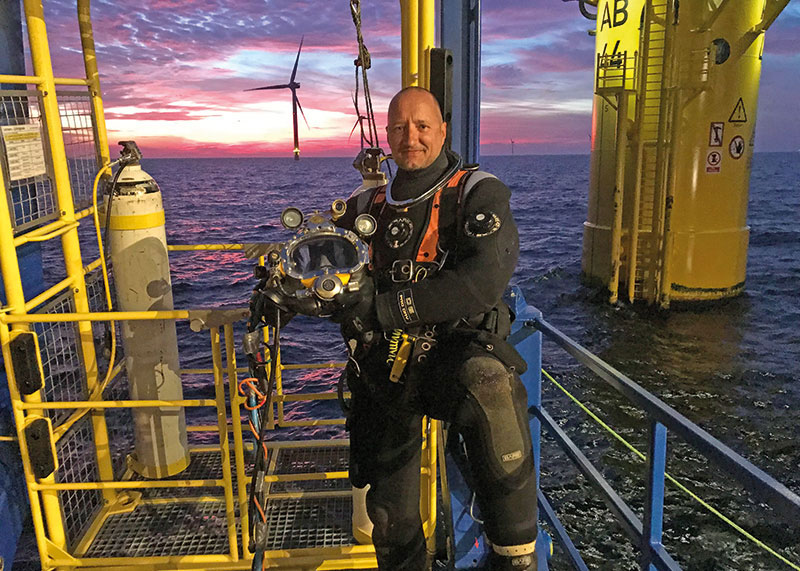
Bereit für den nächsten Tauchgang?
Dann werde Teil von BALTIC TAUCHER und arbeite an Projekten, die nur wenige Unternehmen weltweit realisieren können.
Dein nächster Schritt = Abtauchen und bewerben
Wir freuen uns auf Ihre vollständigen Bewerbungsunterlagen mit Angaben zum frühestmöglichen Eintritt per E-Mail an:

Feasibility study in accordance with Section 4.2 of the Directive on the Promotion of Research, Development and Innovation of the State of Mecklenburg-Western Pomerania dated 10 April 2015, amended on 27 May 2019
European Regional Development Fund (ERDF) Programme of the State of Mecklenburg-Western Pomerania – Funding period 2021 to 2027
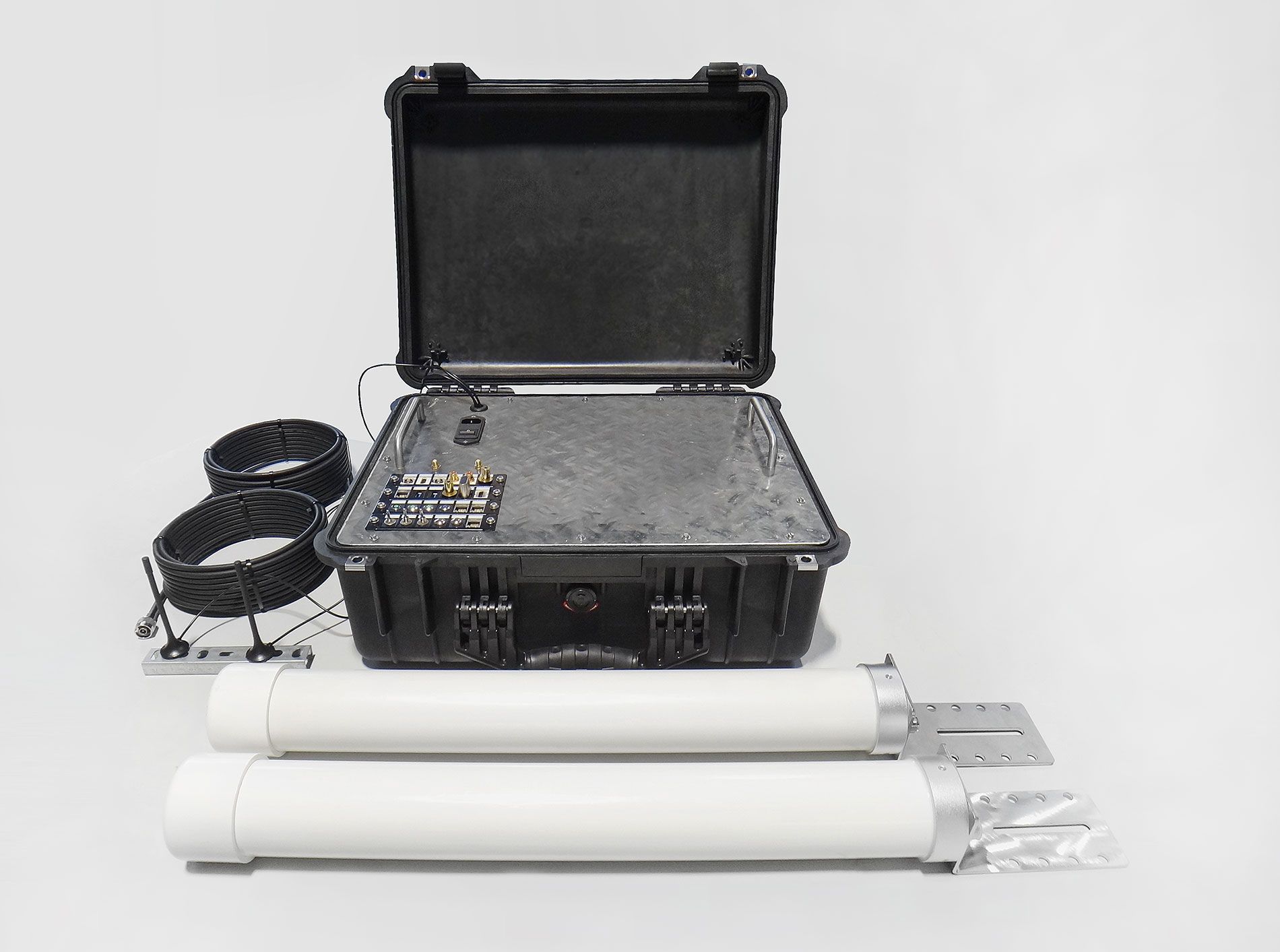
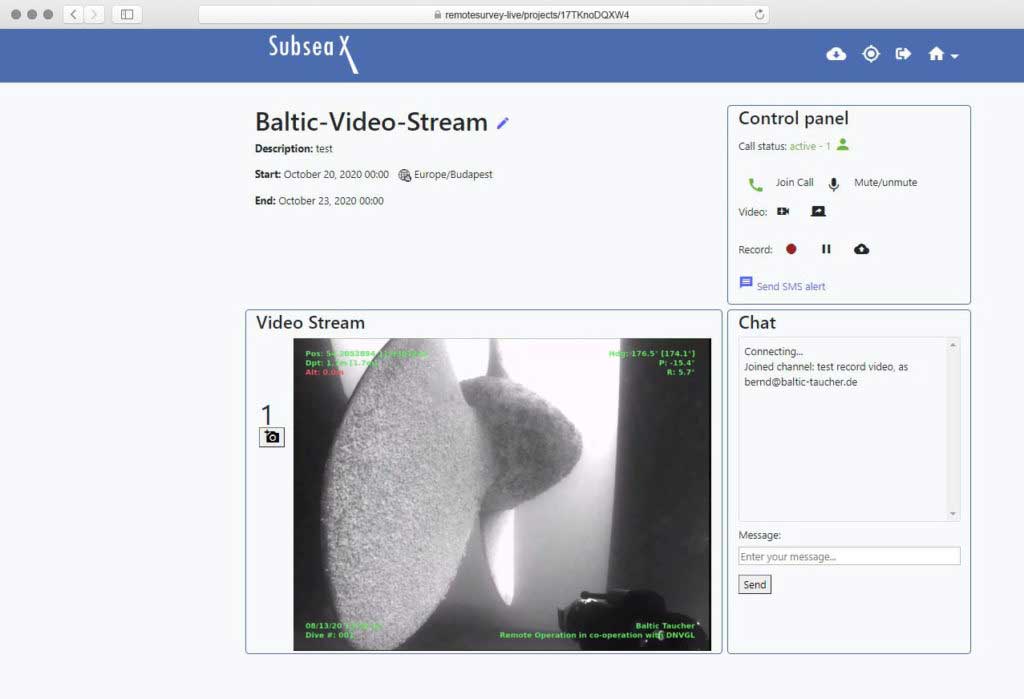
BalticStream is a flexible hard- and software solution for streaming live videos from remote places to anywhere in the world. It was developed by Baltic Diver Germany in cooperation with a Norwegian partner.
On-site almost any kind of live video input can be fed into BalticStream. The data is transferred via mobile telephone or satellite networks and streamed to an online video platform, which can be accessed from usual desktop PCs. In addition, the equipment enab- les a live communication between the workers on-site and the online participants. The on-site hardware is designed to be robust and lightweight and can be operated by any technician after a short introduction. The online platform is easy to access and to handle. This technology can be used in various scenarios.
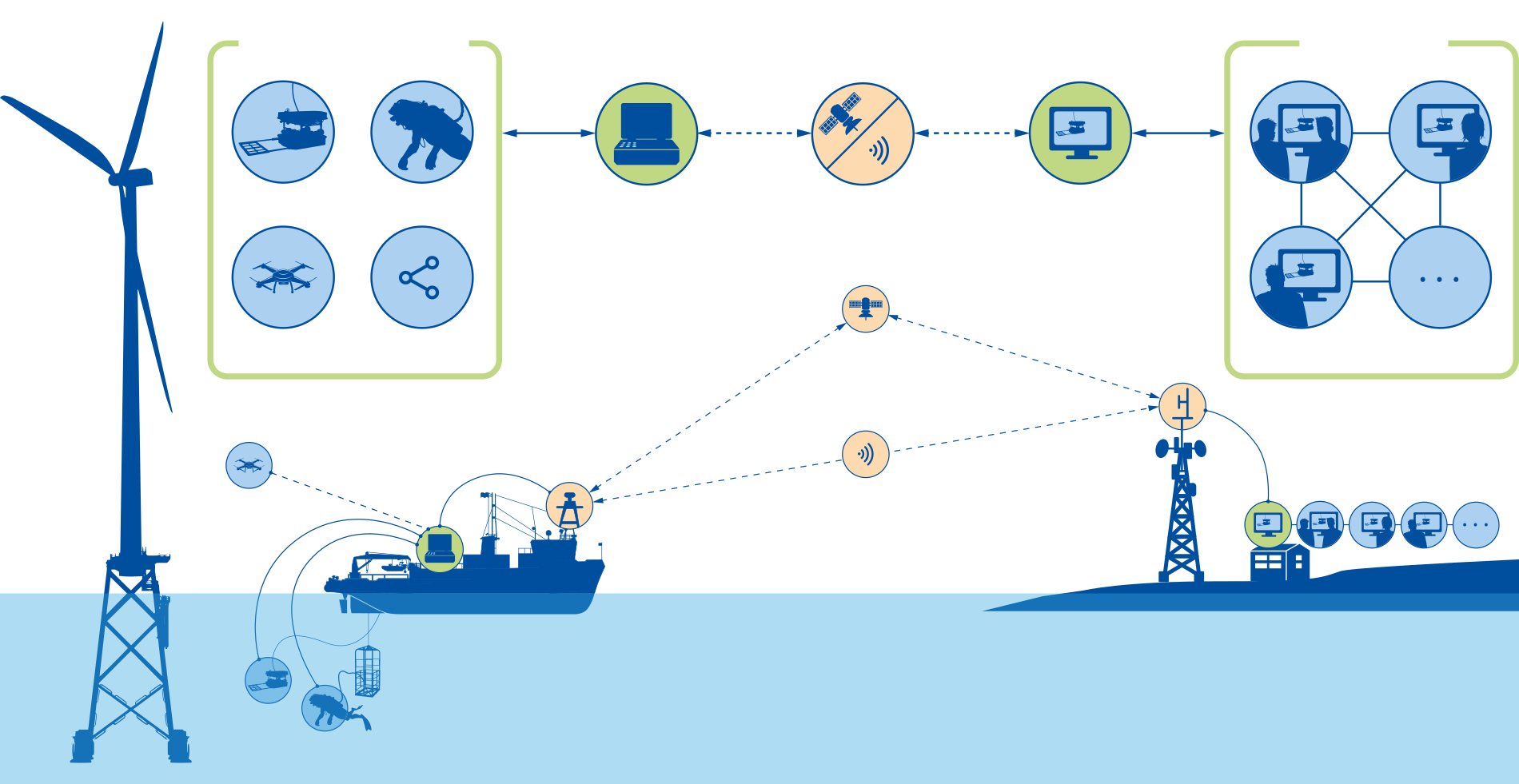
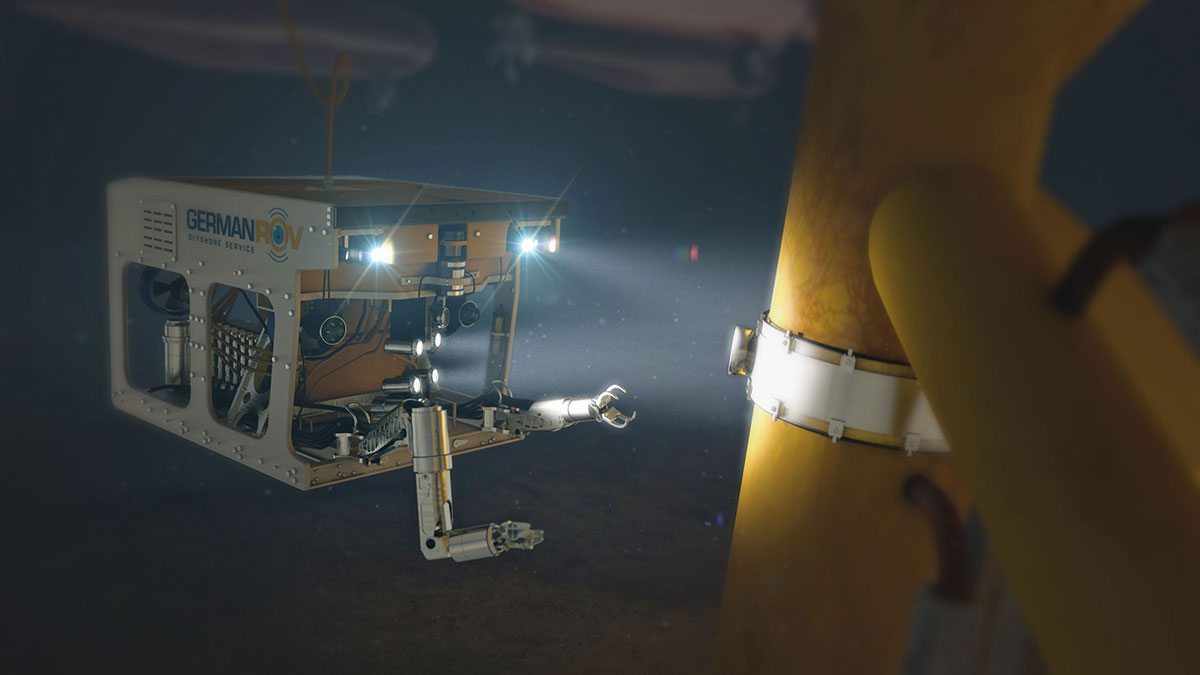
In-water survey of vessels via diver or ROV: The class-surveyor does not need to be present on-site. He can access the survey from the office and directly talk to the operator and diver on-site.
Remote assistance: If a technician faces an unexpected challenge on-site, he might need support from a remote colleague or expert. No matter whether he is a mechanic in a wind turbine nacelle or a diver facing an UXO. Via BalticStream, the expert team can follow the task on-site on screen and provide the necessary remote support. Valuable time and travel costs are saved.
Many other client-specific scenarios are possible. The hard- and software can be adapted in-house for special requirements.
| Link | www.remotesurvey.live |
| Video | 1 to few with <1 s delay, 1 to any number of viewer with ~ 3 s delay |
| Audio | Voice loop with any number of participants |
| User access to live streams | temporary link for external temporary users |
| Requirements for online participants | internet with … mbit/s, browser, microphone |
| Record | live recording, archiving and playback |
| Special features | shared whiteboard e.g. for technical drawing annotation |
| Description | end-to-end live streaming and conferencing solution for any video source through a dedicated web platform |
| Communication | end-to-end, two-way, live audio communication for multiple participants |
| Developer | Baltic Diver Germany, Subsea X |
| Year of development | 2020 |
| Possible video inputs | HDMI, BNC analog and digital, convertable to DVI, s-video, VGA, composite etc. |
| Possible audio inputs | 2 x RCA/chinch stereo, 3.5 phone connector stereo, sampled with 44.1 kHz |
| BalticStream equipment on-site | streaming box (20 kg), antenna, cables (video, audio, antenna), headset |
| Antenna | 2 x MIMO antenna with 2 x 8dBi+ each |
| Electric supply | 220 V 50 Hz, 30 W power intake, battery for 1-2 hours |
| Operator | requires short introduction, can be part of working team |
| Possible networks | mobile telephone networks (GSM, LTE), satellite, WLAN |
| Required data rate | min 0.5Mbps (for vbideo streaming), ideal: 2 MBPS |
| GSM Provider | Vodafone 2 x LTE |
| SAT Provider | vsat 8/2 MBit |
| Server | video streaming and conferencing server hosted on Azure cloud |
| Router | gigabit router, with DualSim and WLAN |
| Powerbox | i7, NVMe, mobile system with UPS |
| CaptureCard | analog or digital input video (legacy <1 s), resolution 2048 ×2048 px |
| All components | industrial standard (wide temperature tolerance, EMC) |
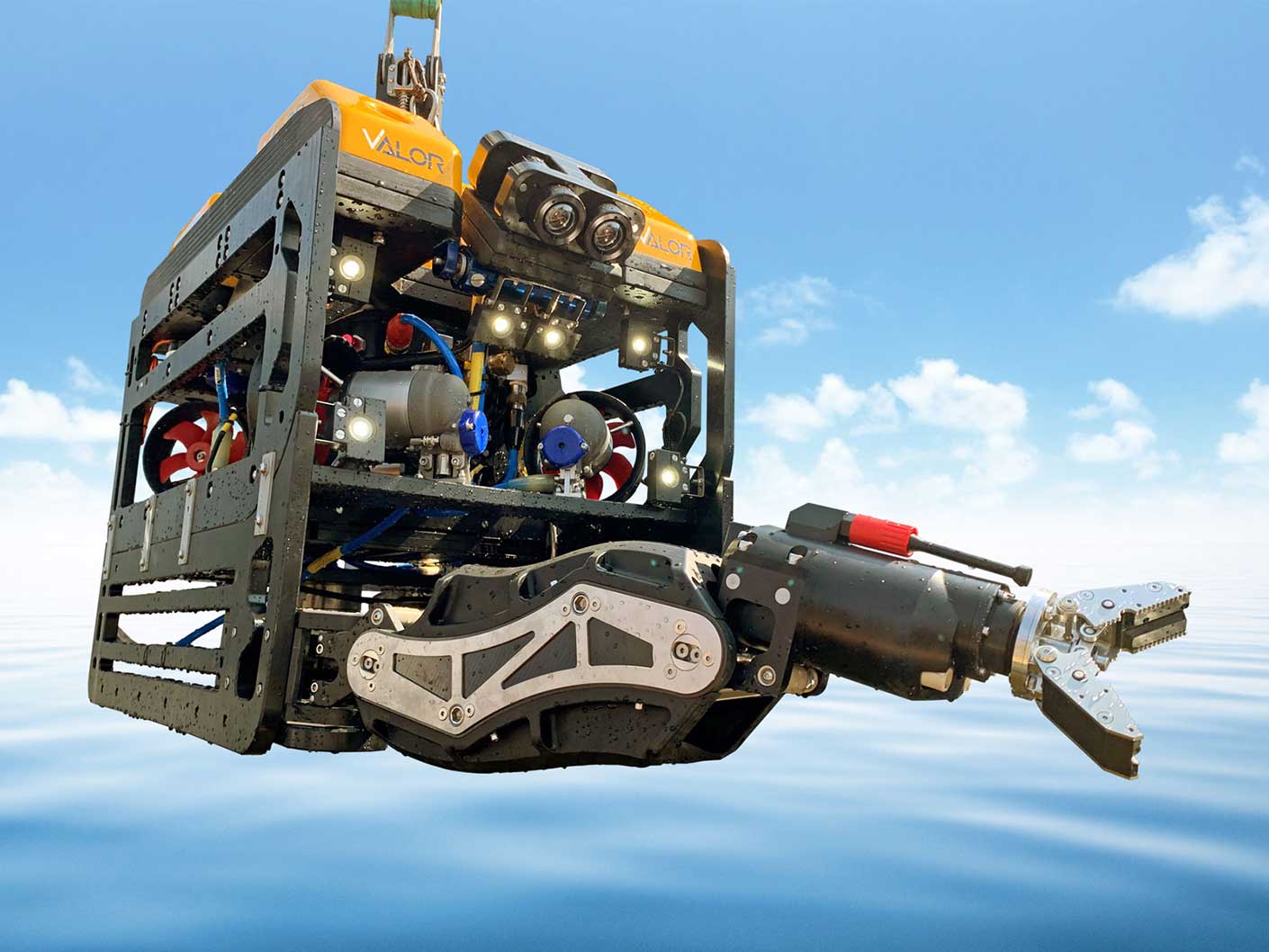

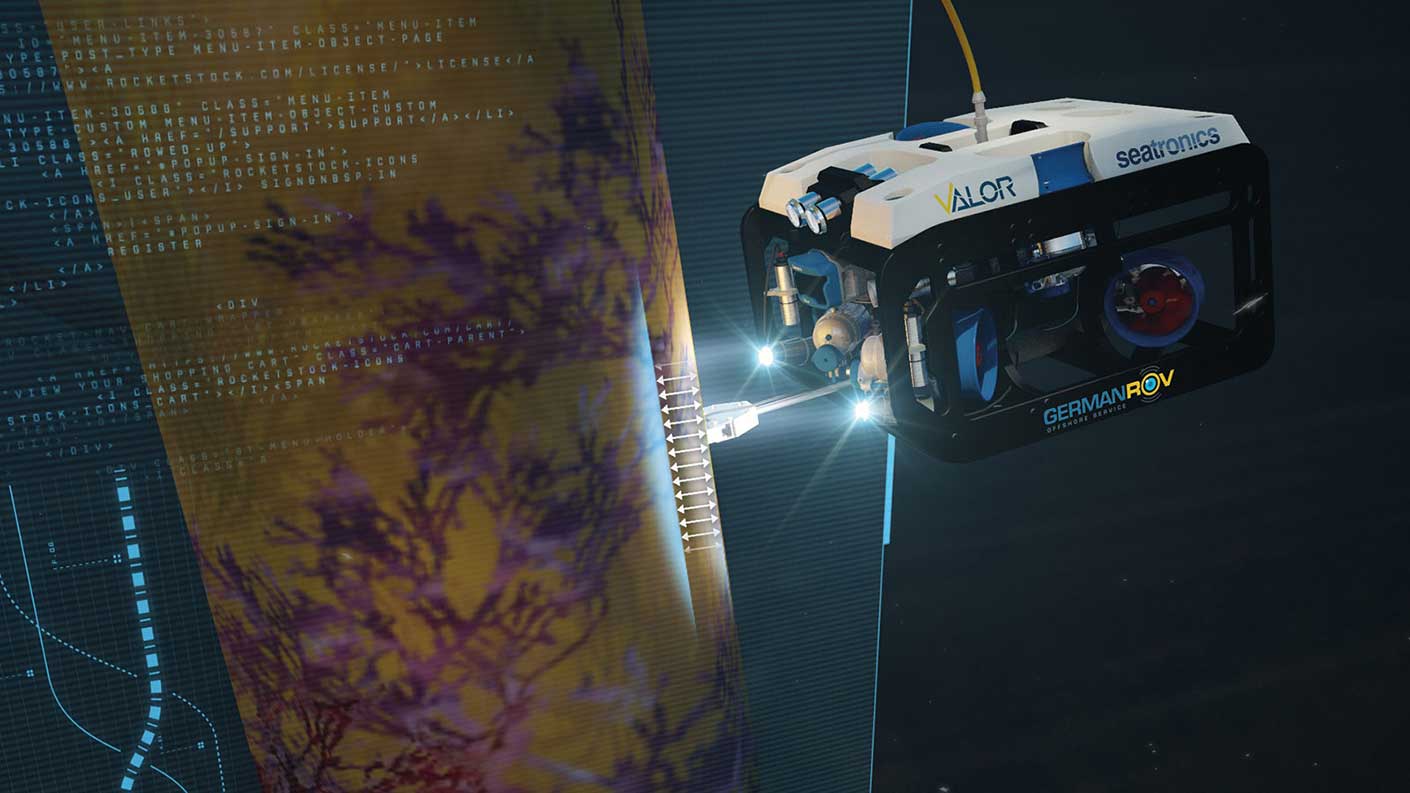
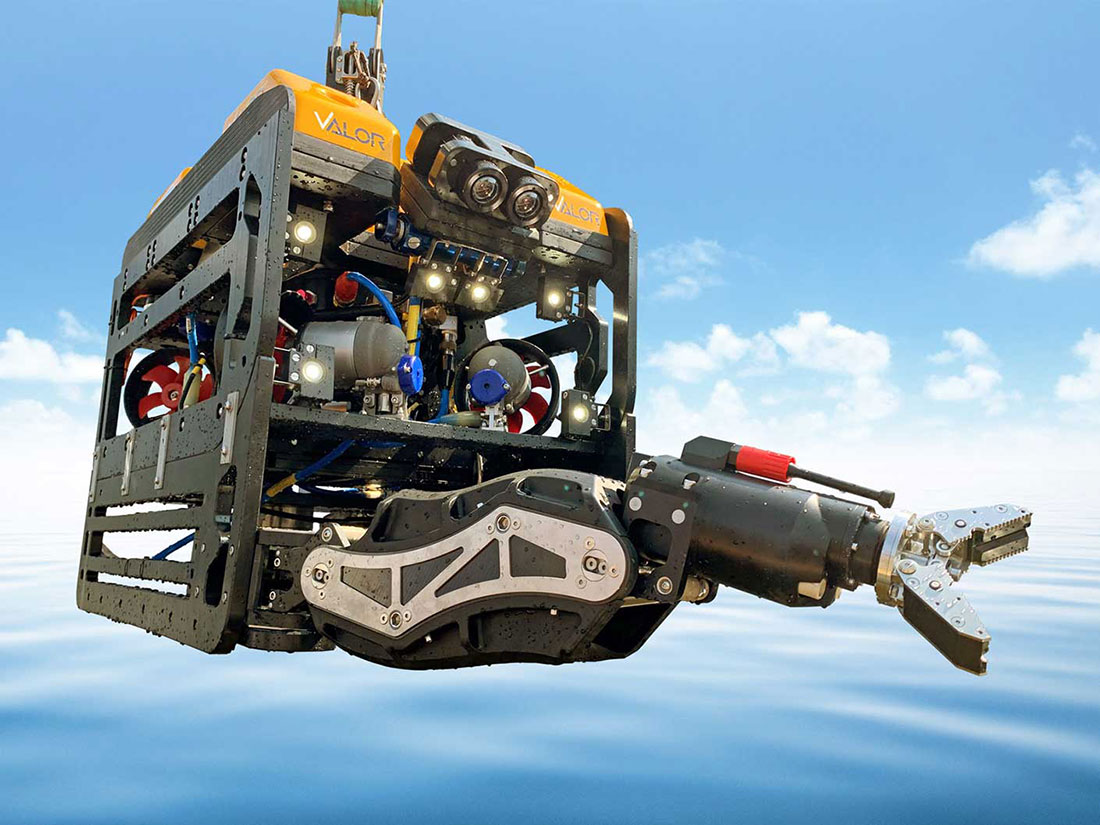
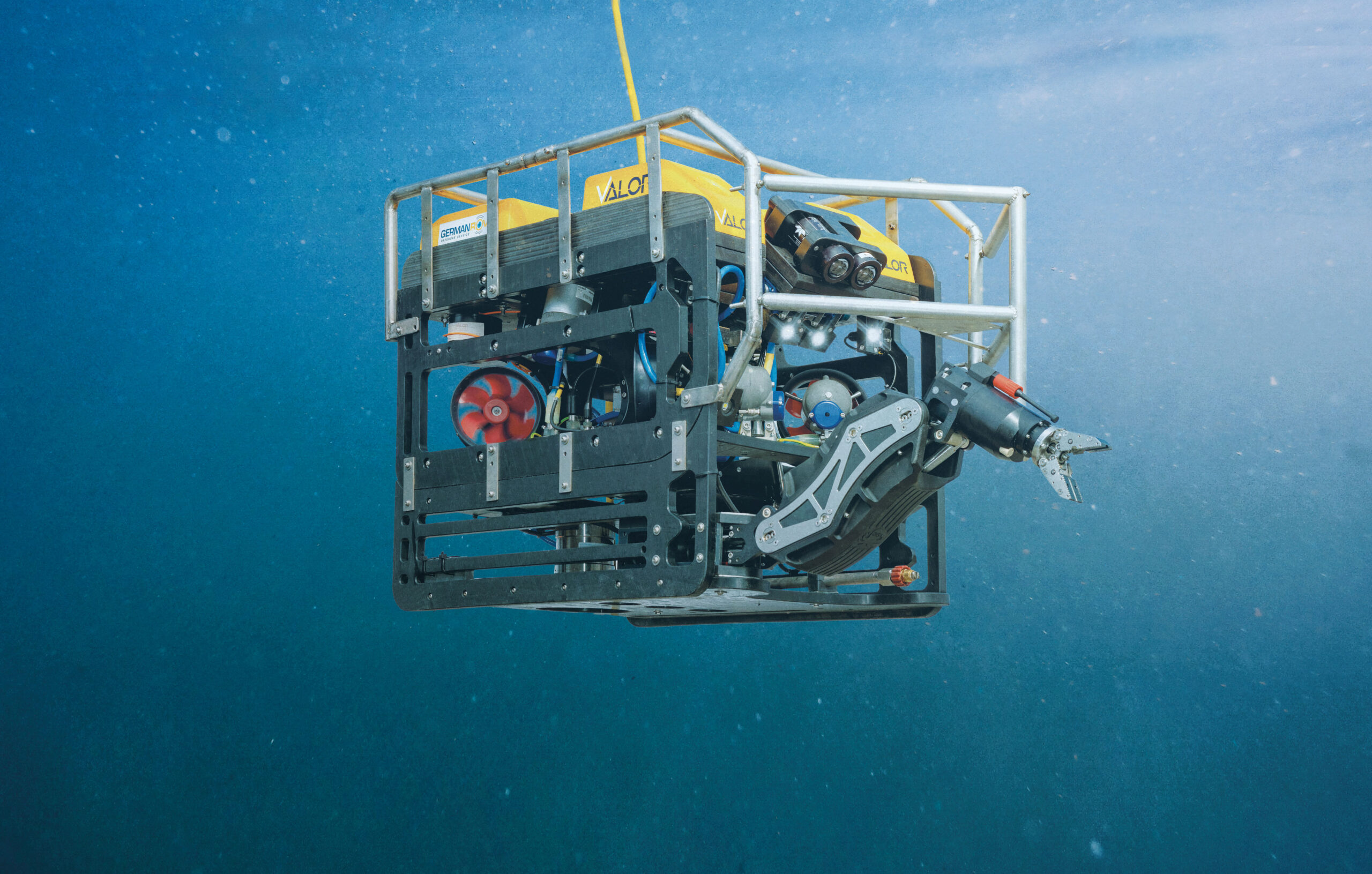
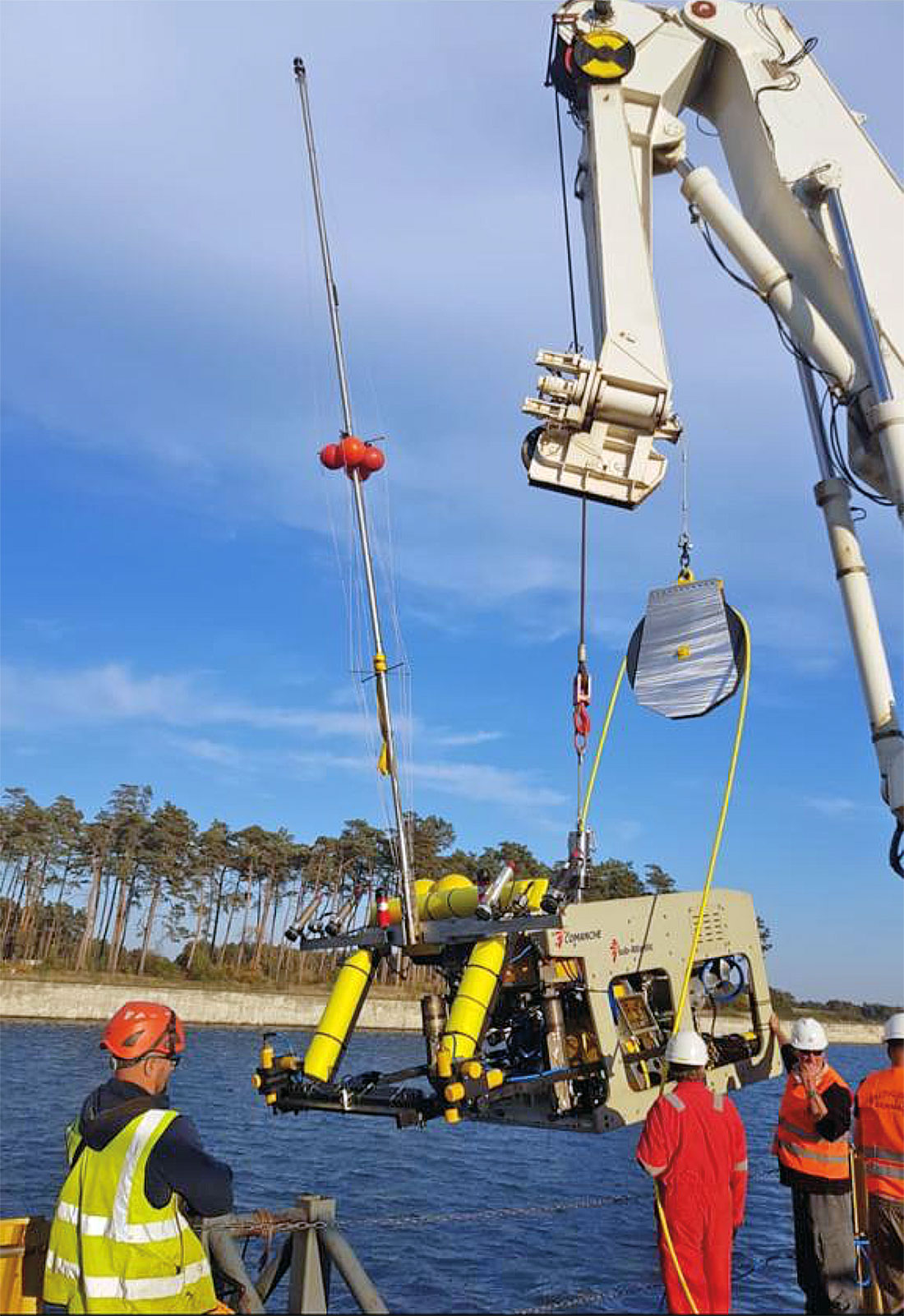
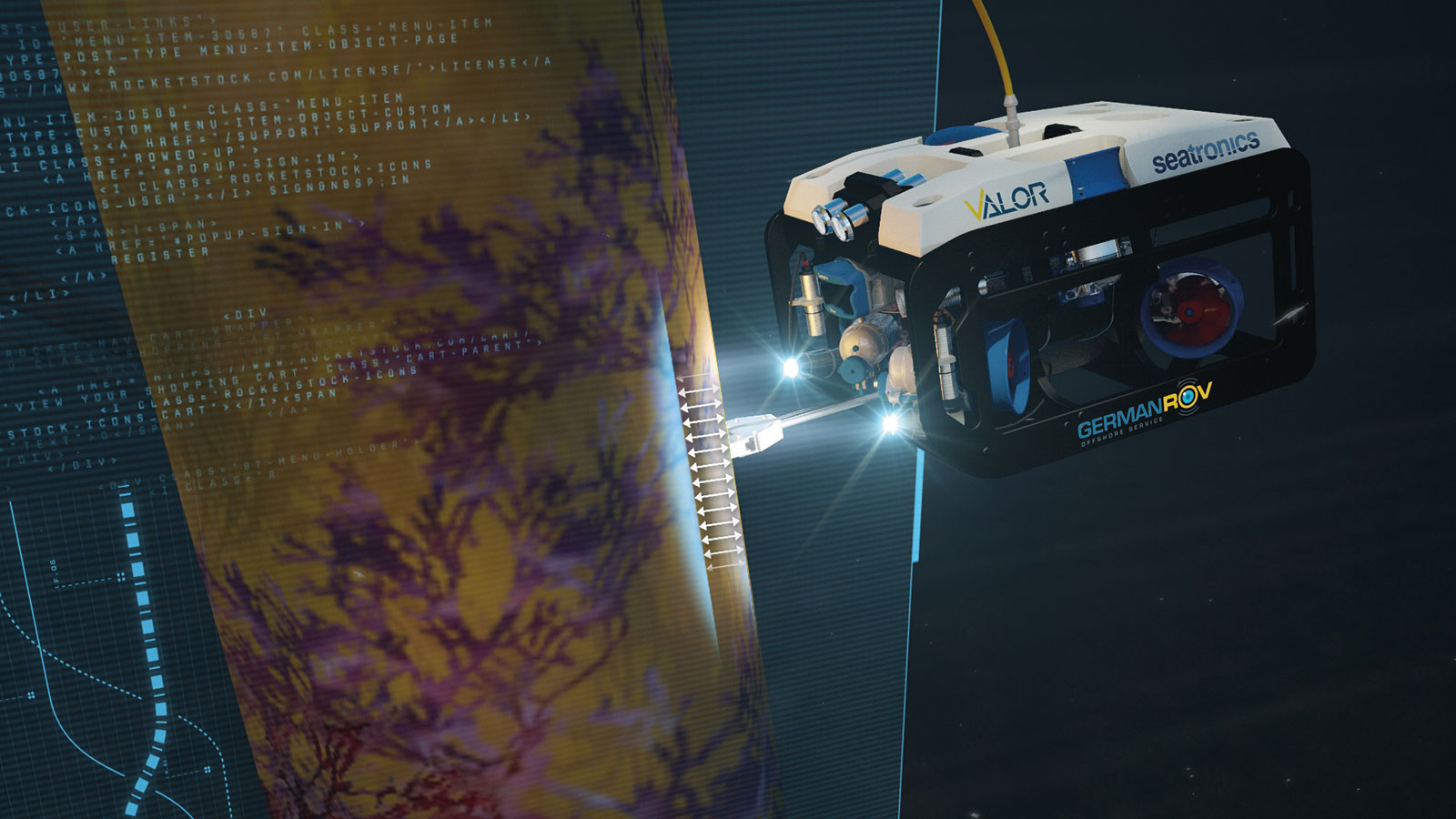
| Manufacturer | Seatronics |
| Year of built | 2020 |
| Length | 860 mm |
| Width | 600 mm |
| Height | 550 mm |
| Weight in air | ~ 80 kg |
| Depth rating | 300 m |
| Number of horizontal thrusters | 4 thrusters vectored at 45° |
| Number of vertical thrusters | 2 thrusters vectored at 30° |
| Type of thrusters | RS485 controlled brushless DC thrusters, type SPE75 |
| Thrust forward/backward/lateral | 71 kgf |
| Thrust vertical | 43 kgf |
| Max. working current speed | 2.5 kn |
| System input voltage | 3 Phase 415 V AC (operating range 373 – 456 V AC) |
| System input current | 20 A (base system) |
| ower delivered to ROV | 800 V DC, 10 kW base system |
| Power deliverable to payload | software configured 12 V to 48 V @ max 3A per user port |
| Weight control unit | ~ 80 kg |
| Display | 1 x 17.3” rackmount HD monitor, 1 x rackmount HD touchscreen monitor |
| Input device | topside controller c/w hand controller |
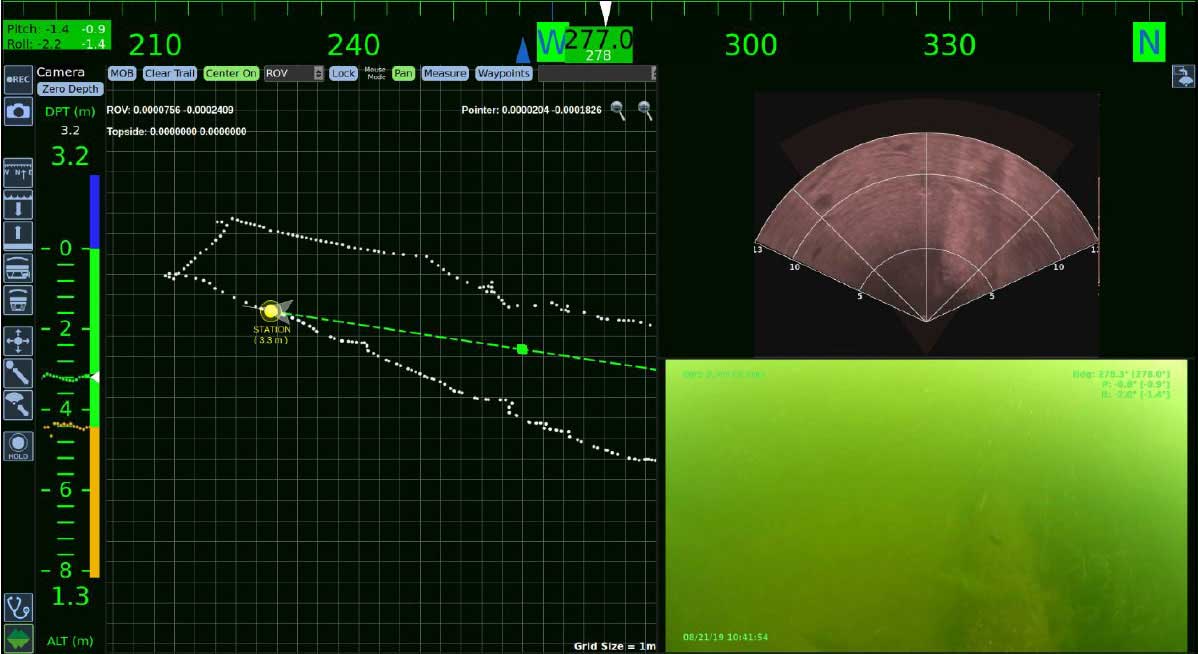
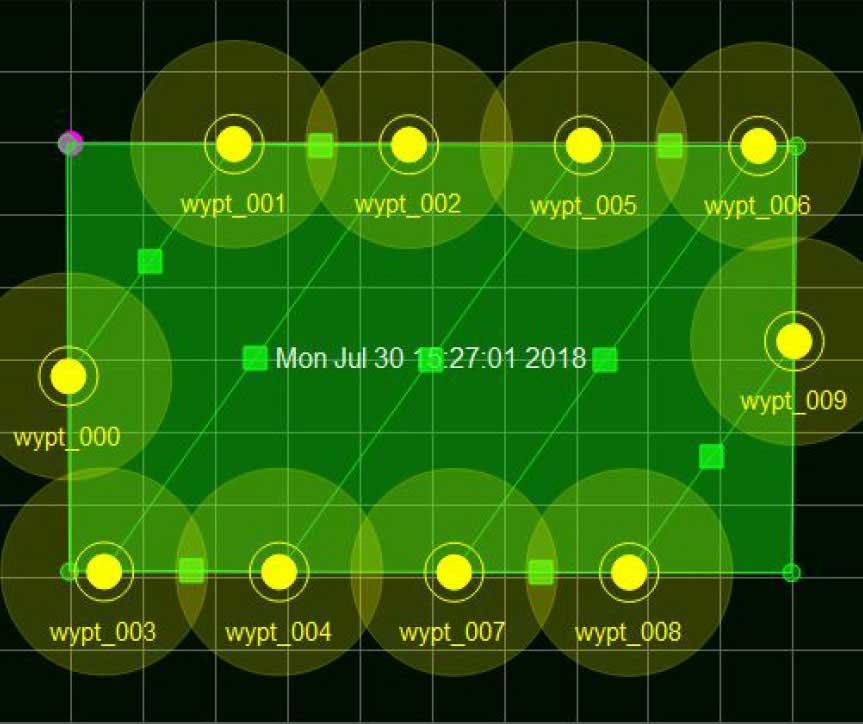
| Pilot aids | very pilot friendly system, auto heading, auto depth, auto altitude, auto hover with pilot notch function, auto movement to point of interest, auto gridline survey |
| Tether length | 150 m loose and 350 on electric winch |
| Diameter | 16.5 mm |
| Tether capabilities | 6 x power conductors, 4 x SM fiber, 1 x shielded twisted pair |
| Data capacity | up to 10 GBits/s at 1 Gb/s per user port |
| Number of lights | 6 |
| Type of lights | teledyne 1500-B-LED, 1500 lumen dimmable LED |
| Type and number of cameras | 2 x GigE cameras supplied (1 x monochrome, 1 x colored), option for additional 2 x 3G HD-SDI or 10 x GigE vision / IP cameras |
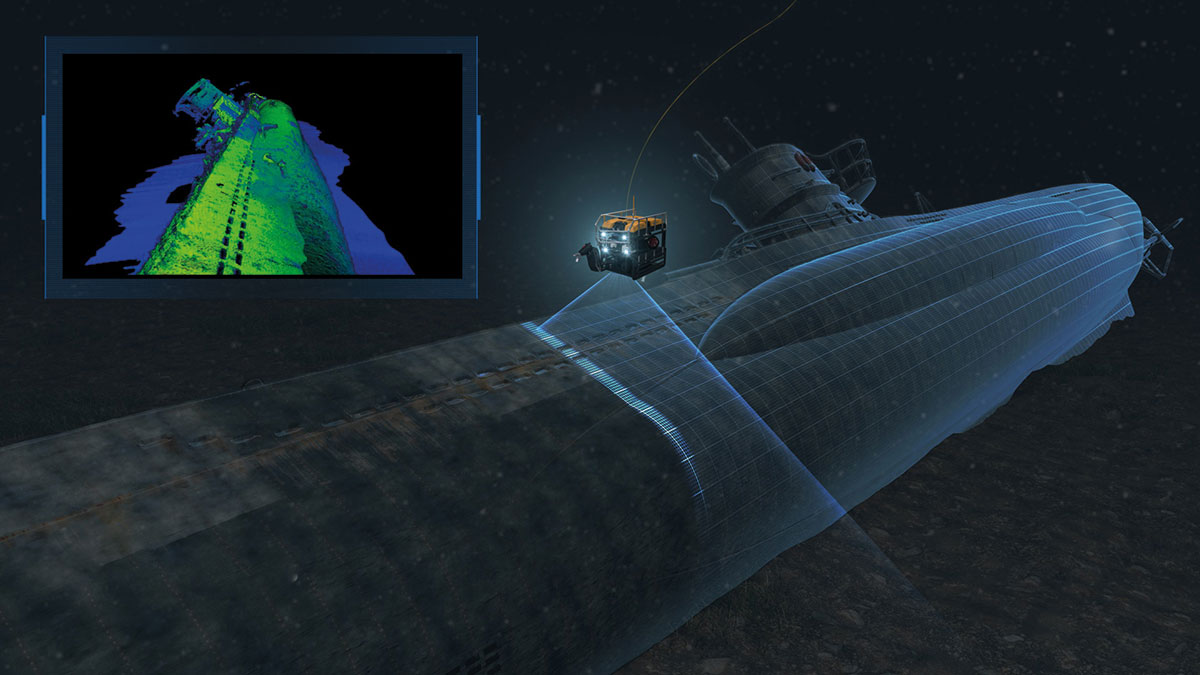
| Sonar | Gimini 720ik |
| Gyro c/w INS | Advanced Navigation MEMS gyro c/w Sublocus INS |
| DVL | Nortek 1MHz DVL |
| USBL | Sonardyne Mini Ranger USBL system incl. 2 x beacons and 2 x nano beacons |
| Launch and recovery | Lock-latch system |
| Tooling skid | fitted at standard |
| Max payload | ~ 21 kg |
| Through frame lift | 100 kg |
| Expansion ports | 10 x User connectors each supporting: variable 12V DC- 48V DC software configured power output gigabit ethernet RS232/422/RS485 (software selectable) time staped data by 1 PPS TTL sync in, TTL sync out analog in ± 10V 16-bits, analog out ± 10V 12-bits |
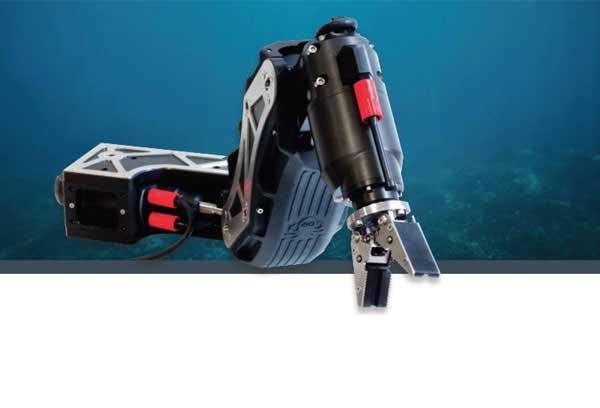
| Manipulator | IOS 5 function Orion manipulator |
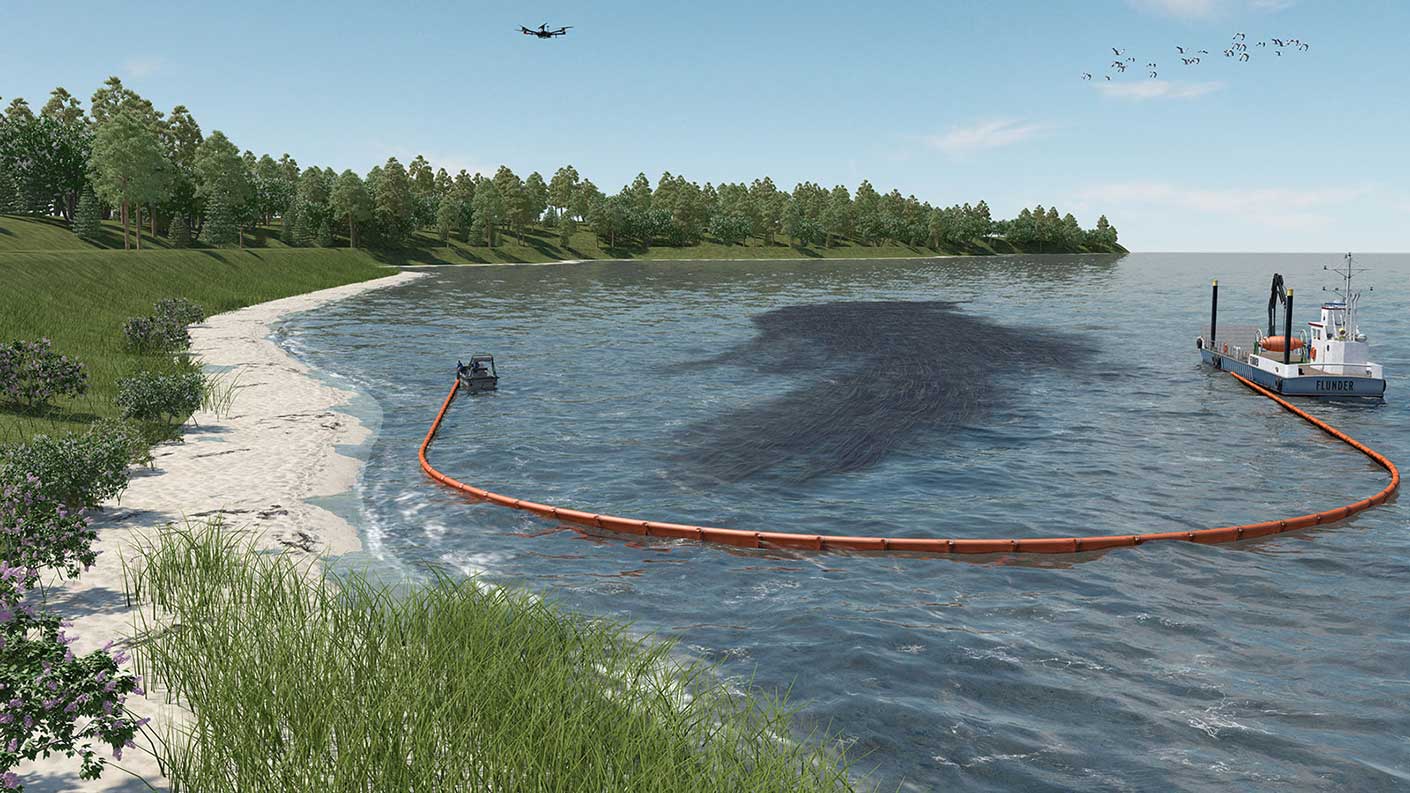
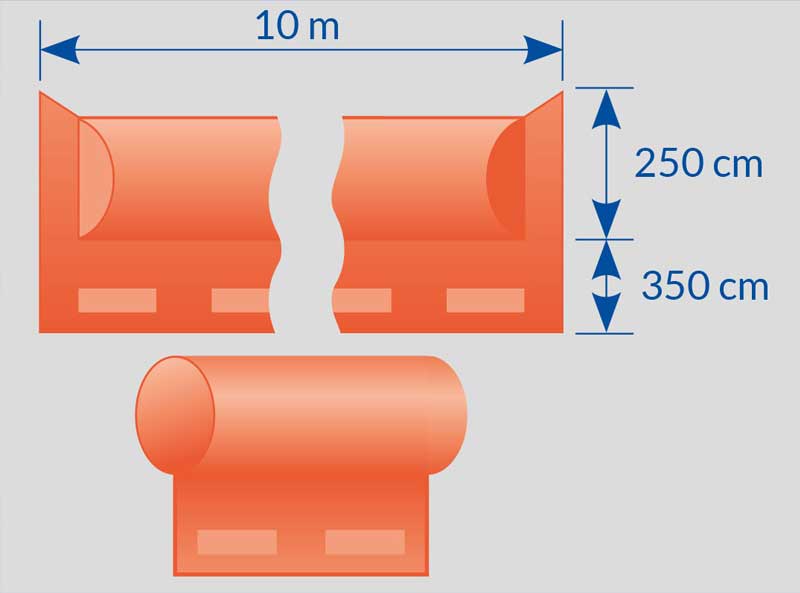
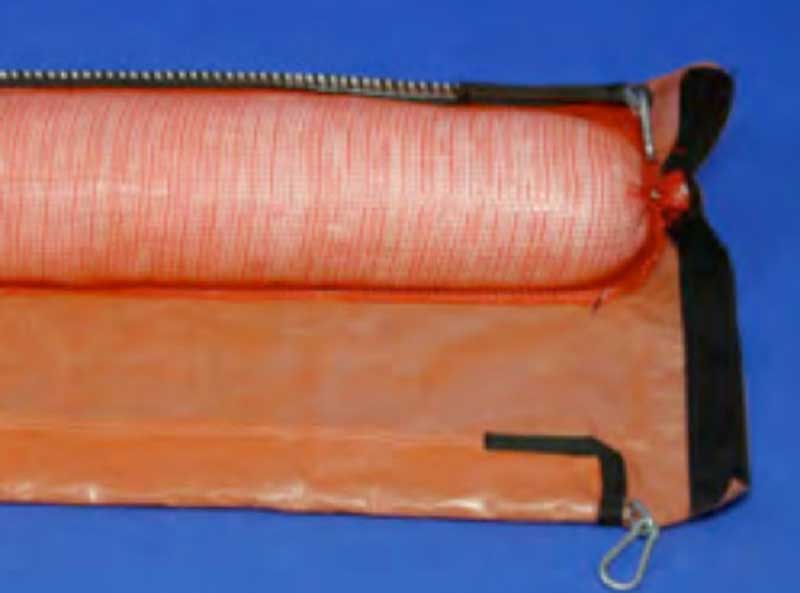
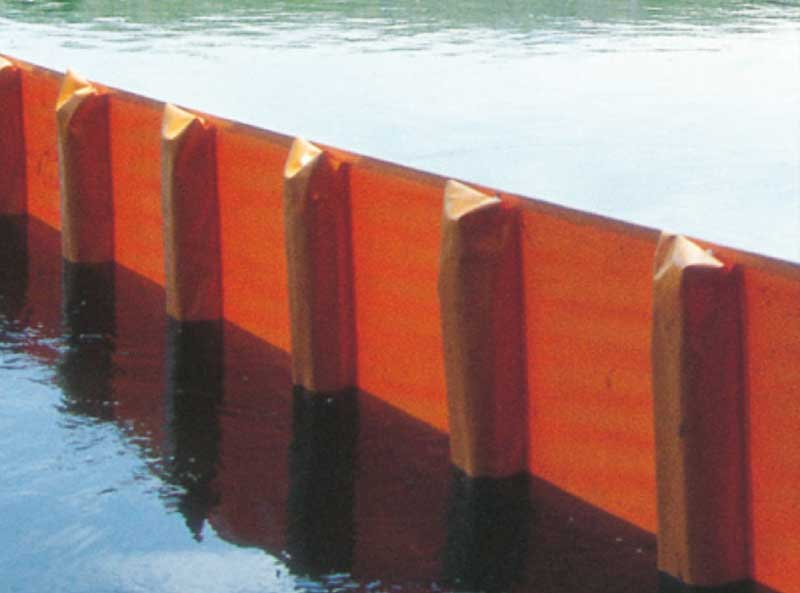

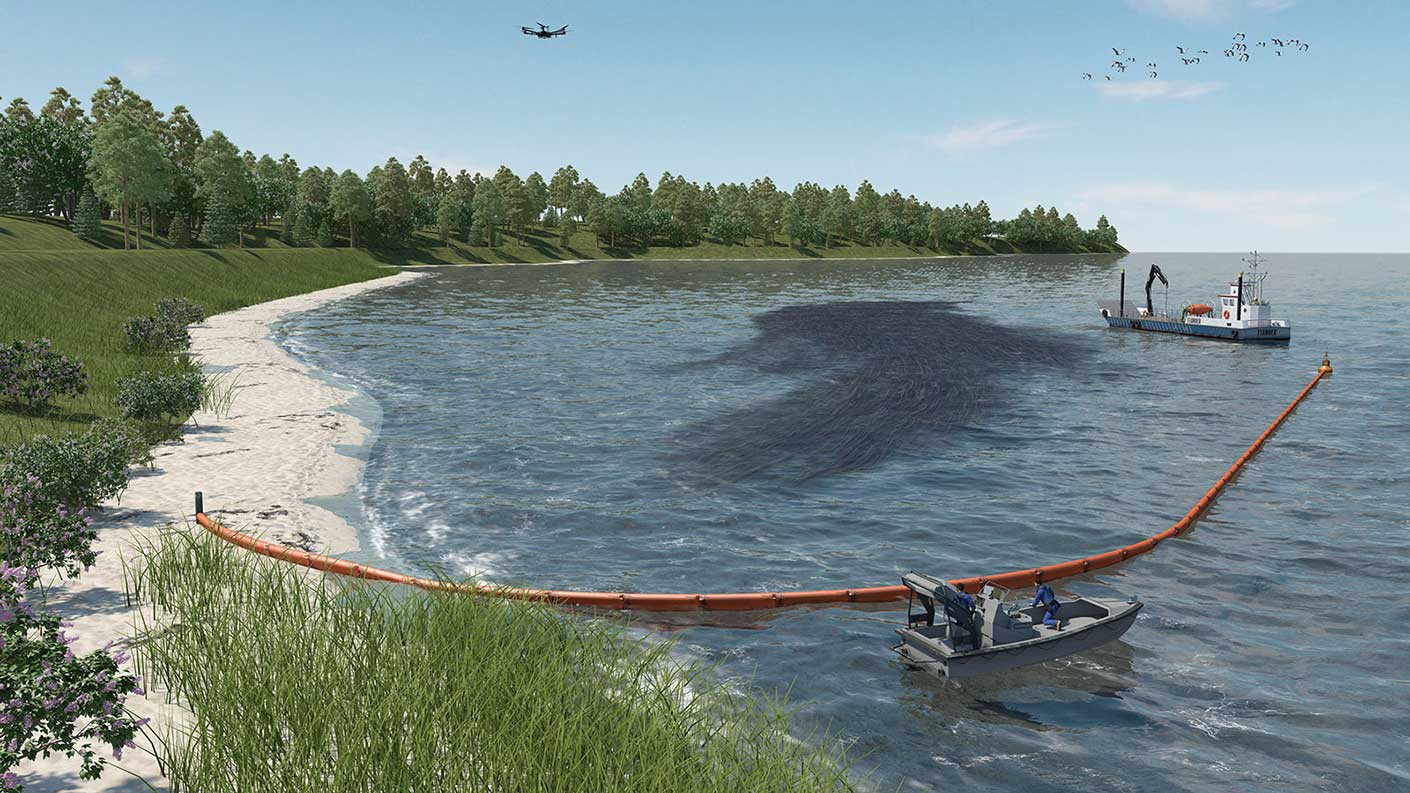
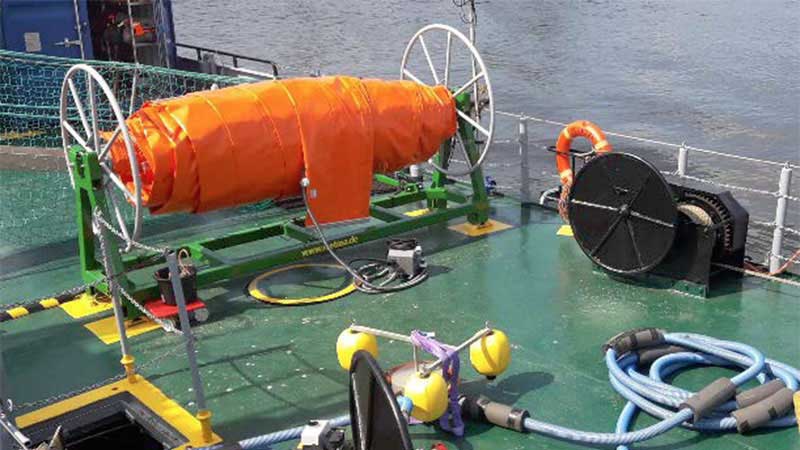
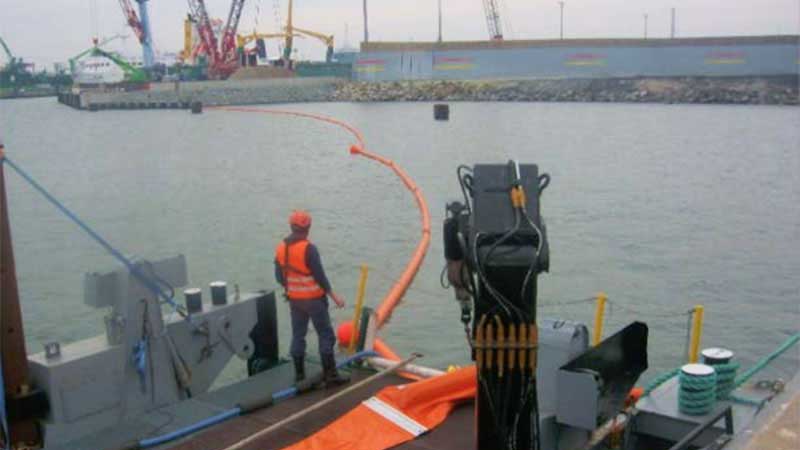
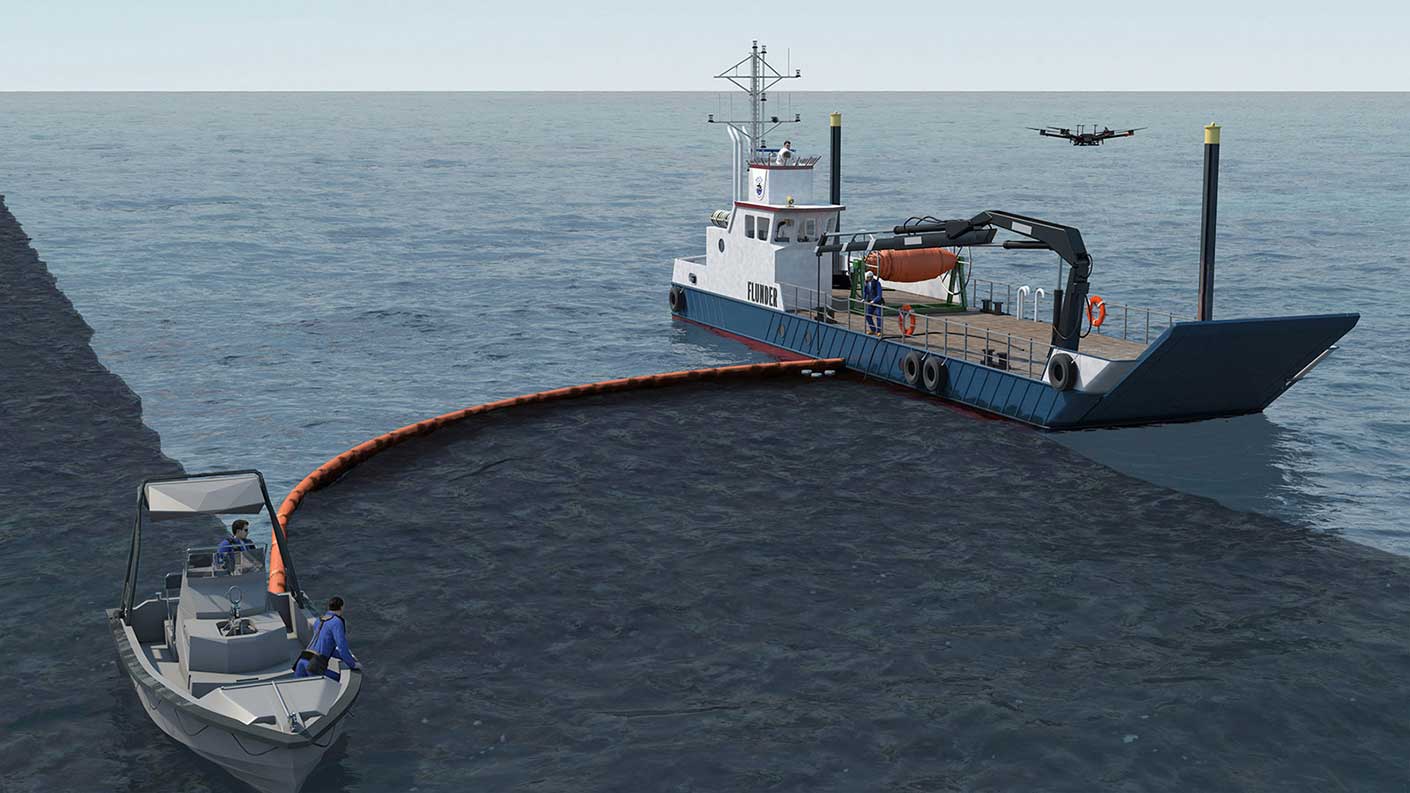
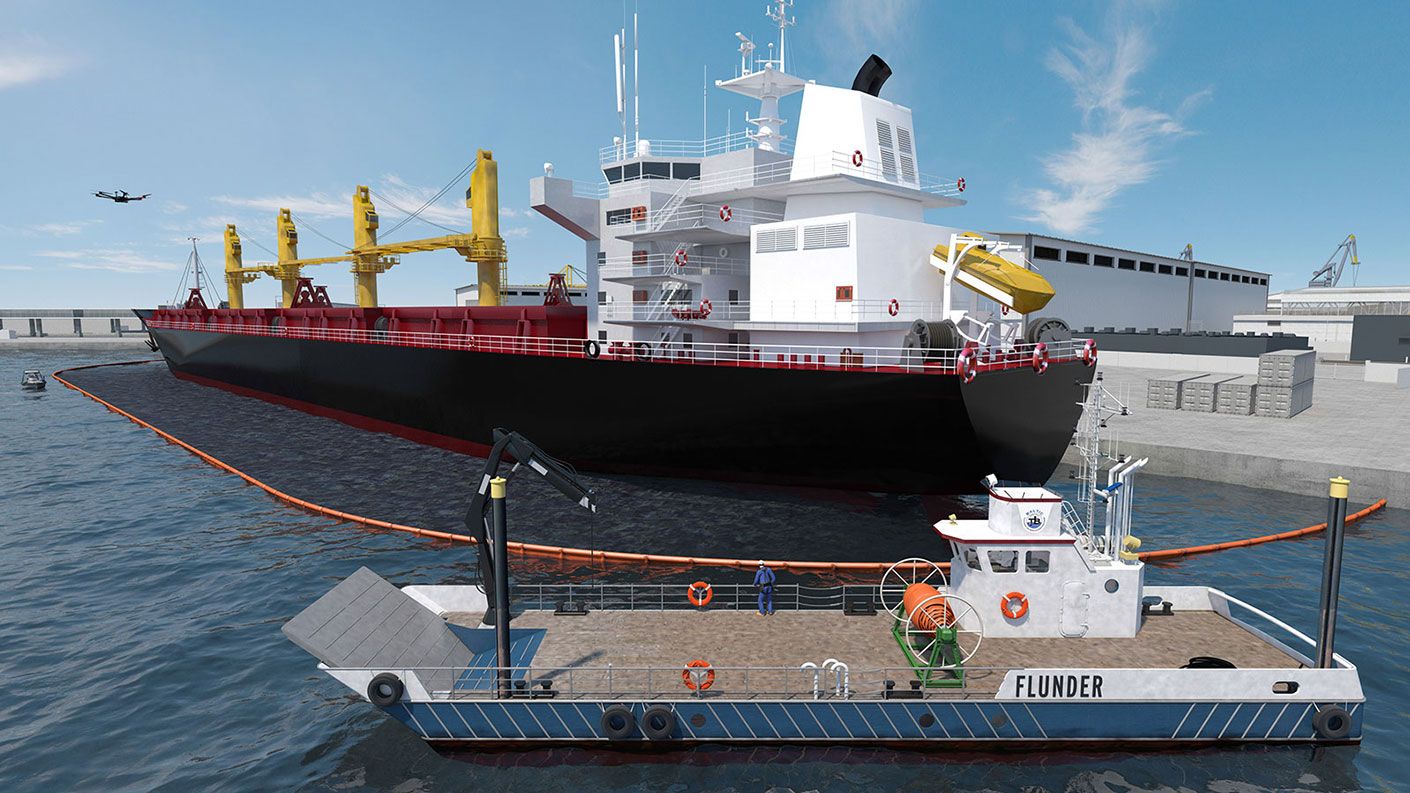
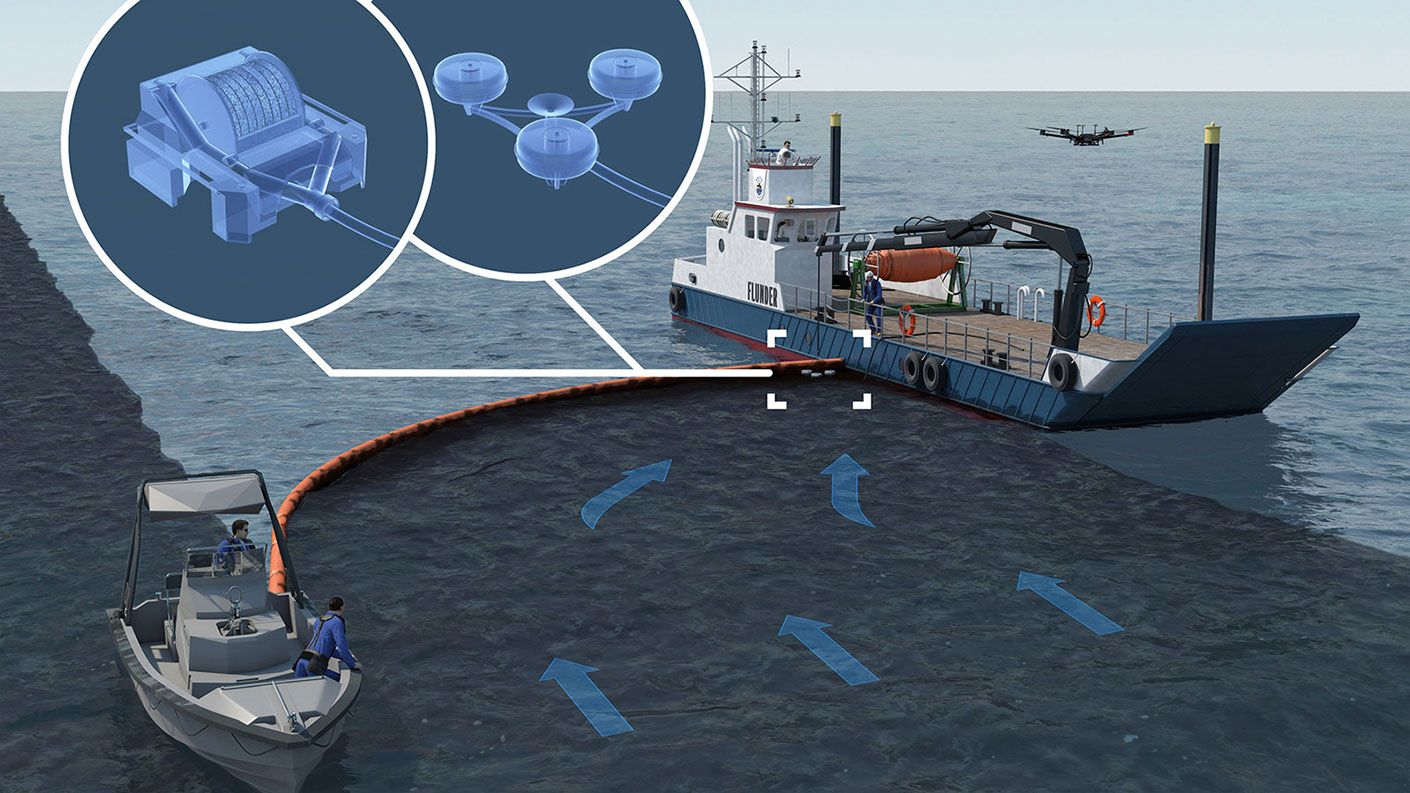
Oil spill response training in port
| Inflation curtain boom | 200 m (20 x 10 m) incl. compressor and ship-mounted hydraulic winch for fast deployment |
| Floating absorber boom | 230 m (10 x 20 m + 03 x 10 m) |
| Floating curtain absorber boom | 150 m (05 x 20 m + 10 x 05 m) |
| Solid flotation curtain boom | 100 m (04 x 20 m + 02 x 10 m) |
| Weir skimmer | 20 m³/h, incl. hoses and pump, Deployment by hand or crane |
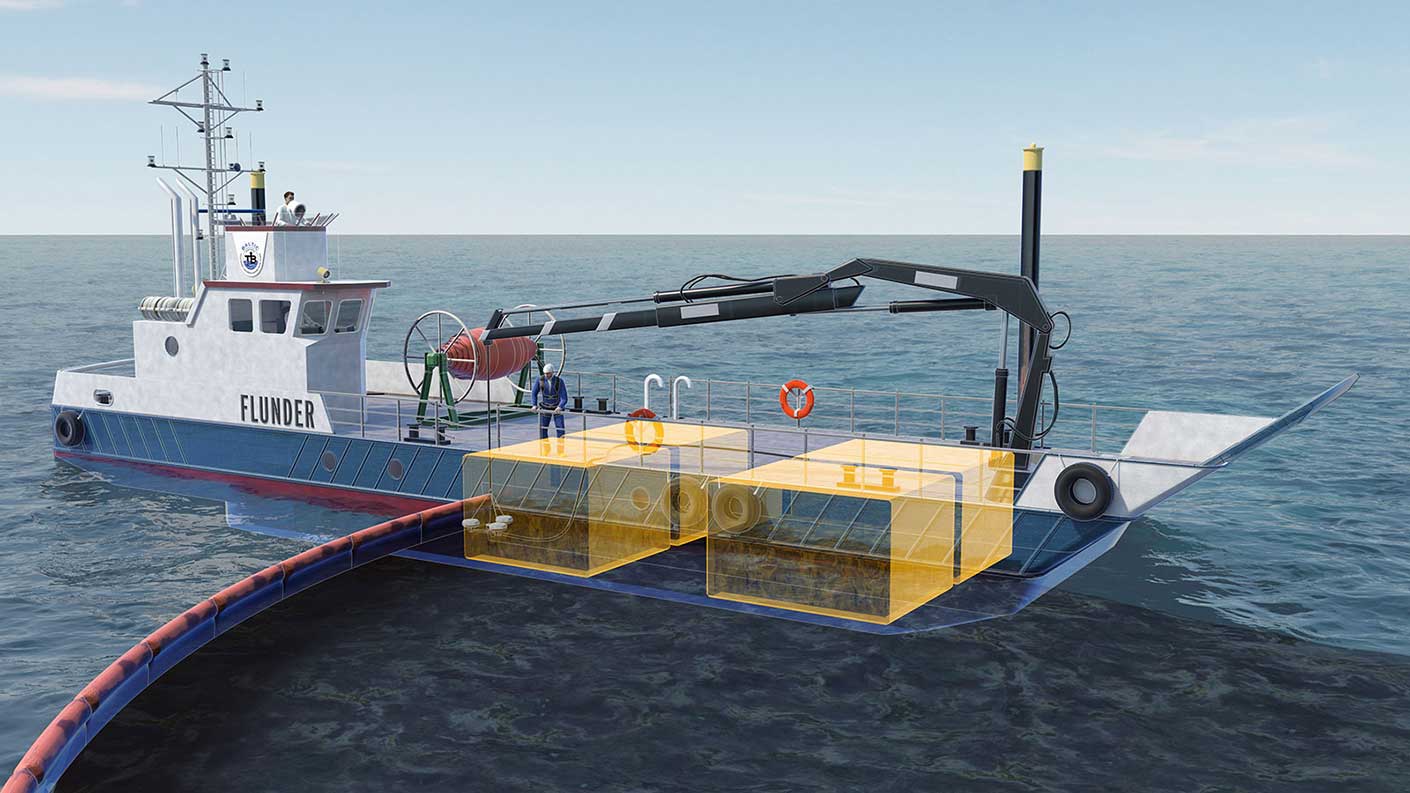
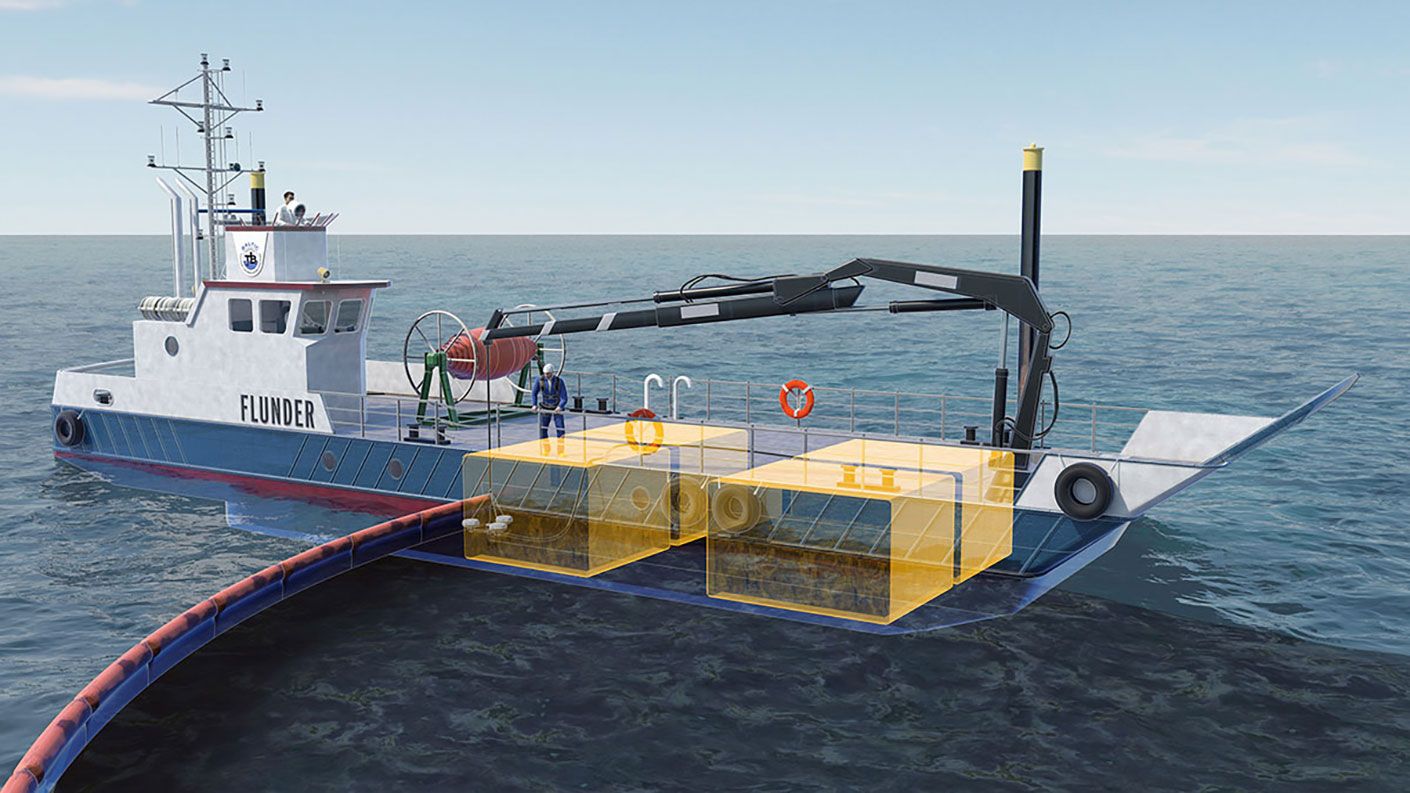
| Ship-mounted (MS FLUNDER) | 91.2 m³ (2 x 21 m³, 2 x 24.6 m³). expendable by additional tanks on deck |
| Portable tanks | Various sizes |
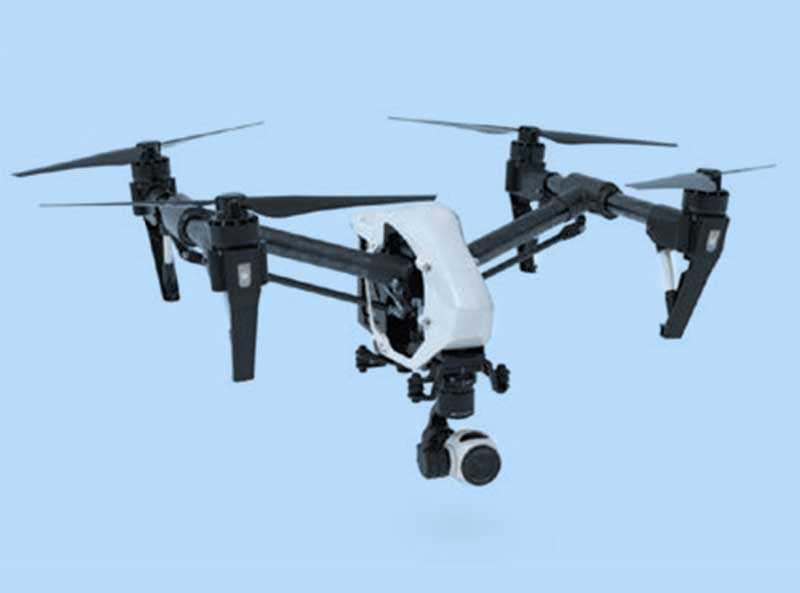
| Purpose | Aerial monitoring and documentation of oil spills, coordination of personnel |
| Model | DPI Inspire 1 |
| Weight | 2935 g |
| Camera | Zenmuse X3 with Gimbal, 12 megapixel, 4K videos at 30 FPS |
| 6 m, 100 PS, incl. Device for towing containment booms |
| Comprehensive PPE and auxiliary tools for oil spill response services, like absorber granulate, big bags etc. |
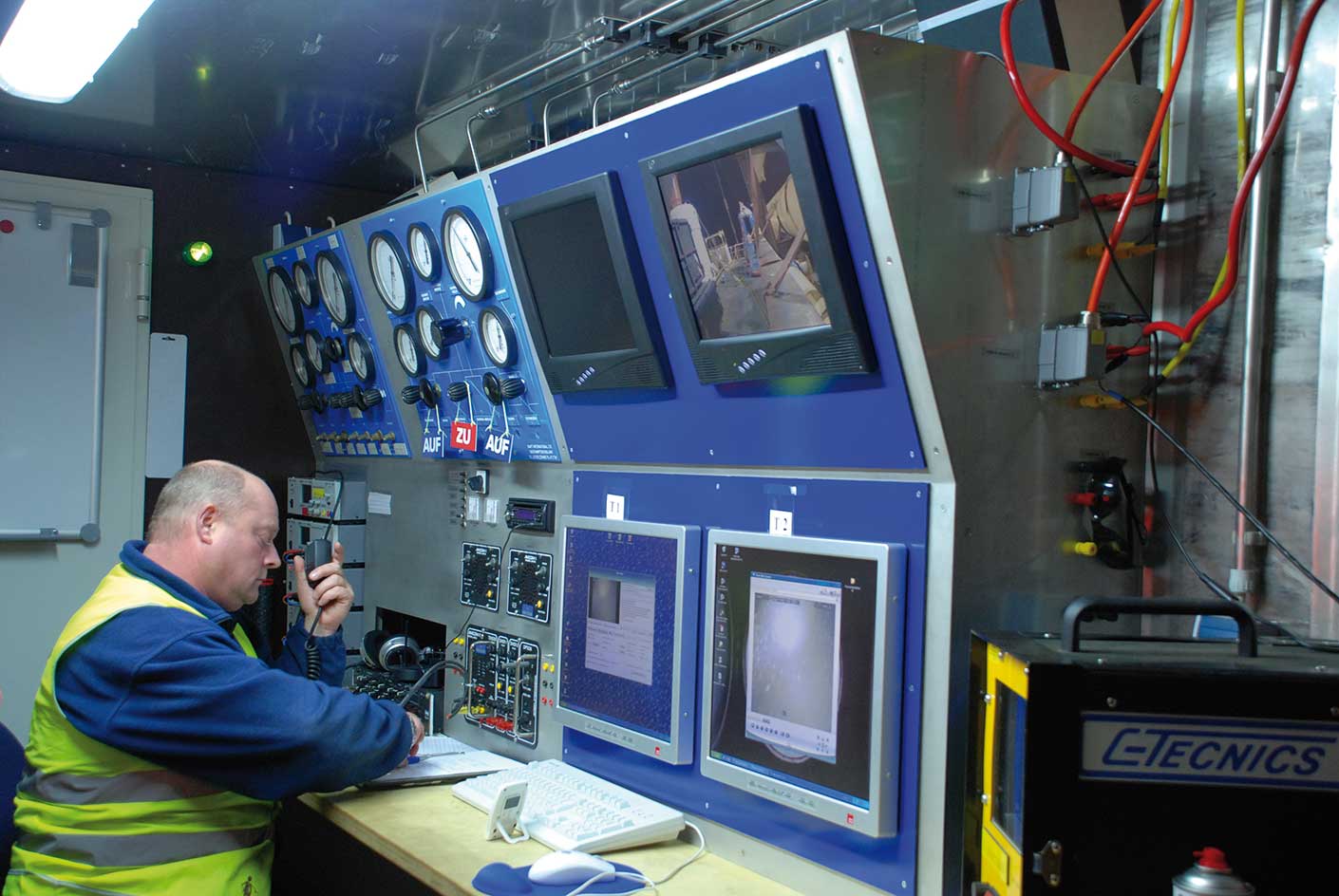
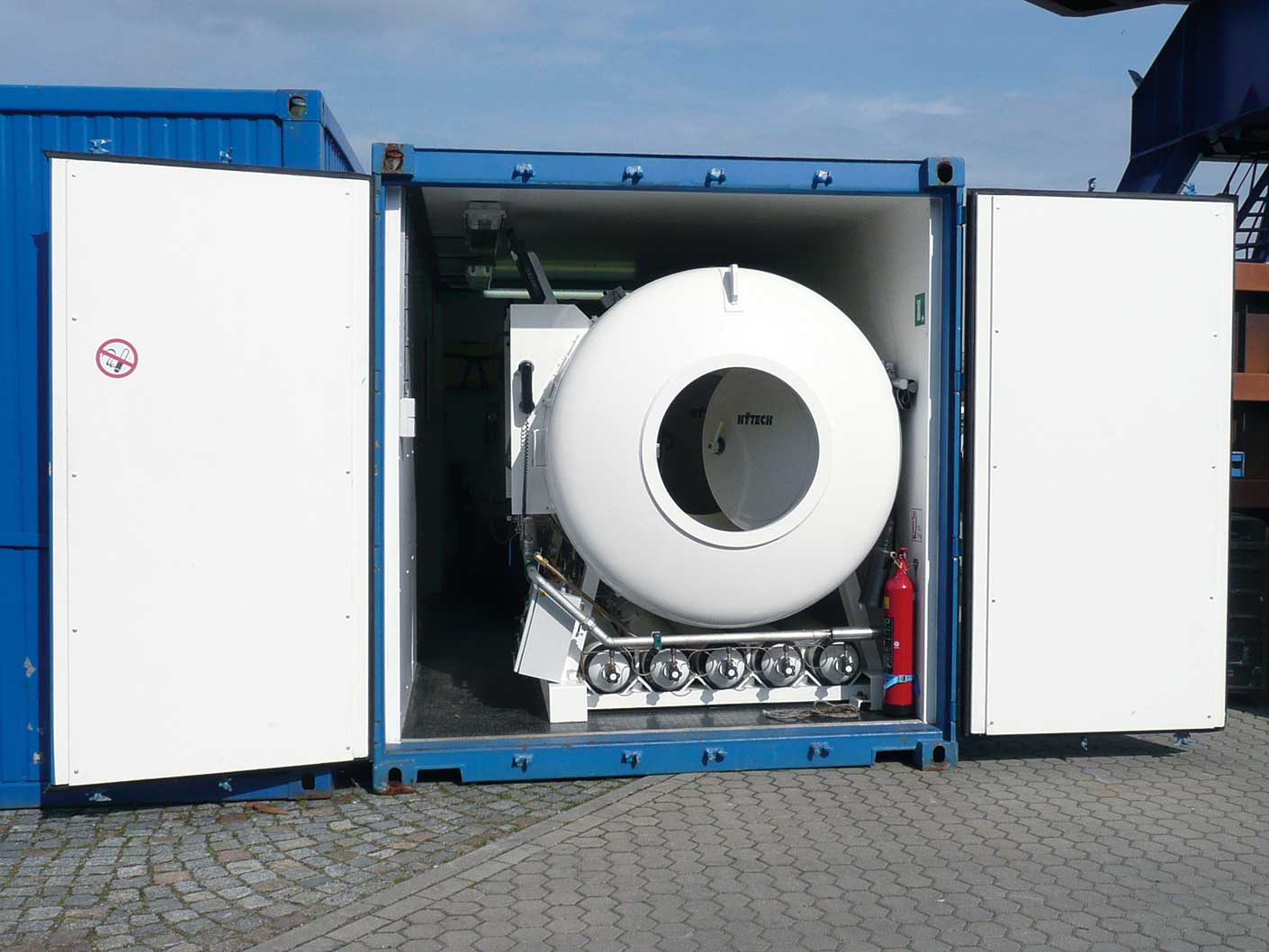
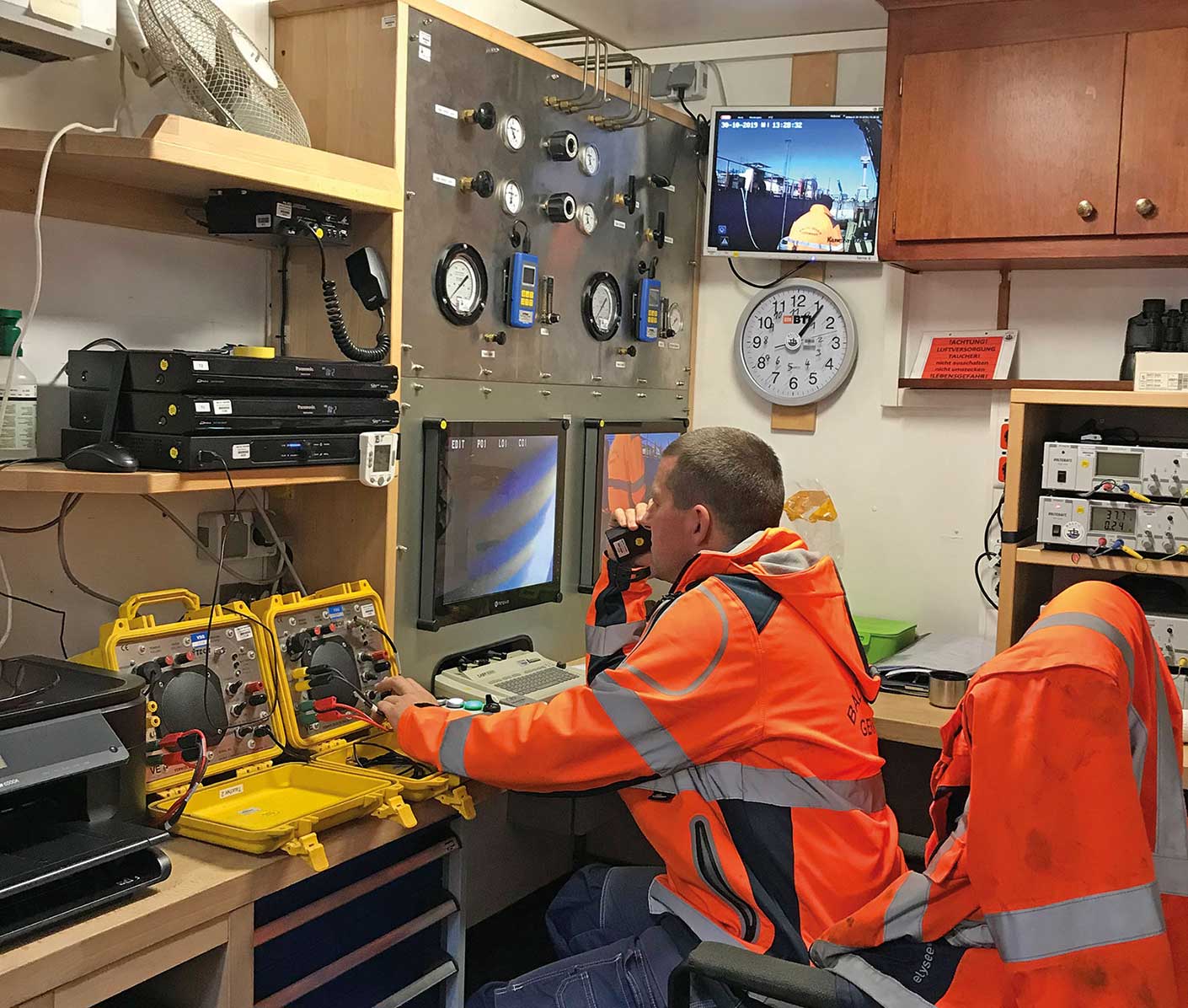
| Size | 20 ft. ISO Certified container |
| Isolation | Fire retardant isolation with thermal protection |
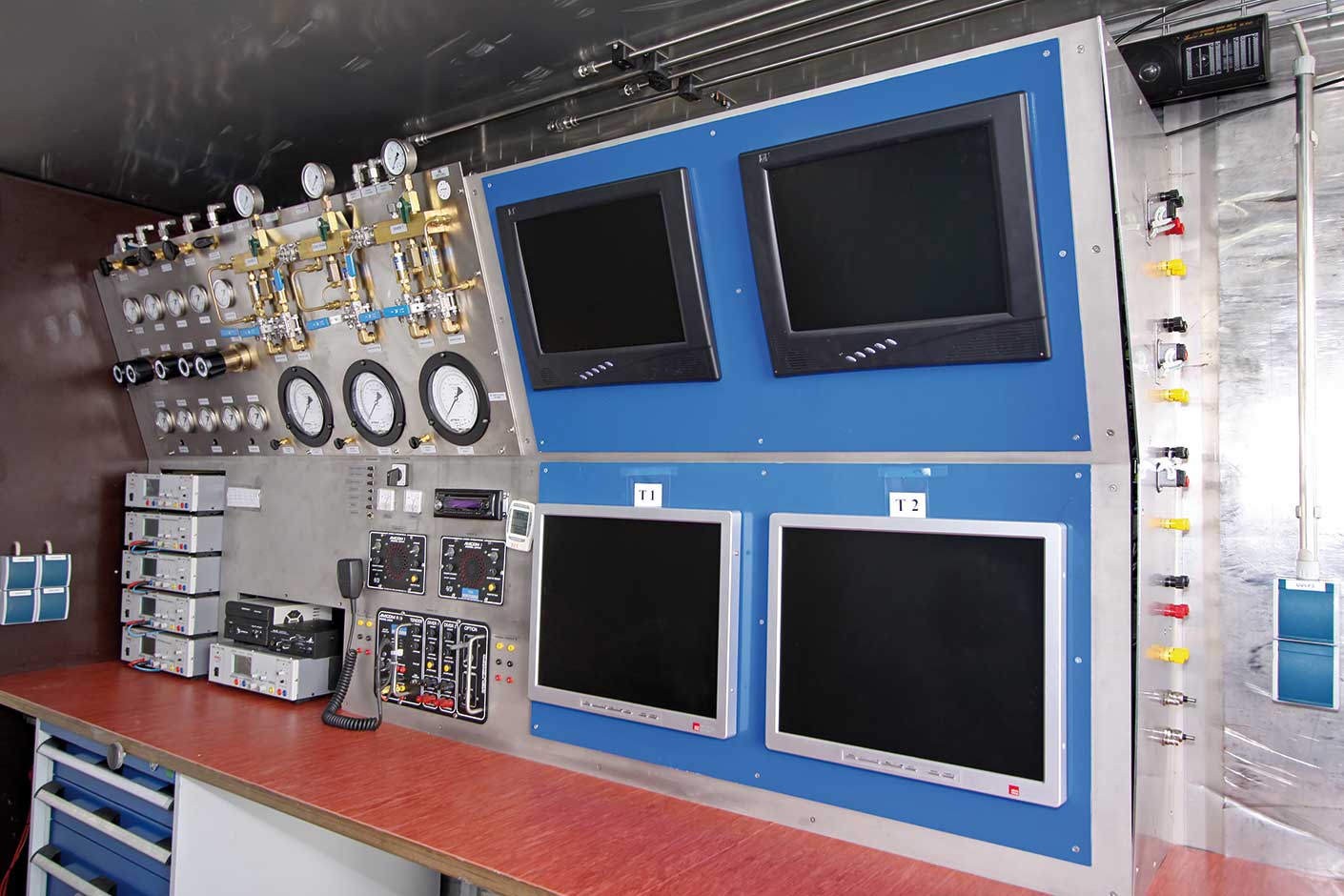
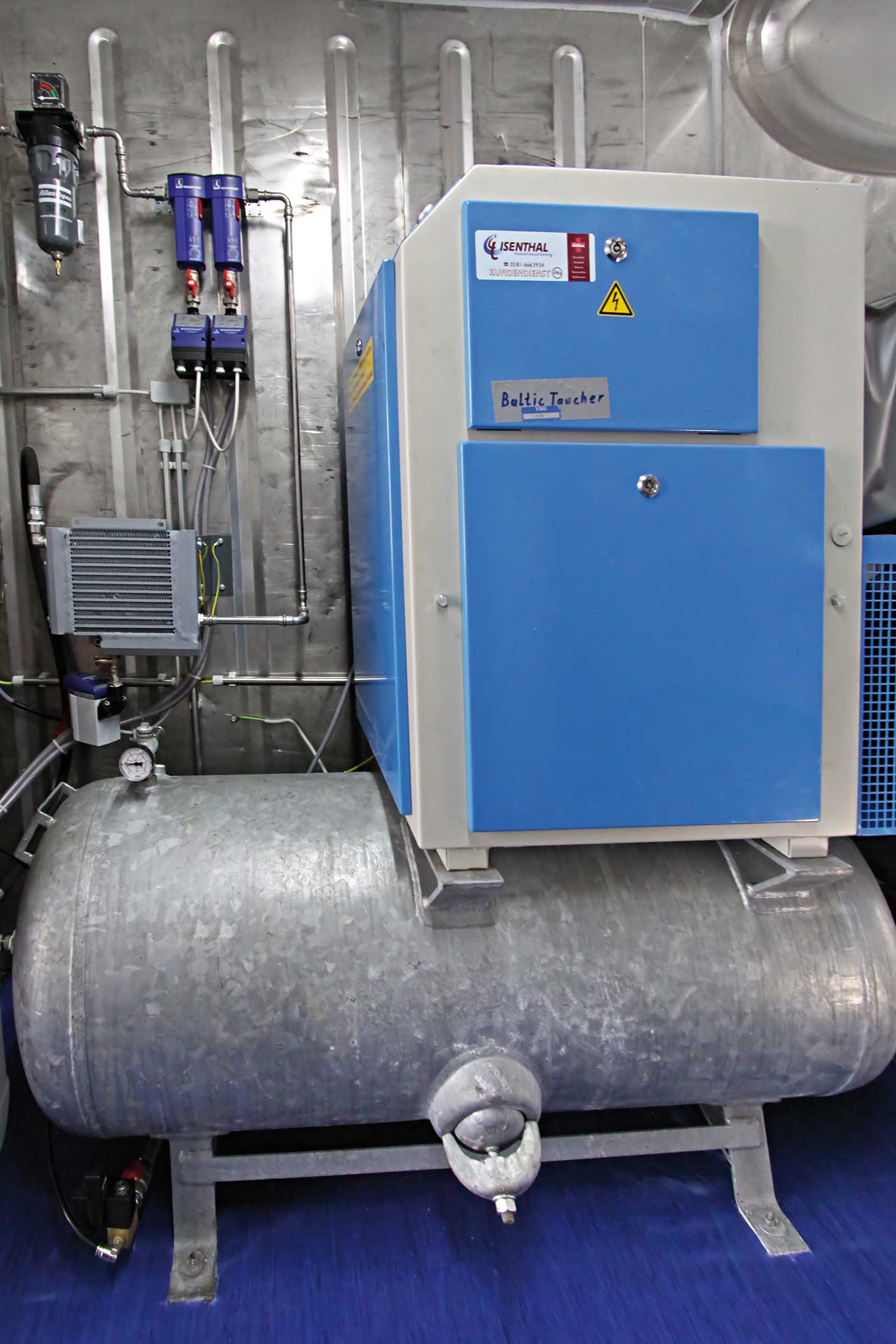
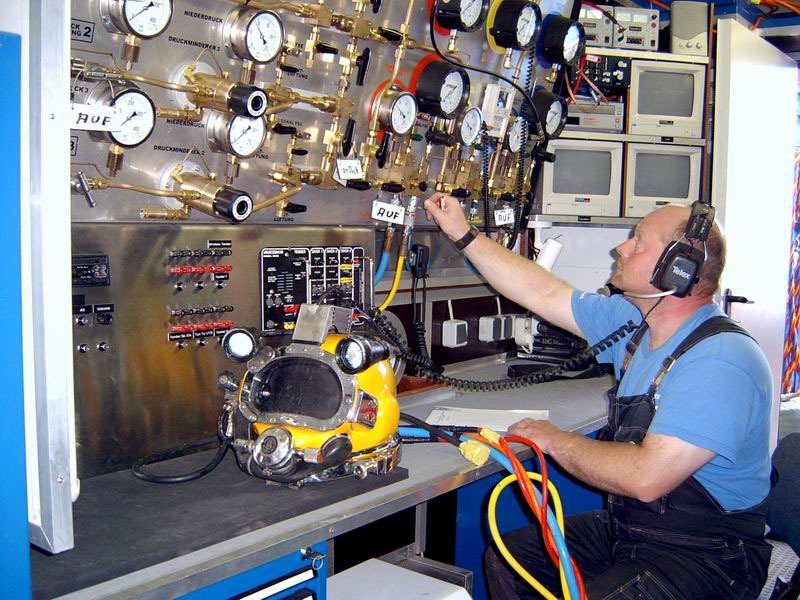
| Design | Container divided with separation wall in two sections: 1. Dive control with storage for umbilicals, helmets etc. 2. Compressor room and gas storage |
| Weight | 7000 kg |
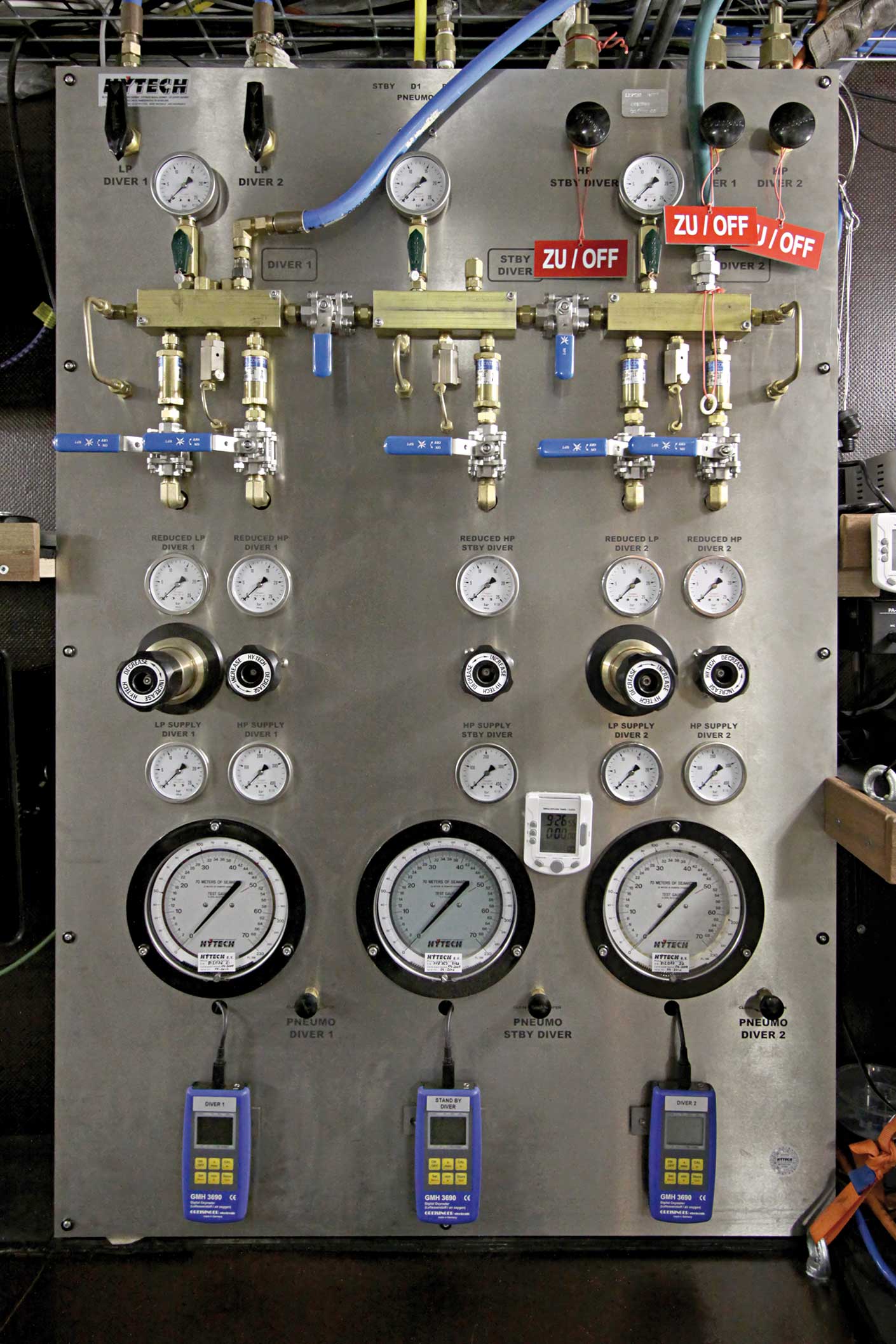
| Dive panel | LR certified diving panel for 3 divers |
| Communication | 2 x AMCOM 2810 A; 1 x AMCOM 2825 A |
| Video system | Video control system |
| Light system | 6 x Voltkraft light control system |
| DVD | 3 x Panasonic hard disk DVD units |
| Deck camera | Deck camera unit |
| Deck communication | Hard wire deck communication |
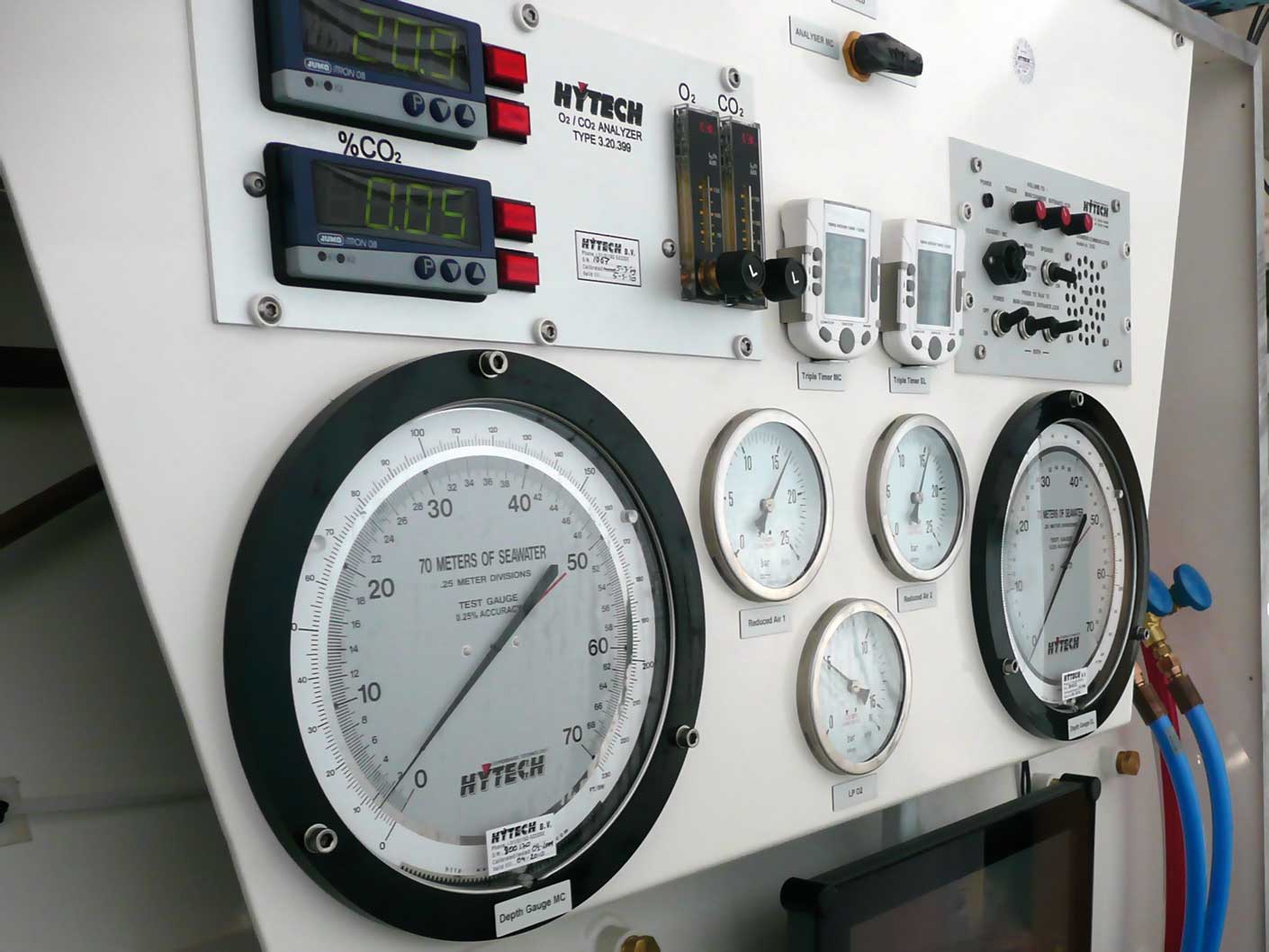
| O2 Analysers | Hytech O2 analysers |
| Umbilical | 3 x 150 m Fibron Umbilicals |
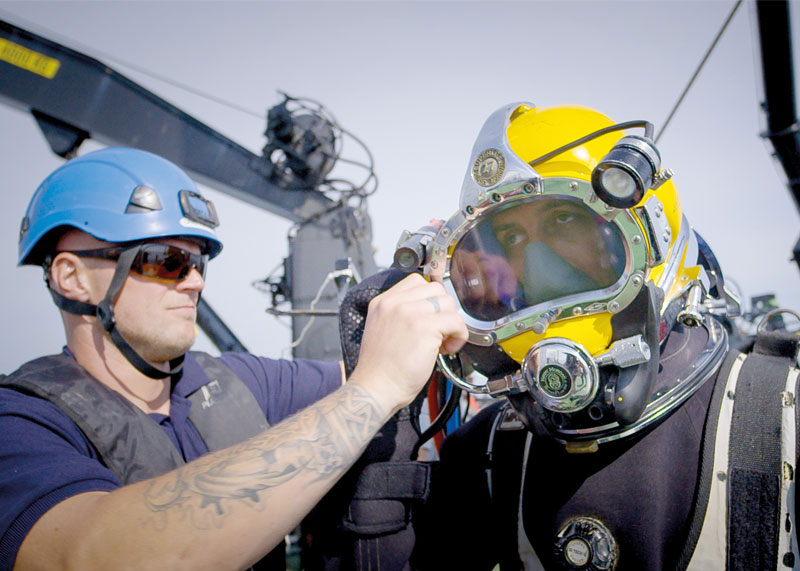
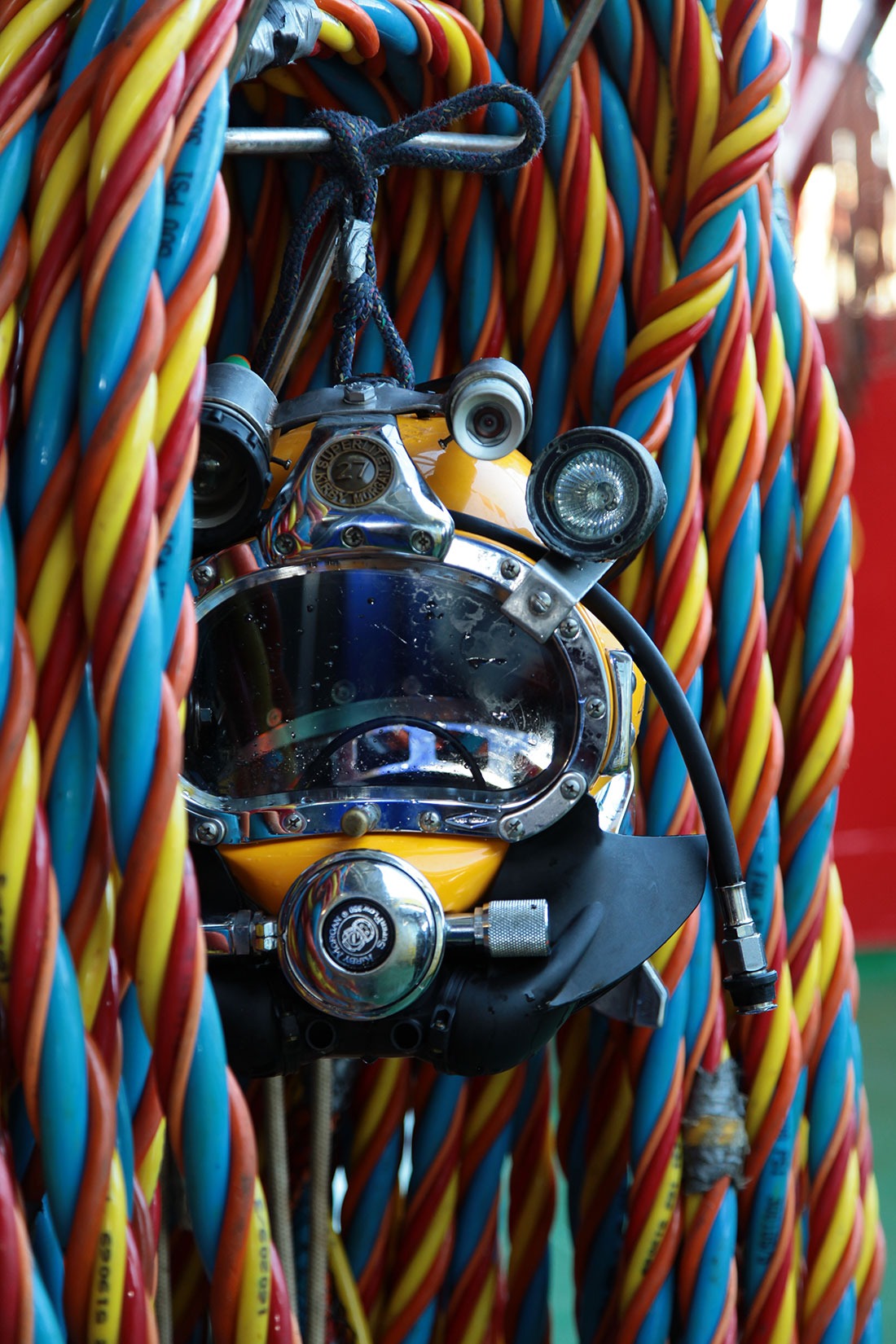
| Dive Helmet | 3 x Kirby Morgan 27 Helmets |
| The container can be operated directly from the public power grid or a mobile generator. The container has 2 independent power feeds with the following specification: |
| Voltage | 3 x 400 V |
| Amperage | Fire retardant isolation with thermal protection |
| Design | 32 A, each |
| Weight | 7000 kg |
| Frequency | 50 Hz |
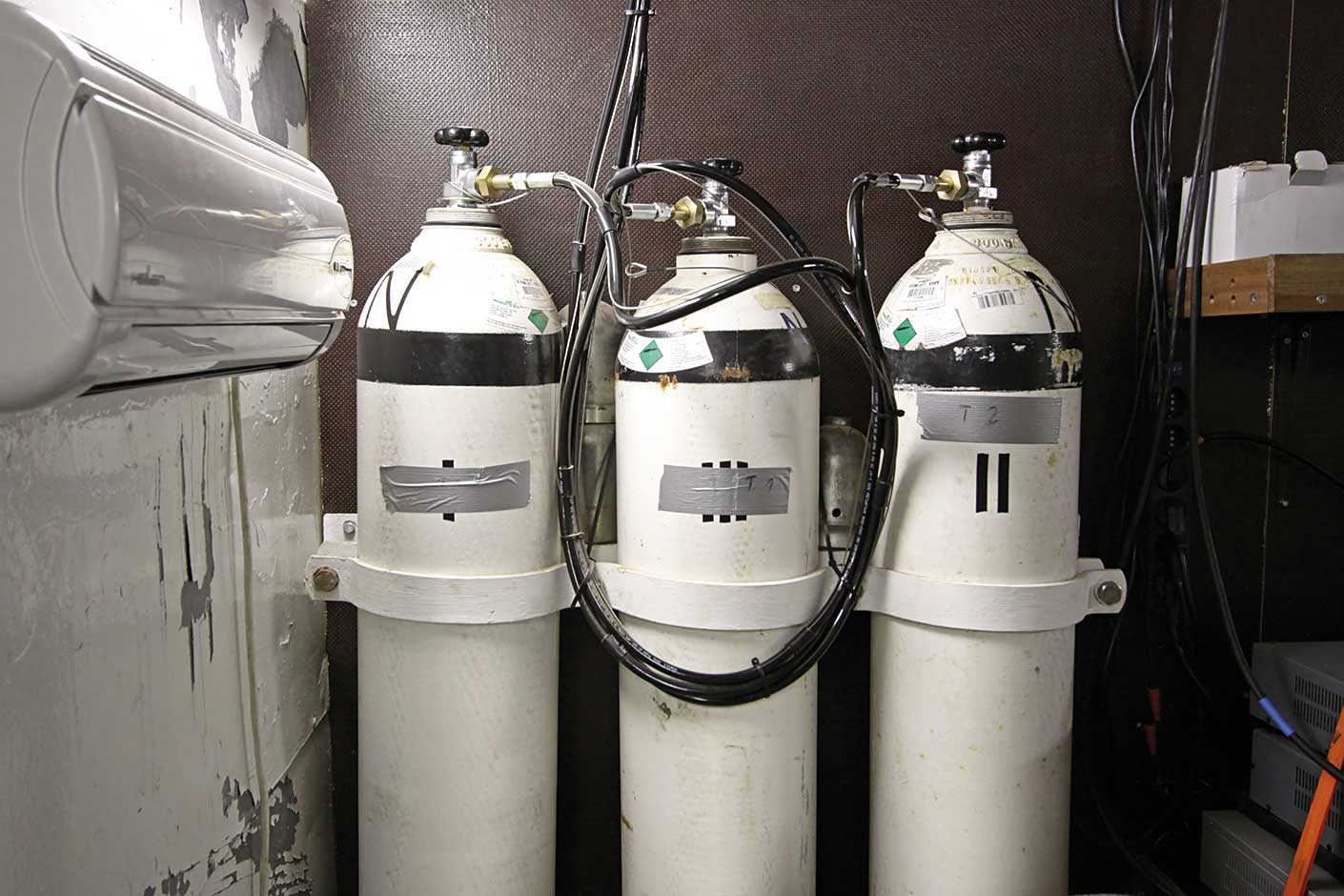
| HP Bottles | 6 x 50 L 200 bar, in separate compressor room |
| HP Compressor | 225 bar type LW 160E |
| LP Compressor | 16 bar type RS4 |
| CSC Approval | D-HH-0214/GL2567 |
| Classification Society | Lloyd’s Register |
| Certificate no | ROT 0910986 |
| Design Standard | IMCA D023 |
| Planned Maintenance System | IMCA D018 |
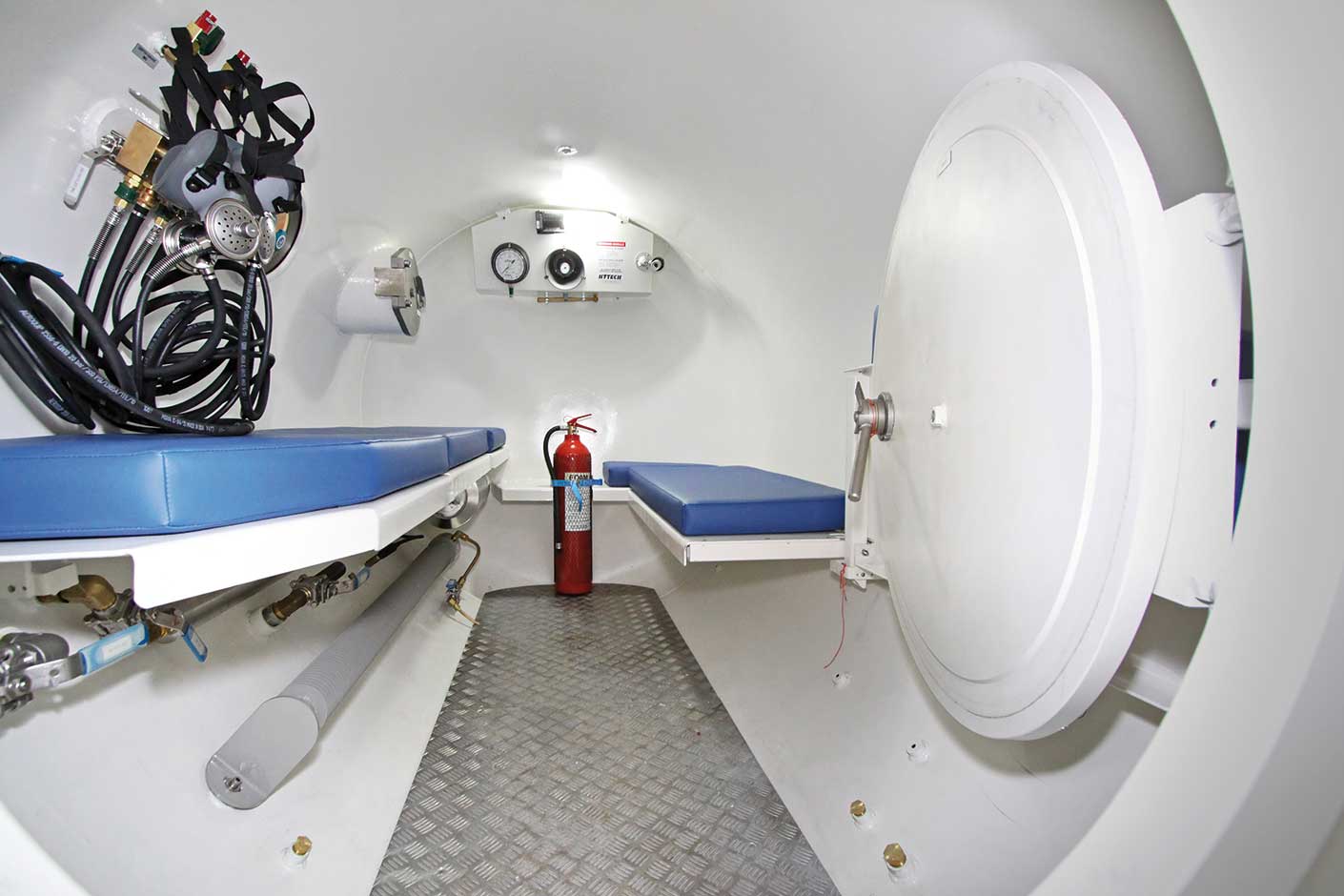
| A chamber communication system provides two way communication between either, the main lock, or entry lock and the life support technician. |
| Classification Society | Lloyd’s Register |
| Certificate no | ROT 0806890 |
| Design Standard | IMCA D023 |
| Planned Maintenance System | IMCA D018 |
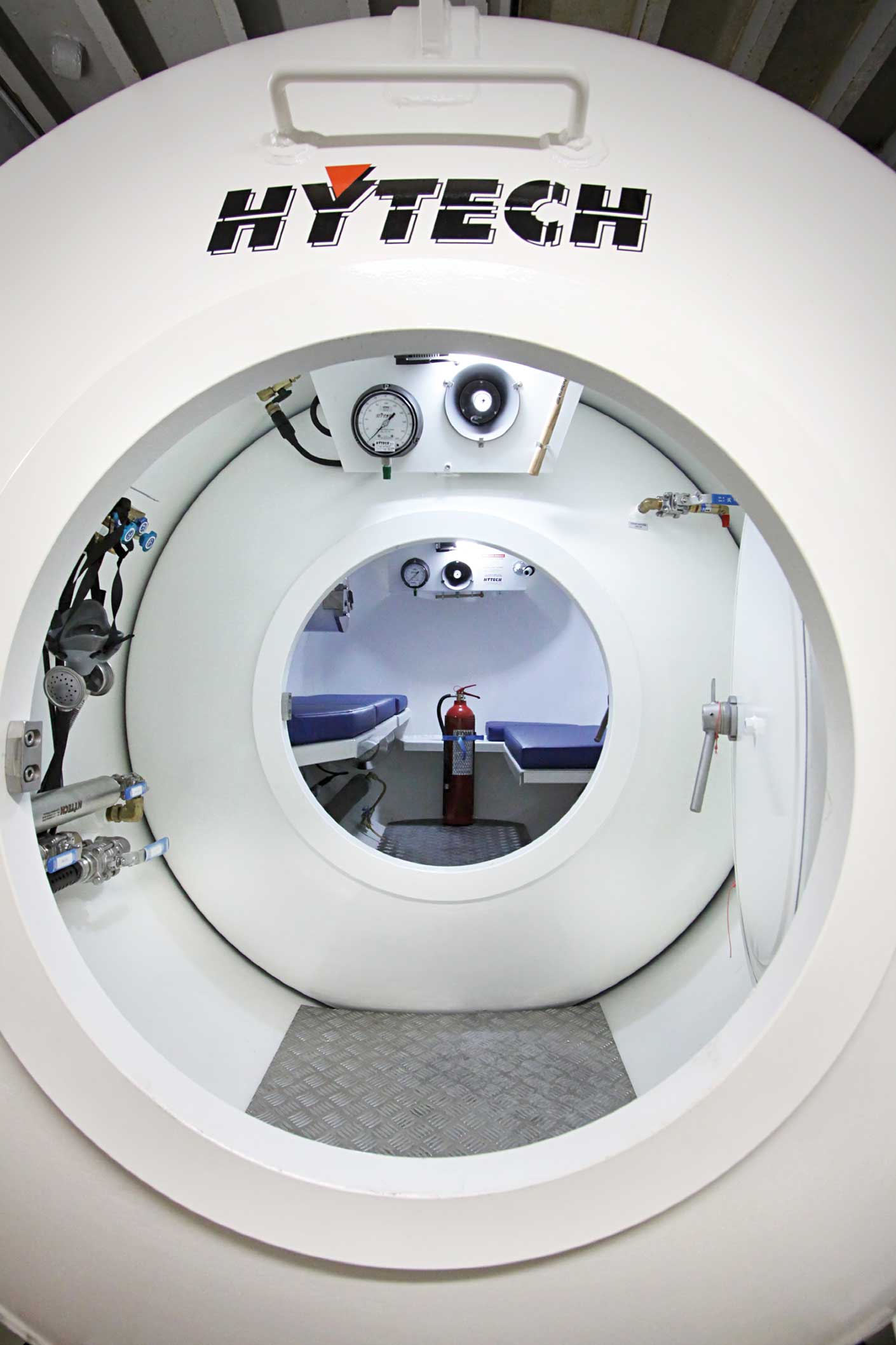
| Size | 20 ft. ISO Certified container |
| Isolation | Fire retardant isolation with thermal protection |
| Design | Separate chamber control inside for chamber operator |
| Weight | 3000 kg |
| Length o.a. | 3500 mm |
| Diameter | 1600 mm |
| Type | Twin lock |
| Weight | 3000 kg |
| Length of entrance lock | 1100 mm |
| Length of main chamber | 2400 mm |
| Length of medical lock | 320 mm |
| Diameter of medical lock | 230 mm |
| Door diameter | 700 mm |
| Viewports diameter | 150 mm |
| Heating system | Tube heat system |
| Working pressure | 5,0 bar (6 bar absolute) |
| Air | Connection for external LP/HP air supply on penetrator plate |
| Oxygen | Connection for external O2 supply on penetrator plate, 2 x BIBS in each lock |
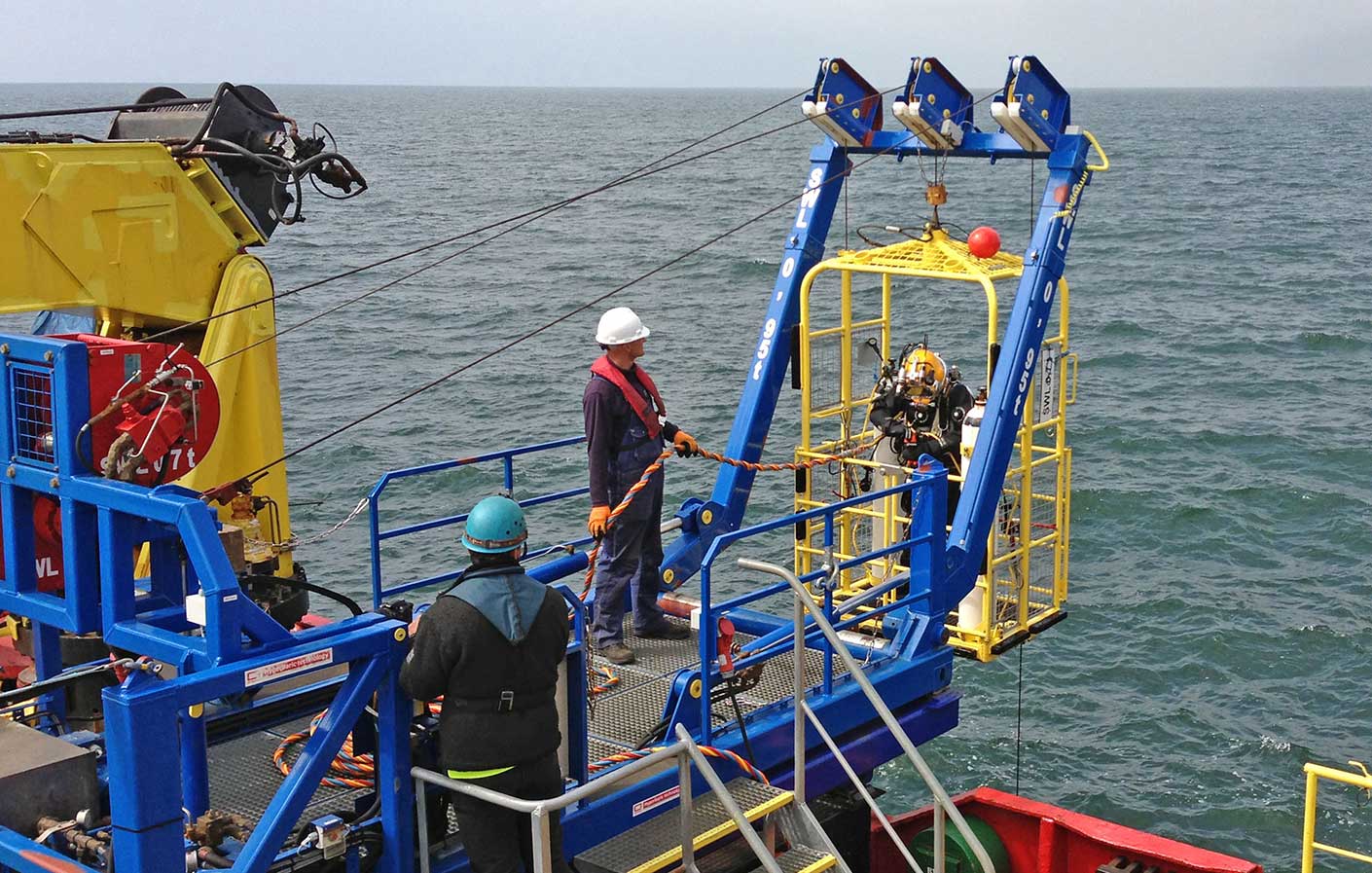
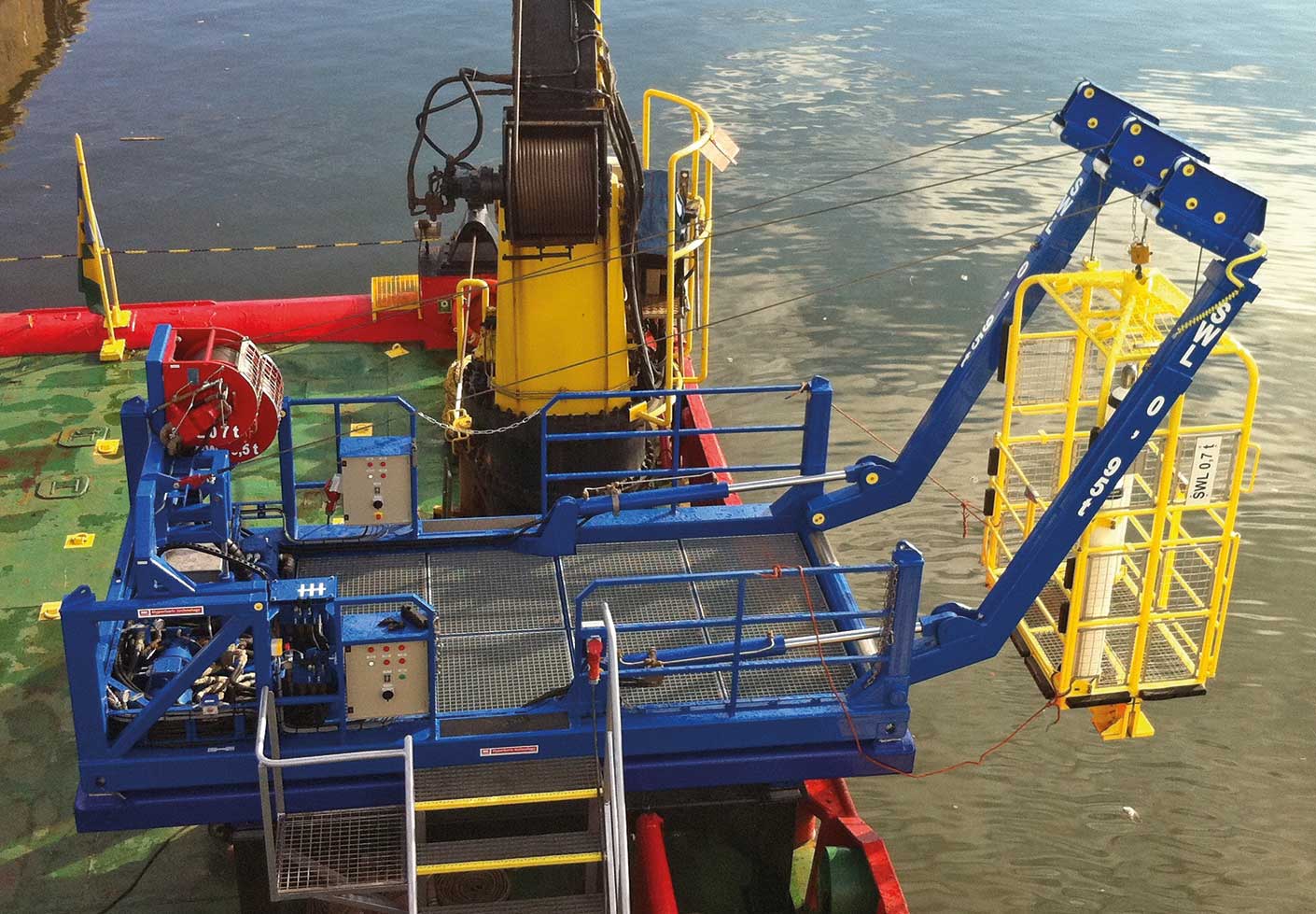
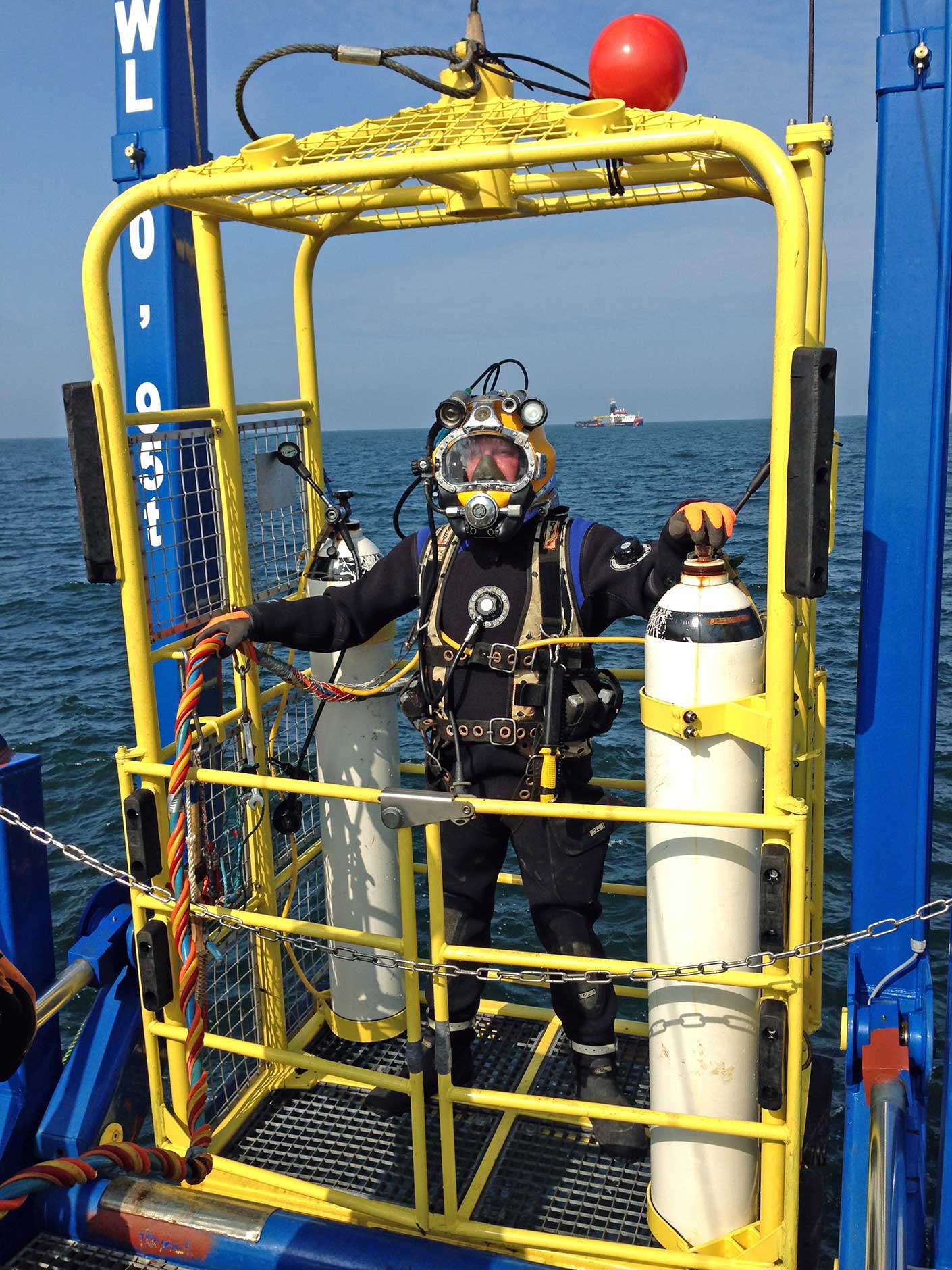
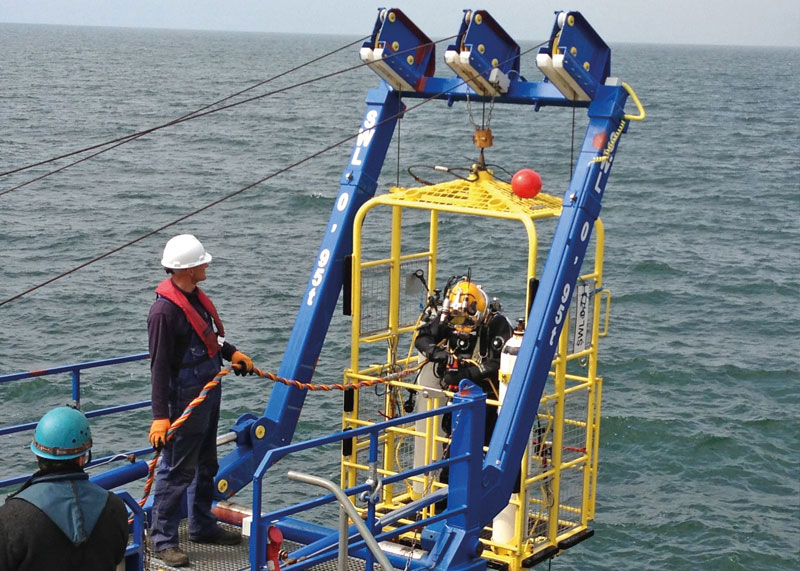
The portable launch and recovery system with two lifting winches, hydraulically powered, is designed to handle a dive cage with 2 divers with 2 air bottles of 50 liters. The lifting height is 100 meters.The LARS with cage & clump is a self containerized unit on a 20 ft. long footprint. The system is easy to transport because of the small dimensions and a total weight of only 4,2 metric tons. The system can be transported in a 20 ft. ISO container.The function of the clump weight is to keep the dive basket straight and steady under water. In case of an emergency or breakdown of the wet bell winch, the clump winch can raise the manned cage. The winches are located within the base frame and each man-rider winch is equipped with a triple braking system.

| Total weight: | 4200 kg (including cage and 2 bottles) |
| Maximum SWL LARS: | 940 kg (clump, cage, 2 divers, tools, bottles) |
| Duty factor: | 1.2 |
| Hoisting factor: | 1.7 |
| Offlead/ Slidelead: | 10°/ 10° |
| Operating temparature: | -20°C till 50°C |
| Lifting speed: | 0,25 m/s ( IMCA Requirement) |
| Lifting height: | 100 meter |
| Power required: | 440 VAC-3Ph + PE, 32 A |
| Certification Society: | Lloyd‘s Register |
| Design Standard: | IMCA D023 |
| PMS: | IMCA D018 |
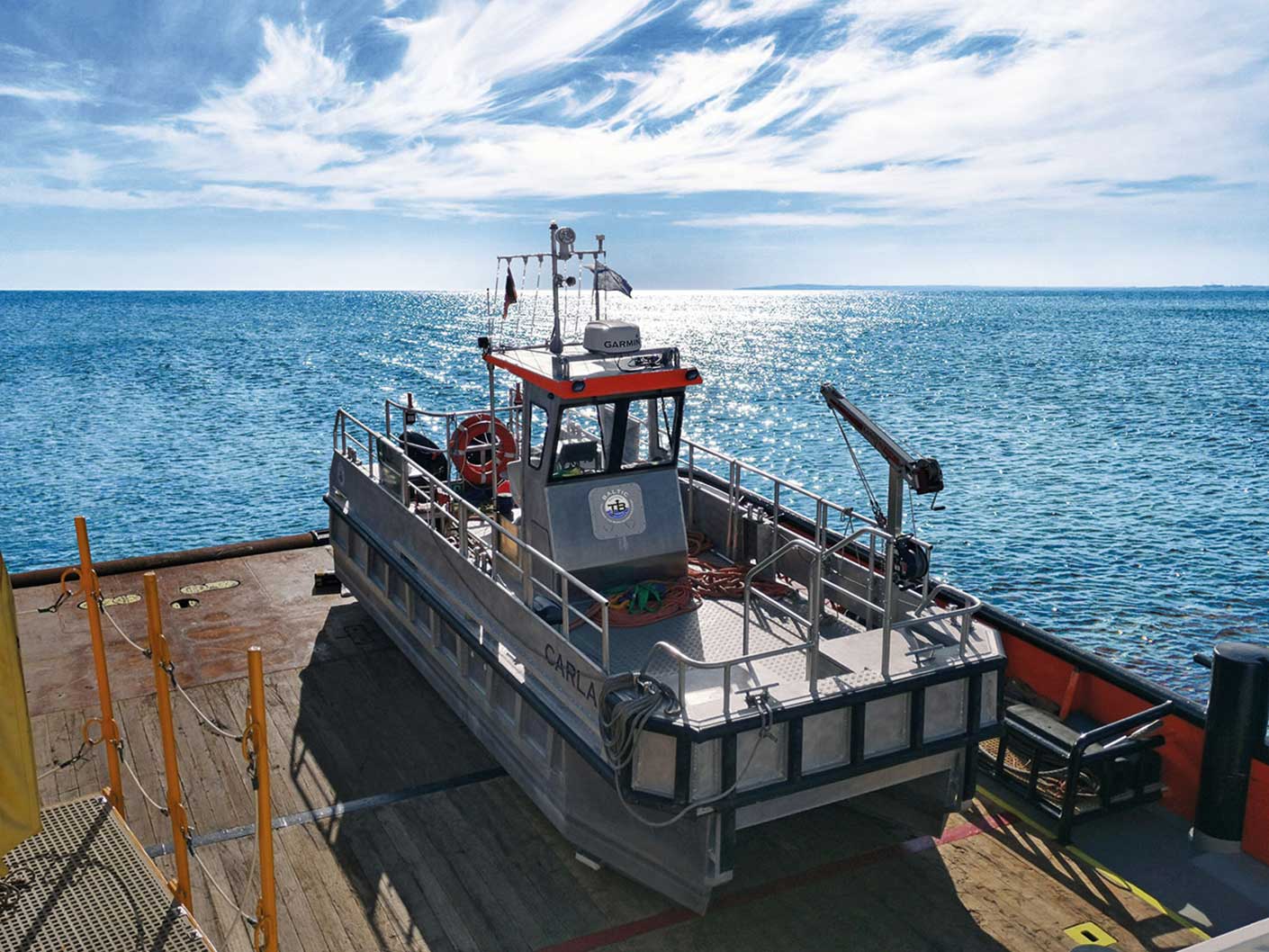

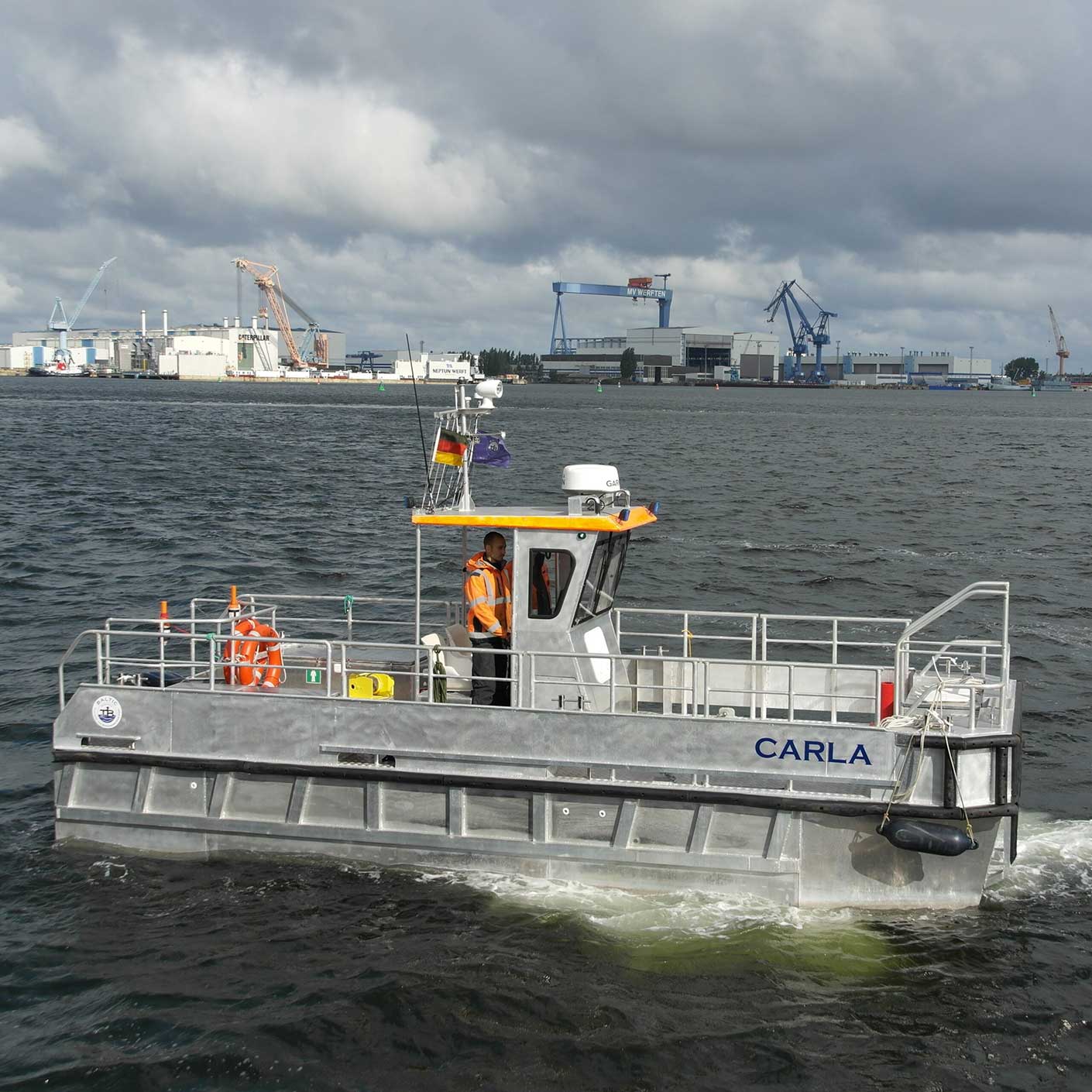
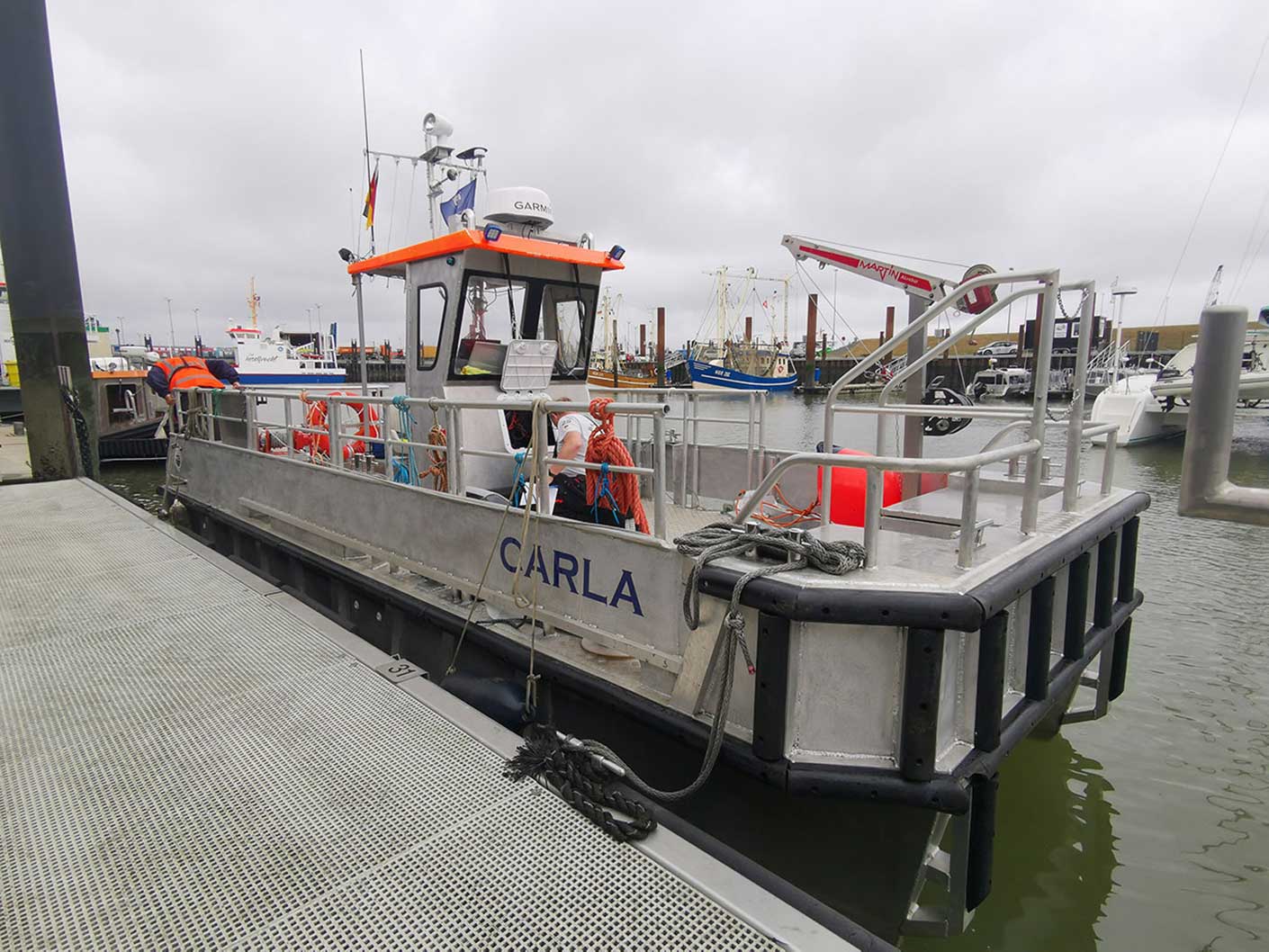
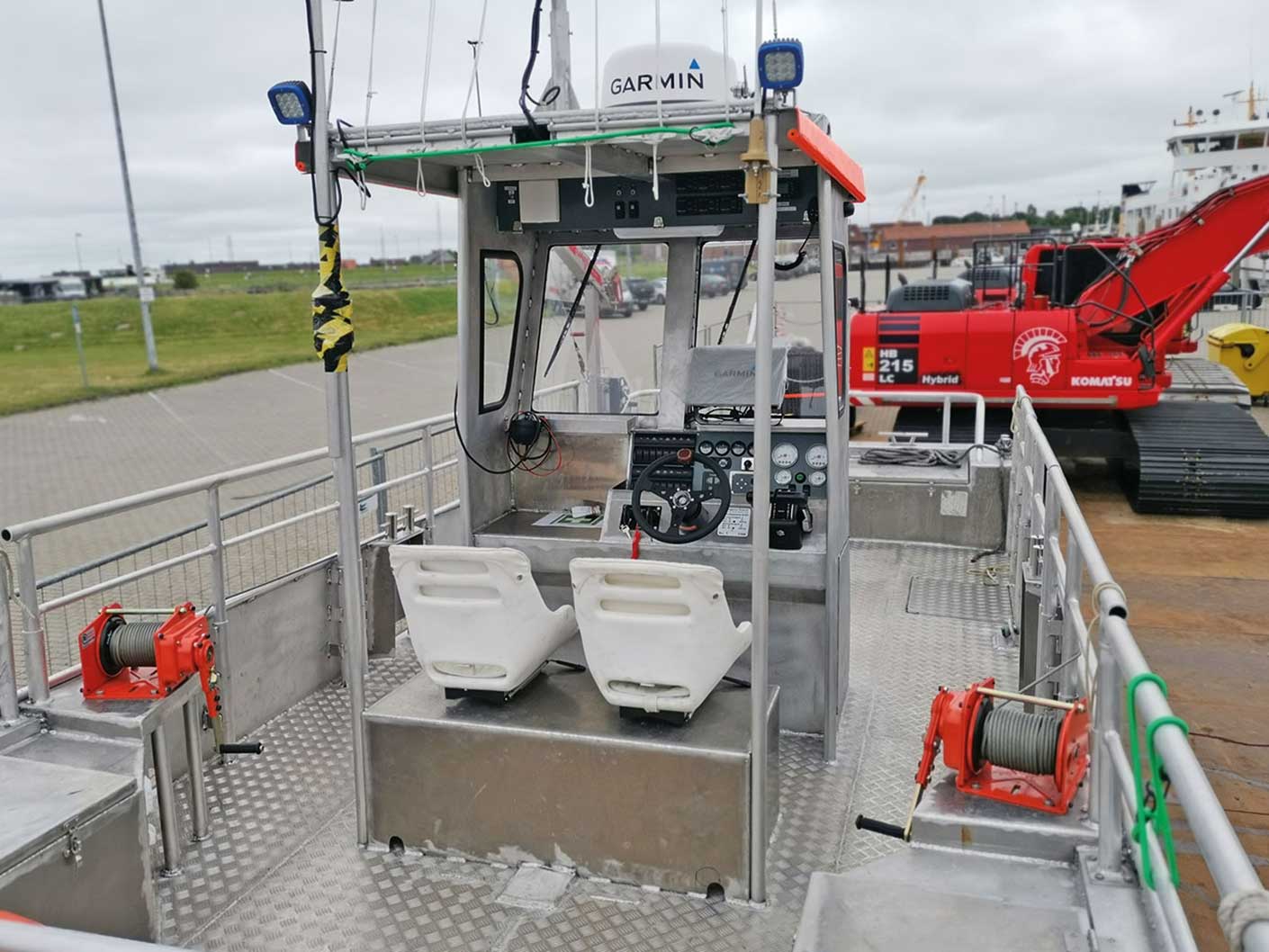
| Vessel type | Pontoon catamaran |
| Year of built | 2022 |
| Manufacturer | Yaro Yachtagentur Rostock, Germany |
| Authority | BG Verkehr |
| Flag | Germany |
| Call sign | DKND2 |
| Hull No. | DE-YARBT801F222 |
| Homeport | Rostock |
| Crew & Guests | 1x crew + 5 guests / 2x crew + 8 guests |
| Trading area | Near Coastal Voyages as Single-Watch Vessel only for voyages up to 10hrs. (Voyages to Dutch, Danish & Polish ports) National Coastal Voyages up to a distance of 5nm as Single-Watch Vessel National Coastal voyages - Voyages in connection with a mother vessel up to a distance of max. 5nm to the mother vessel |
| Draft cwl | +/- 34 m |
| Draft max. | +/- 0,48 m |
| Length o.a. | 8.70 m |
| Length hull | 7.90 m |
| Length cwl | 7.73 m |
| Beam overall | 2.98 m |
| Draft cwl | ±0.35 m |
| Displacement cwl | ±4.40 t |
| Gross tonnage | 4 |
| Nettonnage | 1 |
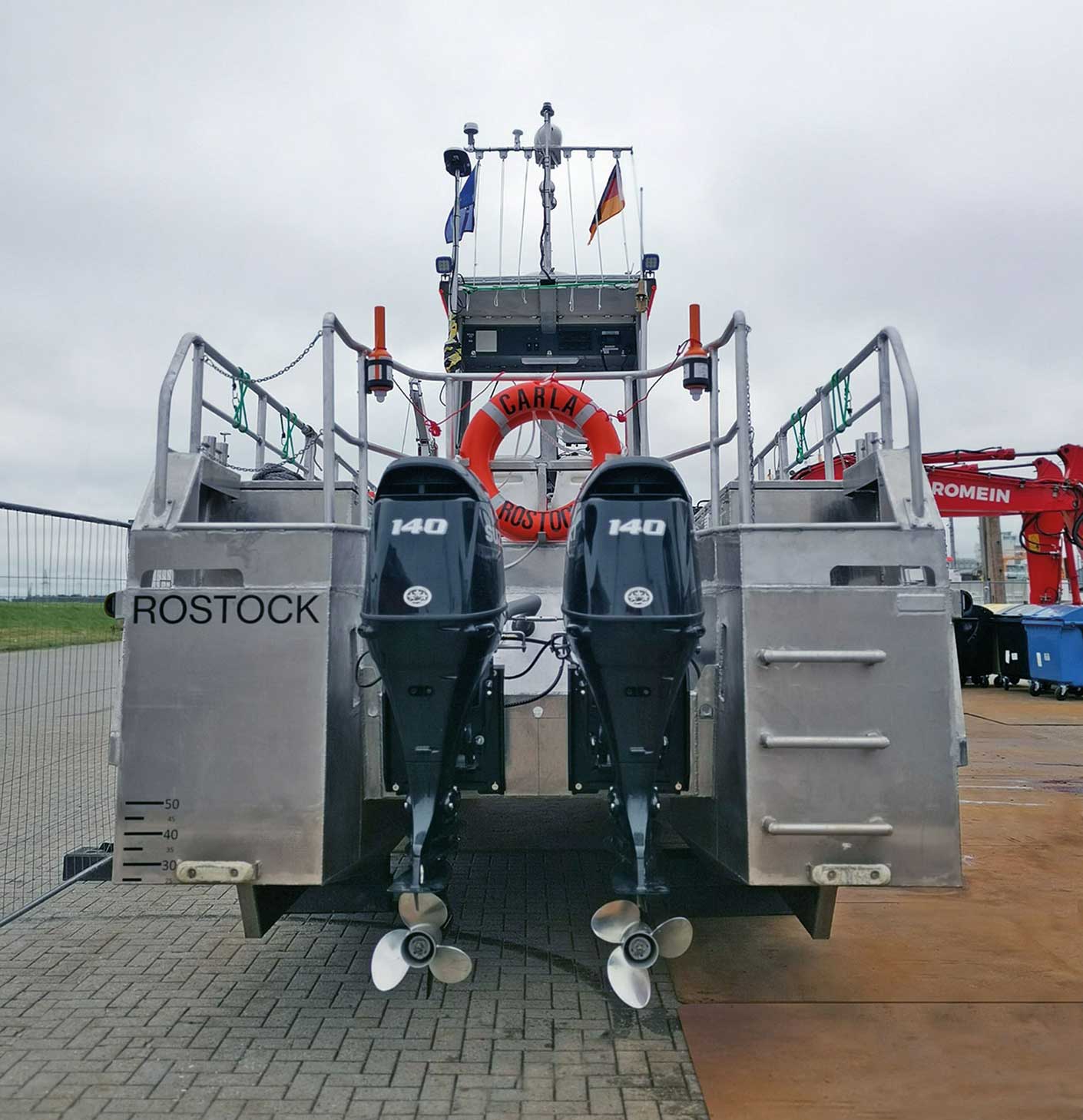
| Engine | 2 x MWM TRHS 518 A |
| Drive | 103 kW (140PS) |
| Service Speed | 7 kn |
| Max Speed | 10 kn |
| Gear box | robust industrial gear box for push and pull work |
| Shaft length | 63 cm |
| Weight per engine | 190 kg |
| Exhaust emission | according to CARB 2008 |
| Hight adjustment | up to 148 mm, Seastar Electro hydraulic Jack Plate powerlift |
| Bowthruster | yes |
| Service speed | 9 kn |
| Max. speed | 25 kn |
| Average consumption | service: 20.8 l/h - max.: 41.0 l/h |
| Fuel | 4 x 96 ltr |
| Nautical | Lowrance HDS-7 LIVE fish-finder/ GPS chart-plotter with ACTICE imanging 3-in-1 depth sounder Lowrance HALO24 Radar NAIS-500 class B incl. VHF antenna |
| Rescue equipment | MOB crane, stretcher, searchlight,VHF radio |
| Davit crane | 1x power arm Akrobat E (max 400kg) |
| Winch | 2x PW300-15 |
| 1 x 12 kg foldable star anchor, Bow fender system and two mooring-winches for push operations |
| 2 or 4 point mooring |
| Towing hook |
| A-frame bow and stern |
| Rain or sun roof on the cargo deck |
| Engine protection – rail |
| Power generator |
| Jason cradle + IPURB |
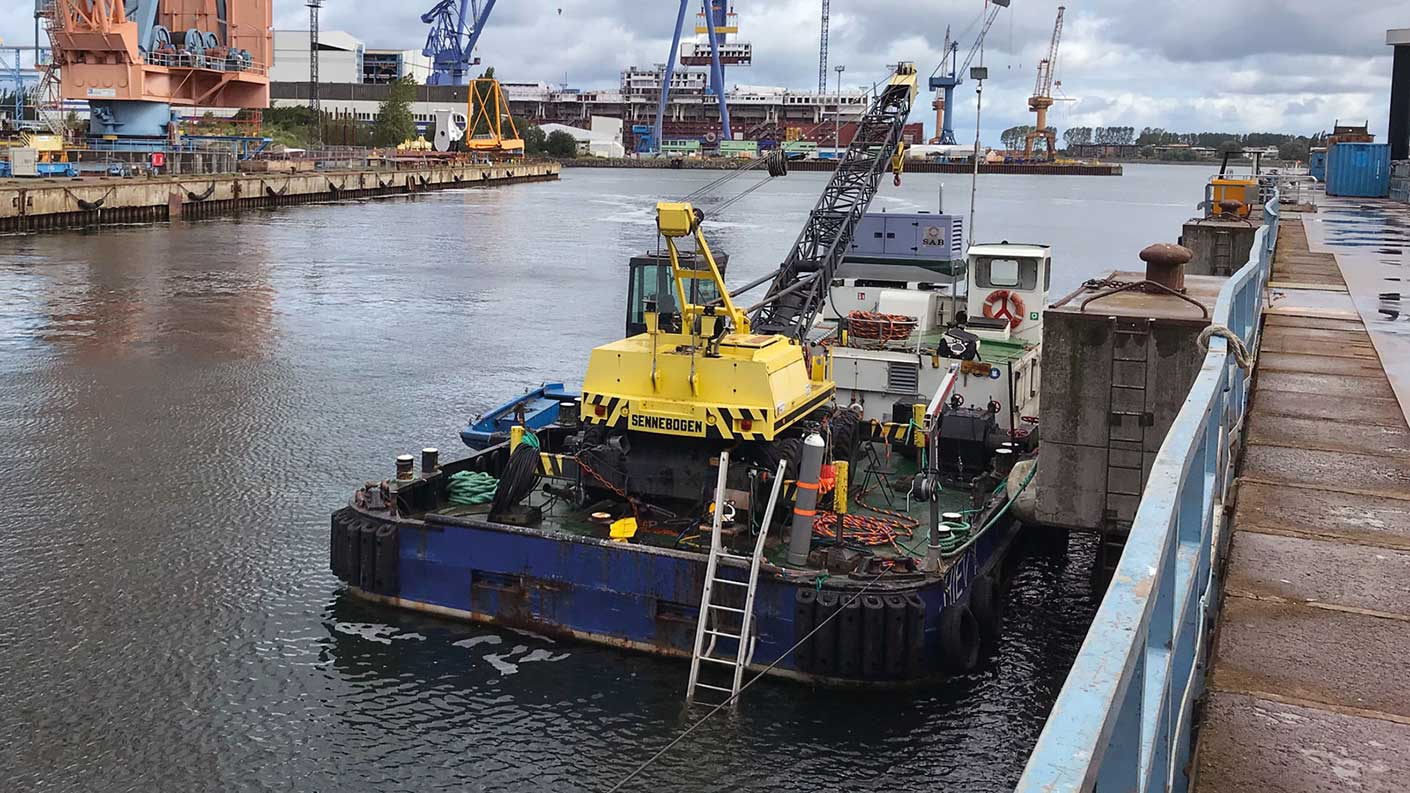
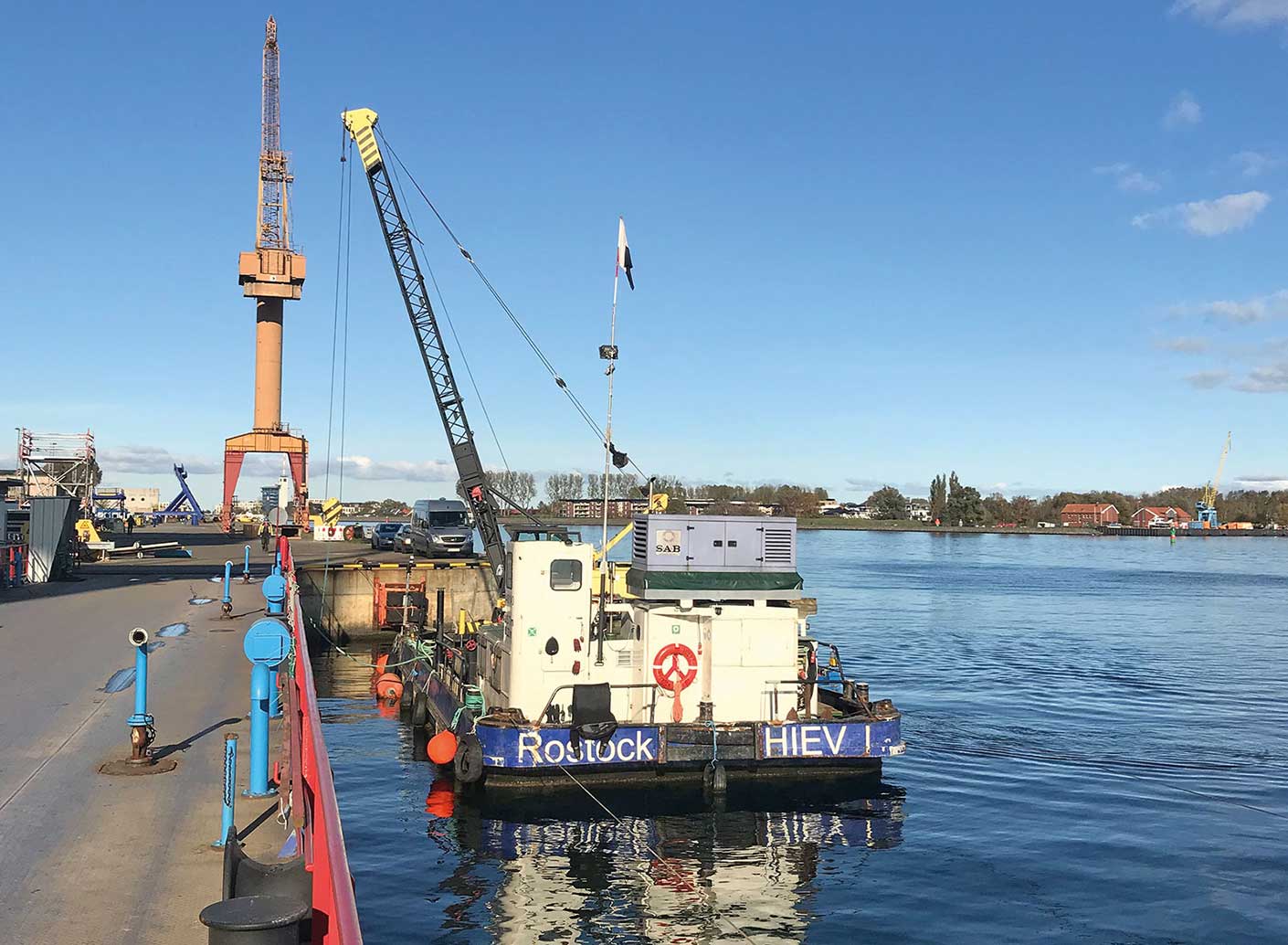
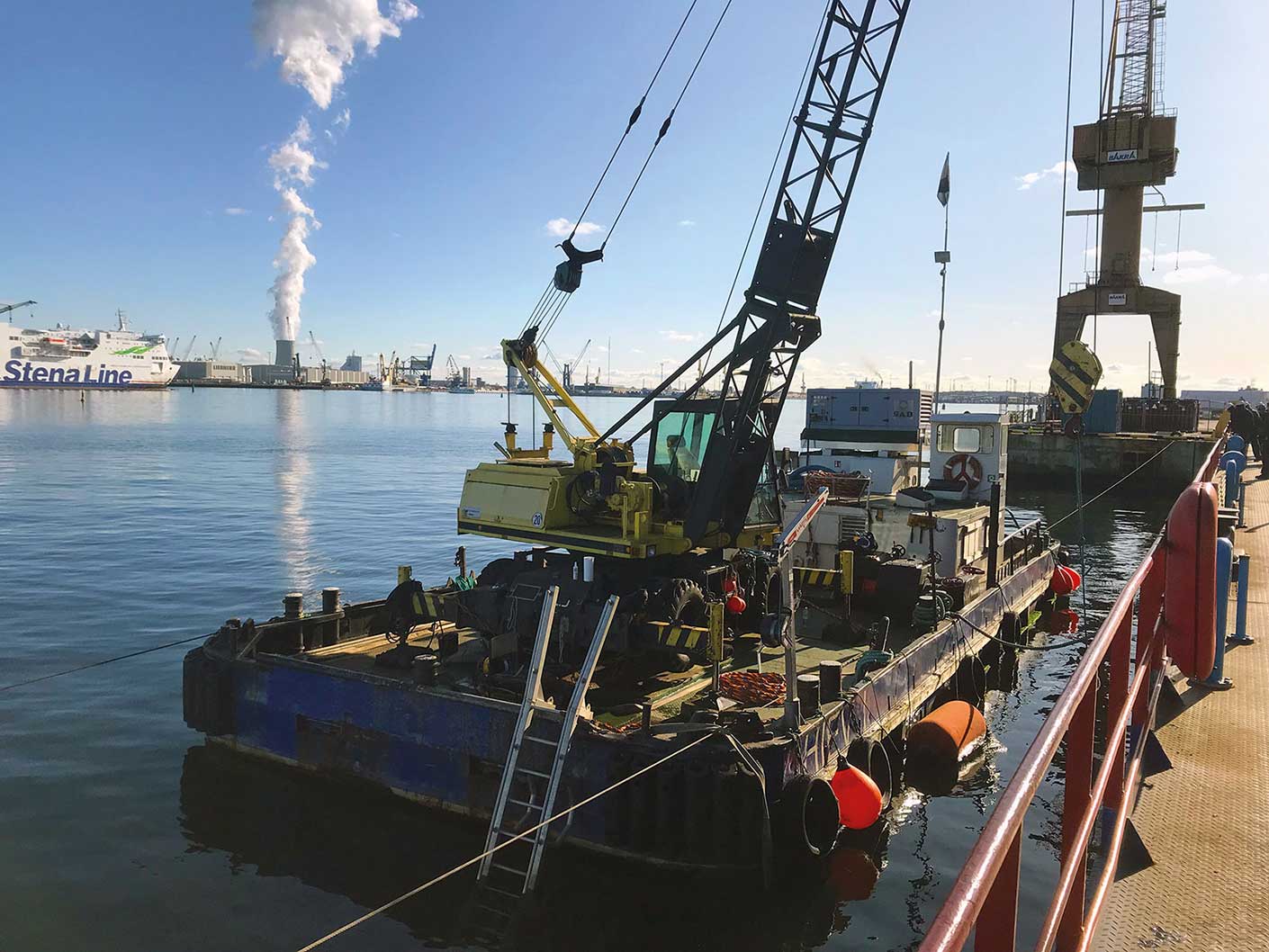
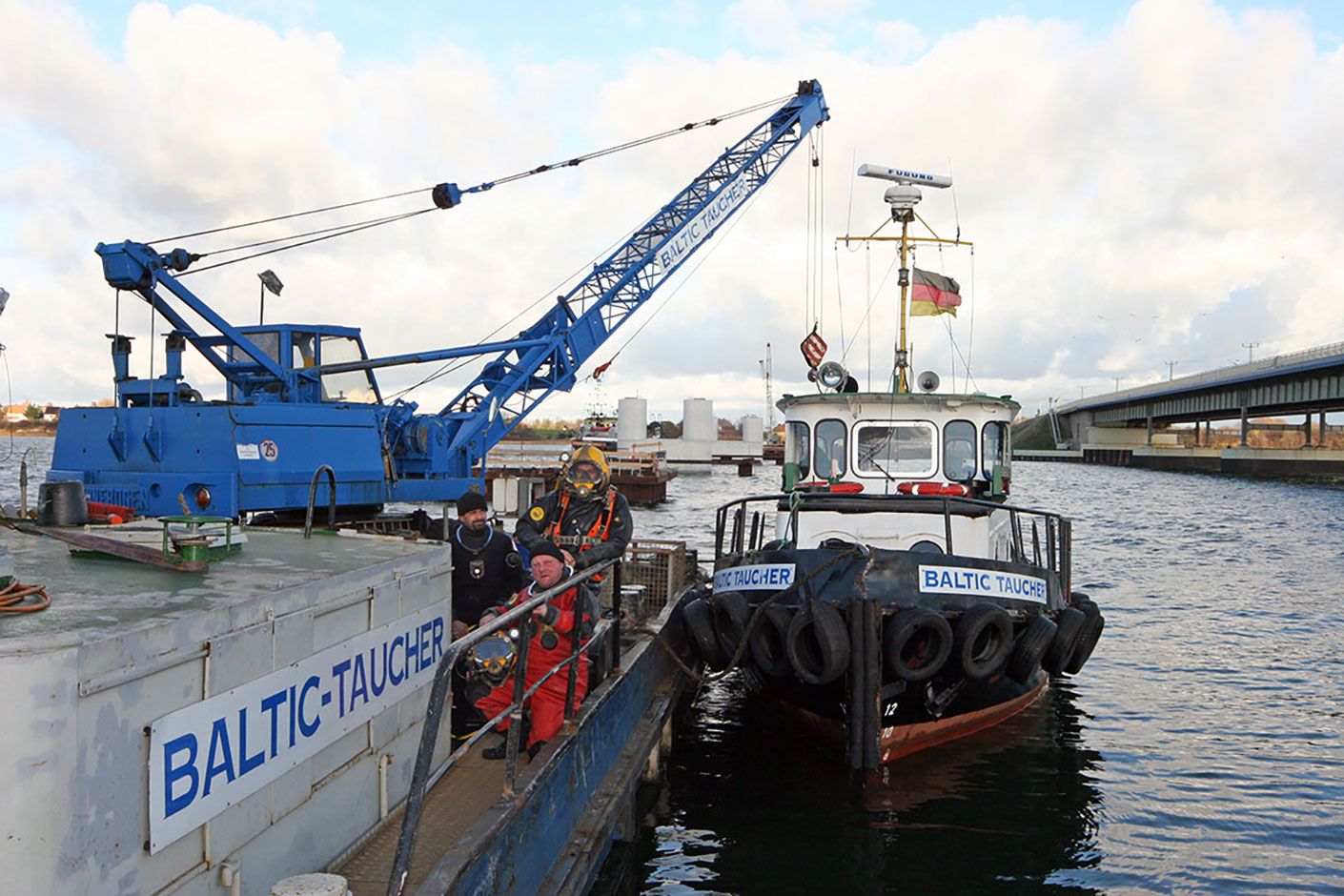
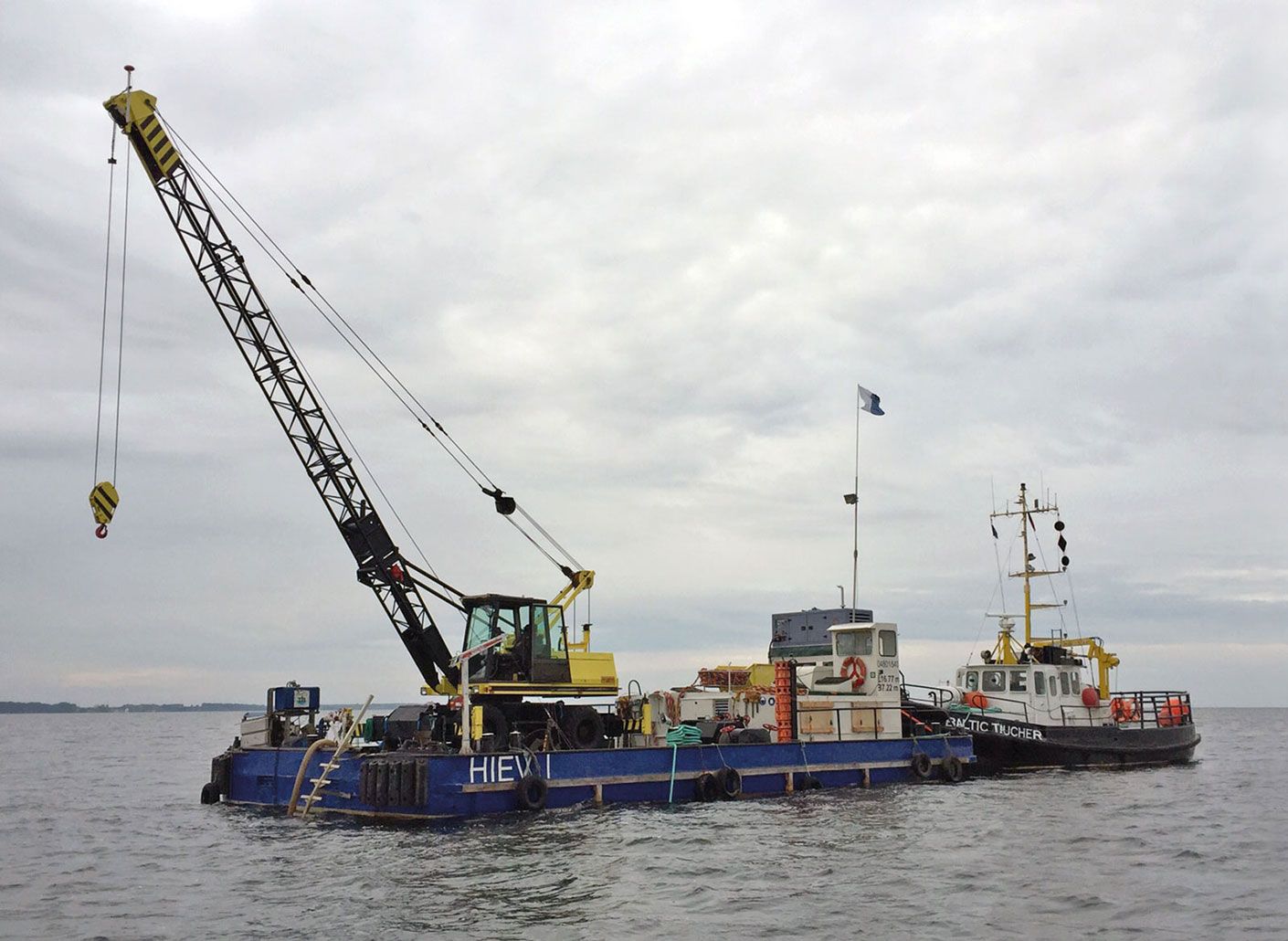
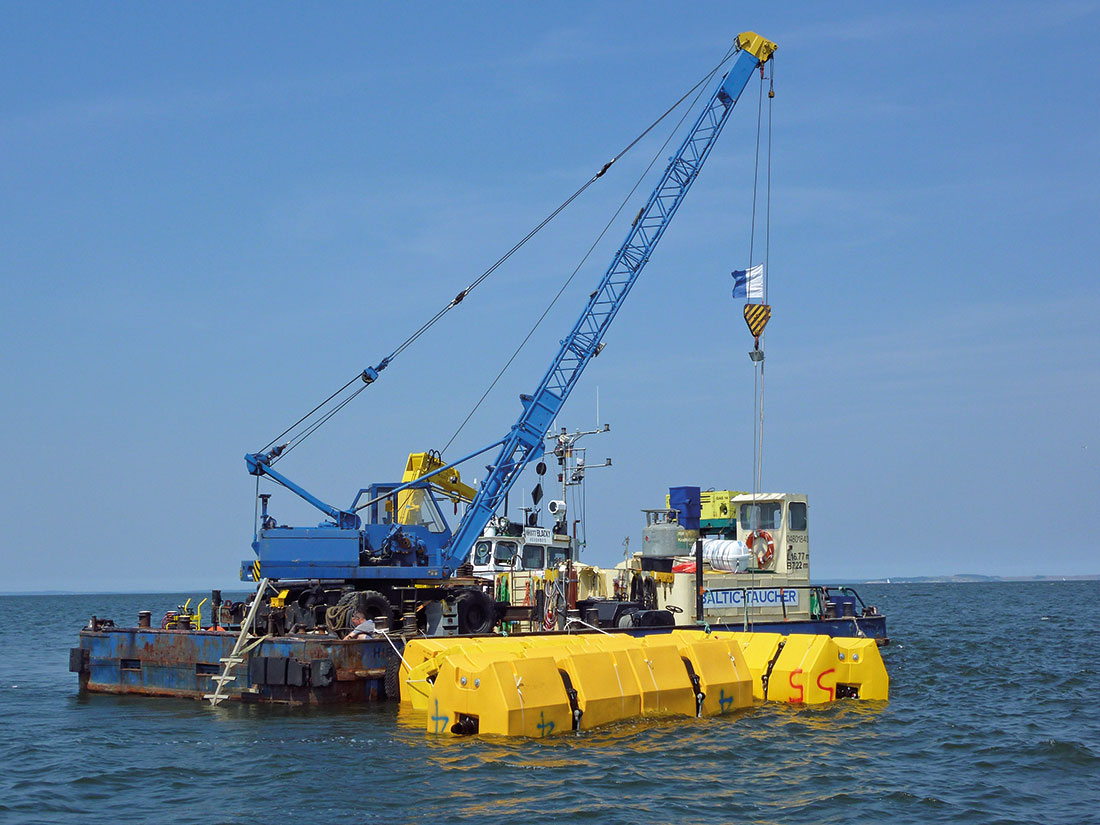
| Vessel type | Crane/ diving barge |
| Year of built | 1964 |
| Yard | Wasserstraßen-Maschinenamt Minden |
| Port of registry | Rostock |
| Flag | Germany |
| Class | SUK, BG Verkehr |
| ENI number | 04801840 |
| Length o.a. | 16.77 m |
| Breadth | 7.22 m |
| Draft | 0.80 m |
| Height above water | Height above water |
| Weight | 54.8 t |
| Max. displacement | 85.0 m³ |
| Main engine | no self-propulsion |
| Genset | 60 kVA |
| Fuel oil | 2.0 m³ |
| Fresh water | n/a |
| Main deck | 75 m² (20 m² used for crane) |
| Additional areas | Cargo store |
| Crew | n.a. |
| Additional rooms | Office/mess room, WC |
| Communication | portable VHF radio |
| Nautical | n/a |
| Deck | MOB davit |
| Pump | Lowara SHS 65-200/185, 18.5 kW, max. 6 bar, max. 120 m³/h |
| Dive control unit | dive control panel, video and communication system for two diver, public address system, deck cameras |
| Helmets | 2 x Kirby Morgan 27 + 2 x 80 m umbilical |
| Compressor | LW 280 ES, 280 l/min, max. 350 bar |
| Further dive equipment | diving ladder, high pressure bottles 5 x 50l 200bar |
| Type | Sennebogen S 612 |
| Boom length | 12 m |
| Lifting capacity | max. 5 t; 3 t at 6 m outreach |
| 4-Point mooring | 4 winches, 70 m wire each attached to fix points at pier or using 1,5 t anchor weights |
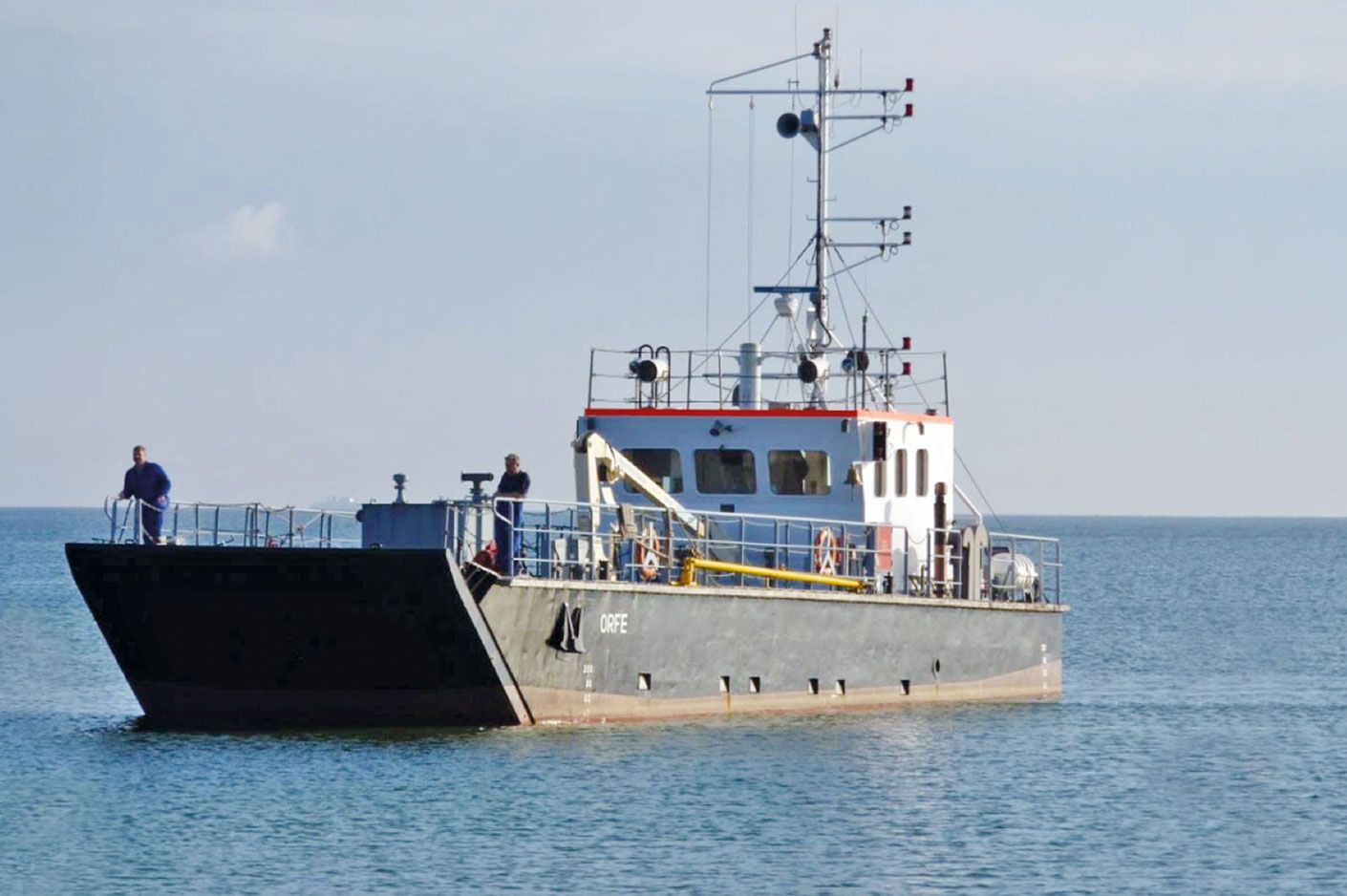
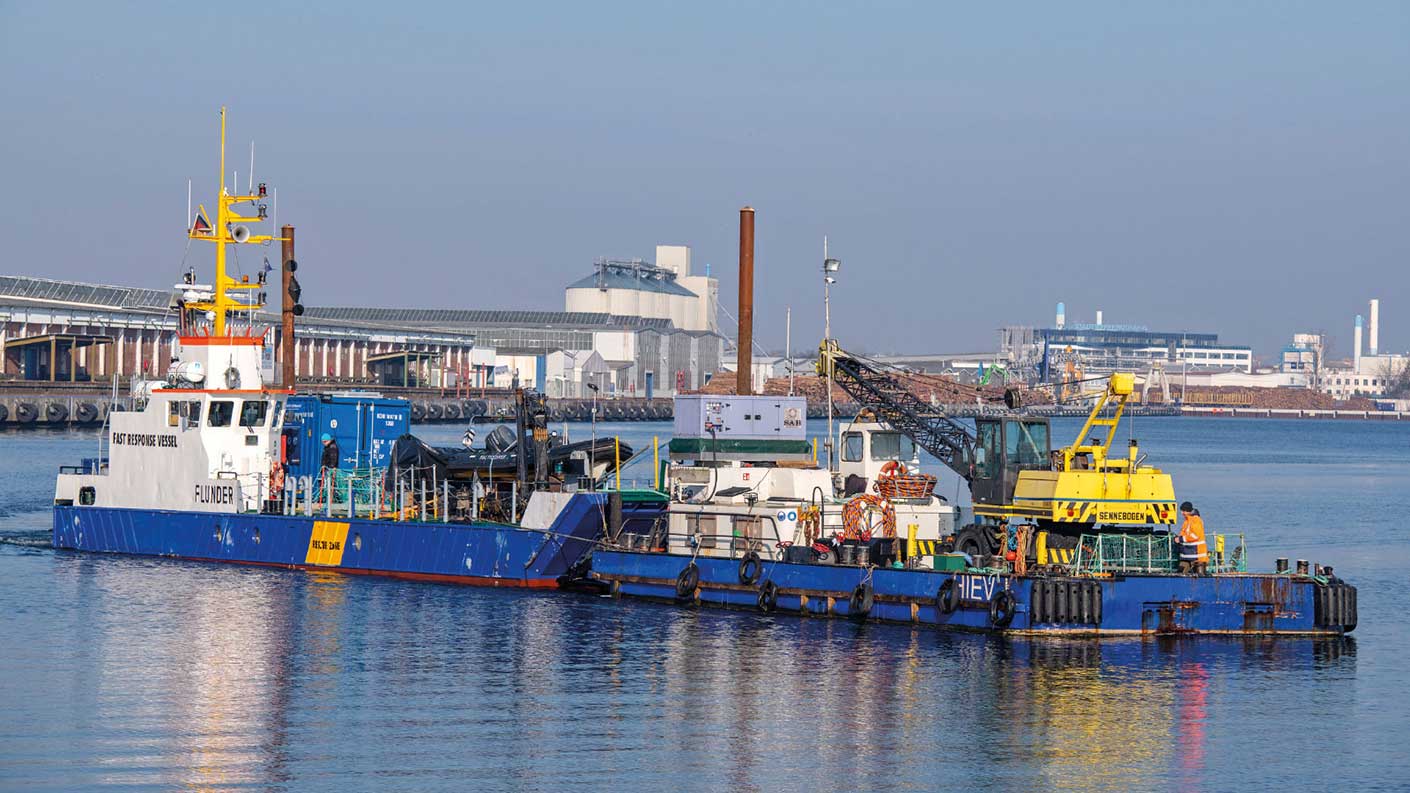
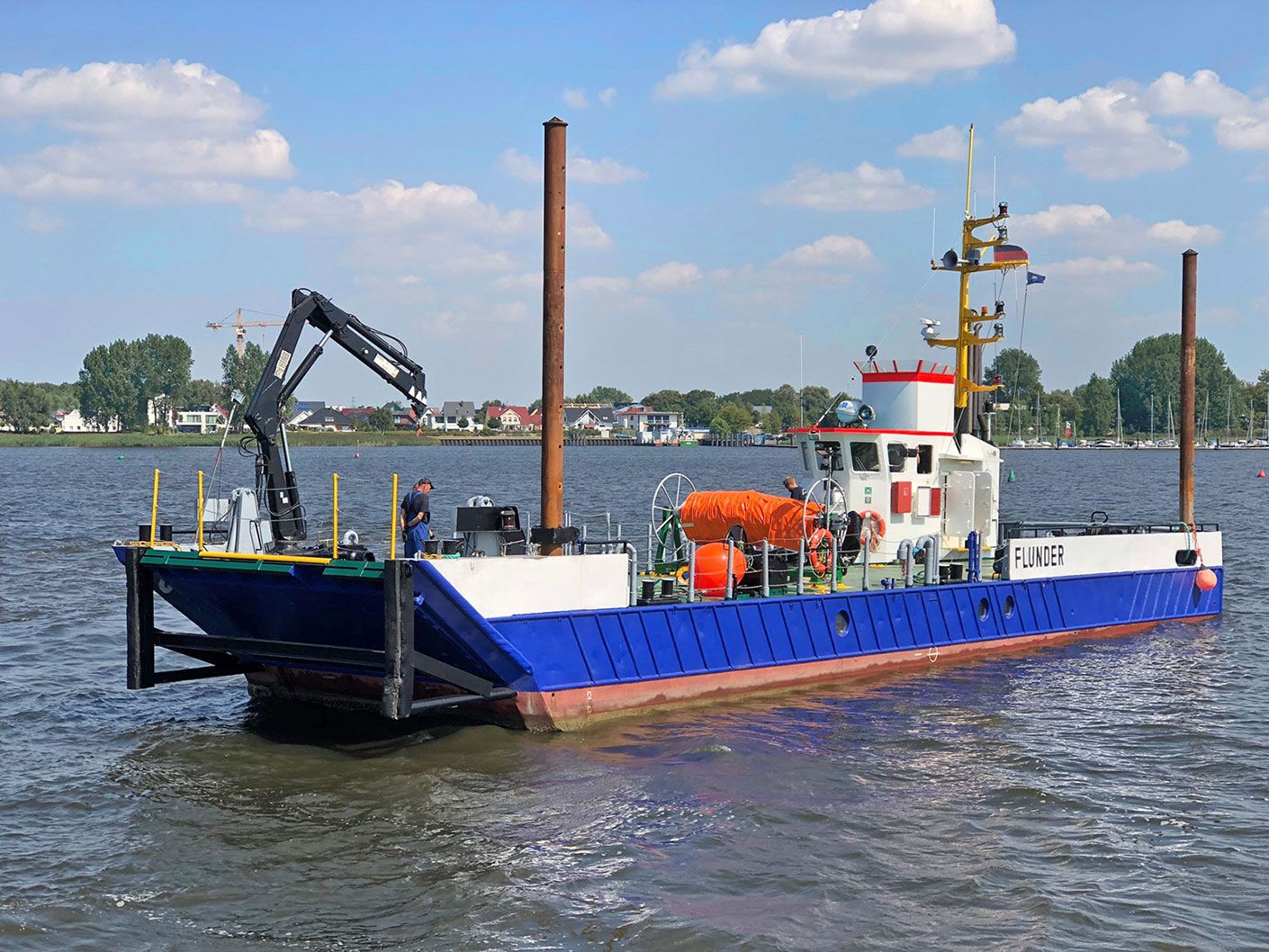
| Vessel type | Landing craft/ pollution control vessel |
| Year of built | 1966 / 1994 |
| Yard | Rheinwerft Walsum |
| Port of registry | Stralsund |
| Flag | Germany |
| Call sign | DBFL |
| IMO-No. | 211229440 |
| Class | BG Verkehr, coastal service max. 20 sm from coast |
| Length o.a. | 23.6 m |
| Breadth | 6.4 m |
| Draft | 1.25 m |
| Gross tonnage | 100 |
| Main engine | 2 x MWM TRHS 518 A |
| Power | 2 x 129 kW |
| Propulsion | 2 x fixed propeller |
| Inverter | 32 kVA |
| Service speed | 8 kn |
| Max. speed | 10 kn |
| Fuel oil | 11 m³ |
| Fresh water | 150 l |
| Additional tanks | 7 m³ (supply or oil spill response) |
| Main deck | 57 m² |
| Additional areas | 25 m² |
| Crew | n.a. |
| Communication | GMDSS A1, UHF and BOS radio, portable VHF/UHF radio, public address system |
| Nautical | AIS, Radar - ARPA, DGPS, autopilot, echo sounder, chart plotter, magnetic and satellite compass |
| Deck | 2 x anchor capstan, deck winch 5 t (fwd), bow ramp, hydraulic power, pack 15 kW incl. controllable interface for external units |
| Cranes | telescopic crane, SWL 0.99 t at 5 m, Davit, SWL 0.6 t at 3.5 m |
| Daughter craft | RIB DSB 380/B, 15 hp |
| Oil spill response | Sweeping arm with Lamor brush skimmer Minimax daughter craft, incl. skimmer pump and settling tank |
| Vessel type | Multi Purpose/ Supply/ Tug/ Oil spill response vessel |
| Year of built | 1979 |
| Yard | Martin Jansen, Schiffswerft und Maschinenfabrik |
| Port of registry | Rostock |
| Flag | Germany |
| Call sign | DCCM |
| Class | BG Verkehr |
| Length o.a. | 28.00 m |
| Breadth | 6.00 m |
| Draft | 1.25 m |
| Gross tonnage | 91 |
| Main engine | Mercedes OM 403 |
| Power | 2 x 235 kW |
| Propulsion | 2 x fixed propeller |
| Inverter | 22 kVA |
| Service speed | 6 kn |
| Max. speed | 8 kn |
| Average consumption | serv.: 43 l/h - max.: 65 l/h |
| Fuel oil | 7.5 m³ |
| Fresh water | 2.5 m³ |
| Additional tanks | 20 m³ (supply or oil spill response) |
| Main deck | 100 m² |
| Additional areas | 10 m² (cargo store) |
| Crew | 2 (2 x 1) |
| Communication | GMDSS A1, Portable VHF/UHF Radio, GSM - Voice and Data |
| Nautical | AIS, Radar - ARPA, ECDIS/ECS, DGPS, Autopilot, Echo Sounder |
| Deck | Anchor capstan, towing winch (aft), moonpool Ø 60 cm |
| Crane | Telescopic, SWL 1.1 t at 7 m |
| Tug | Bumper bar incl. two forward winches to attach and maneuver other vessels |
| Oil spill response | Containment booms, skimmer etc., see additional data sheet |
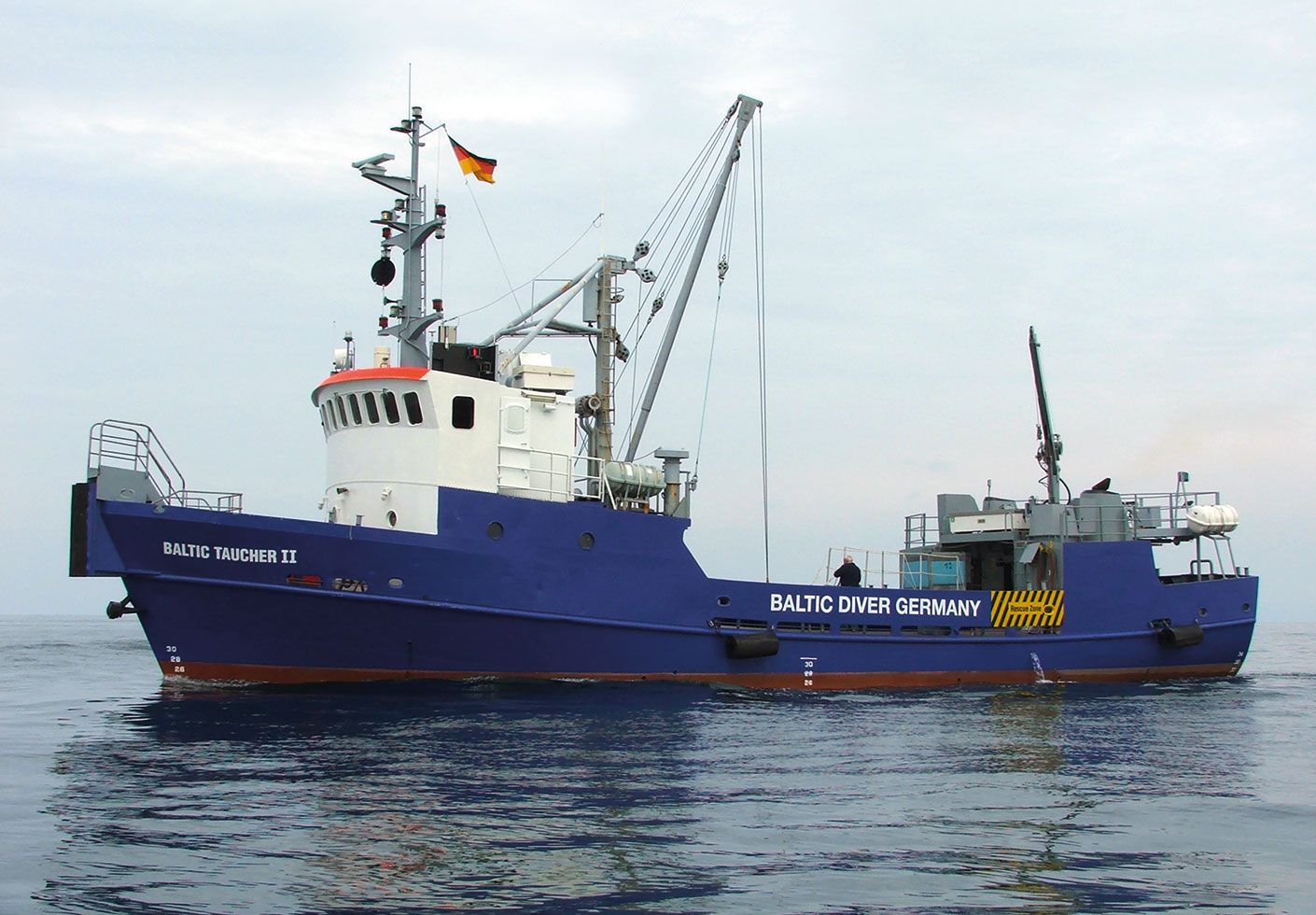
| Vessel type | Multi purpose-/ research- / diving vessel |
| Year of built | 1978 |
| Yard | Voldnes Skipsverft, Norway |
| Port of registry | Rostock |
| Flag | Germany |
| Call sign | DECT2 |
| IMO-No. | 9096387 |
| Class | RINA |
| Length o.a. | 29.00 m |
| Breadth | 6.70 m |
| Draft | 2,80 m |
| Gross tonnage | 146 |
| Main engine | Volvo Penta D16MH |
| Power | 404 kW |
| Propulsion | Controllable pitch propeller |
| Bow thruster | n.a. |
| Genset | 2 x 62 kW |
| Service speed | 8,5 kn |
| Max. speed | 11 kn |
| Average consumption | serv.: 45 l/h - max.: 90 l/h - 4-point-mooring: 125 l/d |
| Fuel oil | 10.5 m³ |
| Fresh water | 10 m³ |
| Main deck | 80 m² |
| Additional areas | n.a. |
| Crew | 4 (2 x 1; 1 x 2) |
| Passenger | 10 (3 x 2; 1 x 4) |
| Office | yes |
| Communication | GMDSS, portable VHF/UHF radio, satellite - voice and data, GSM - voice and data, internet |
| Nautical | AIS, radar - ARPA, ECDIS/ECS, DGPS, autopilot, echo sounder Positioning system, VHF D-finder |
| Deck | Anchor capstan (fwd), capstan (aft) |
| Lifting | Derrick, SWL 4 mt at 8 m, MOB davit, SWL 0,9 mt, MOB davit, SWL 0,225 mt |
| Daugther craft | RIB„ “Bombard“ 6 m, 100 hp |
| 4-Point mooring | 2 x 250 kg (aft) + 2 x 350 kg (fwd) delta flipper anchors, 400 m wire each |
| Two compartment DDC with two way communication according IMCA design standards. The main lock can be used for 2 patients laying down on a stretcher or 3 patients in sitting position. In emergency situations, the entrance lock can also be used as treatment chamber. |
| LOA | 3500 mm |
| Diameter | 1600 mm |
| Type | Twin lock |
| Length entrance lock | 1100 mm |
| Length main chamber | 2400 mm |
| Door diameter | 700 mm |
| Heating system | Tube heat system |
| Working pressure | 5,0 bar (6 bar absolute) |
| Air | external LP/ HP air supply |
| Oxygen | external O2 supply, 2 x BIBs in each lock |
| Classification | Lloyd‘s Register |
| Dive panel | for three divers incl. penumo, approved by Lloyd‘s Register |
| Communication | two way communication for three divers |
| Video | Video control system for three divers incl. recording |
| Internal communication | Deck camera unit, hard wire and radio communication to deck and bridge |
| Dive helmets | 3 x Kirby Morgan 27 |
| HP bottles | 9 x 50L 200bar |
| Compressor | L/W 280 E Compact 280 l/min + back-up compressor |
| O2 analysers | Hytech |
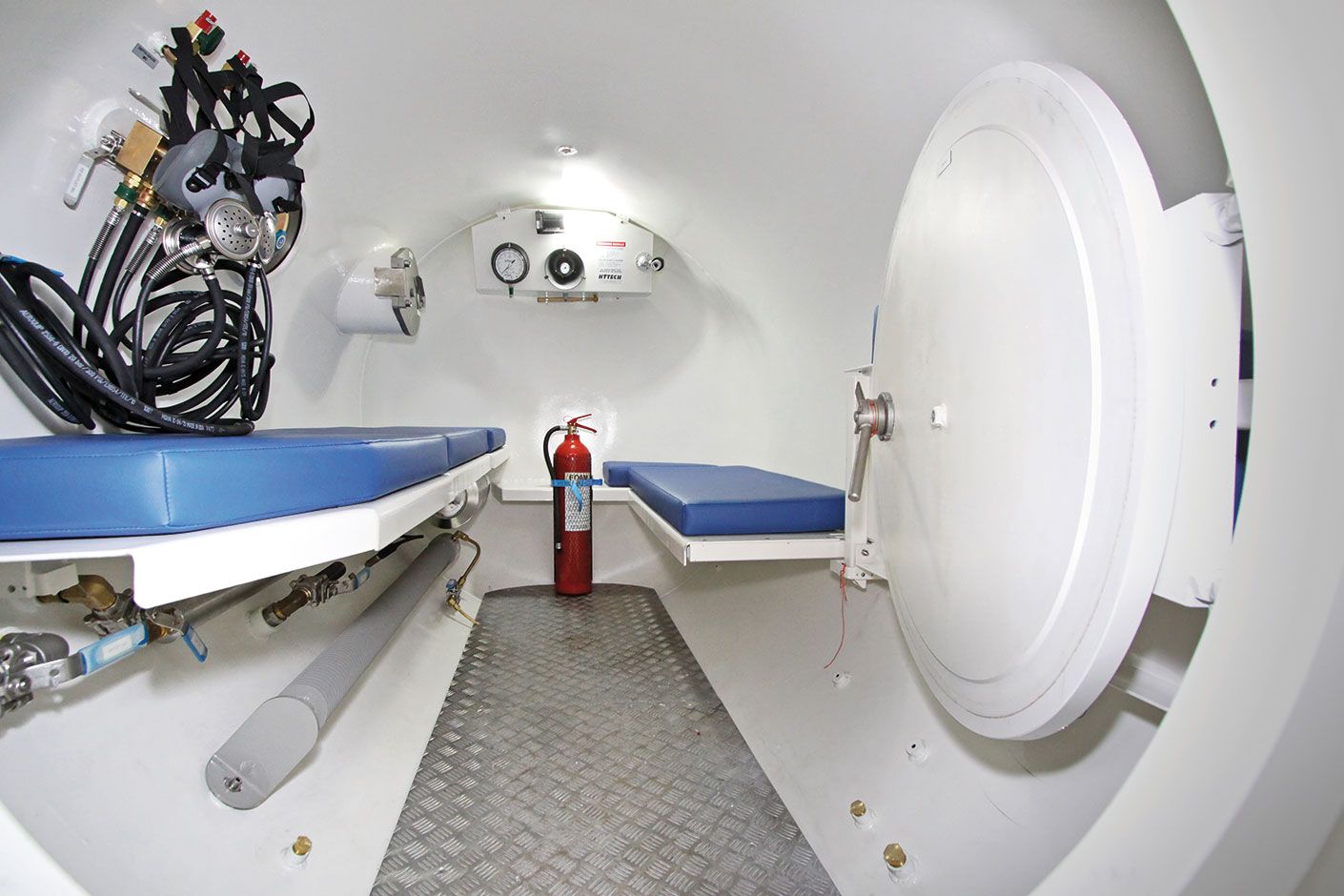
Deck Decompression chamber
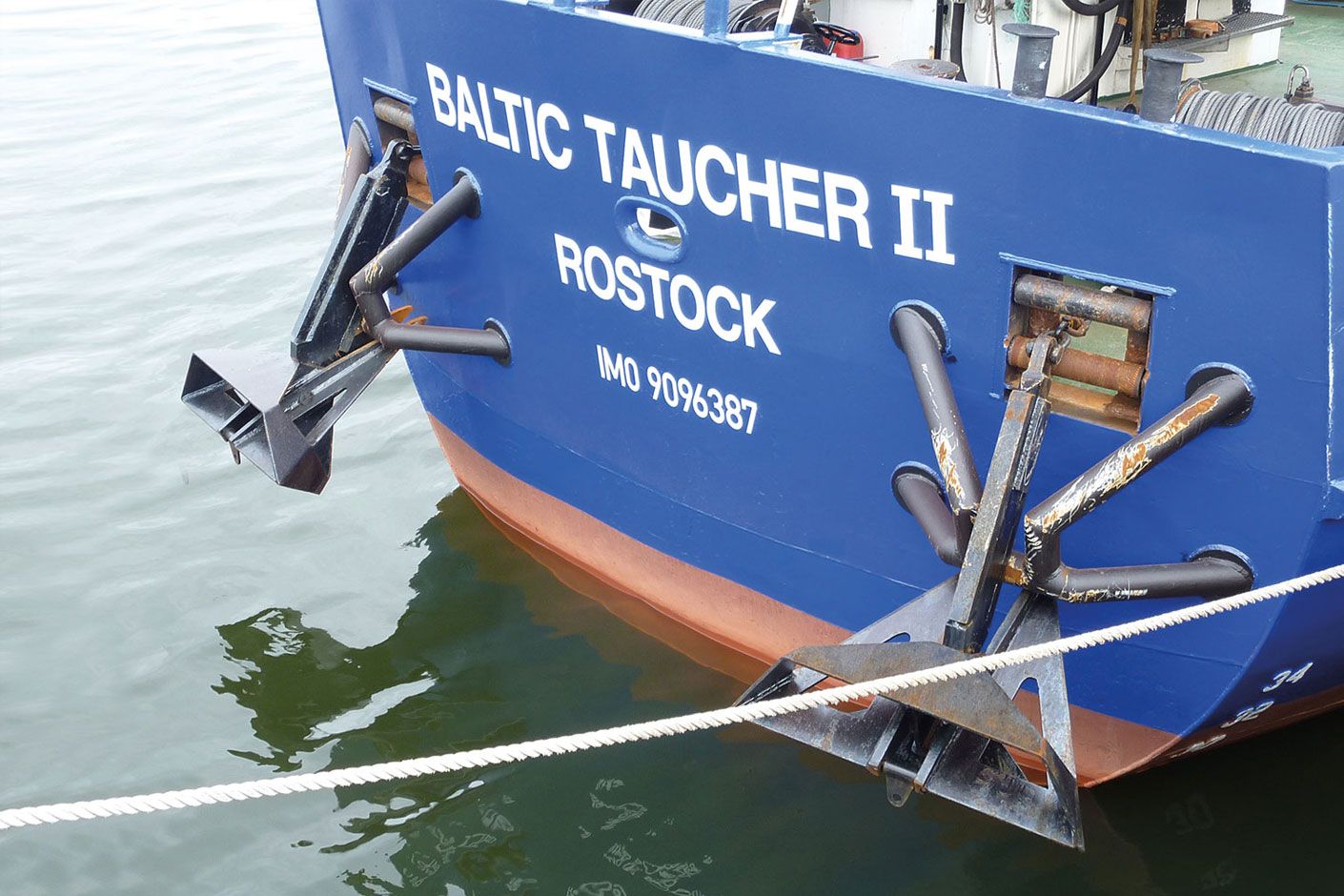
Delta Flipper Anchors for 4-point Mooring
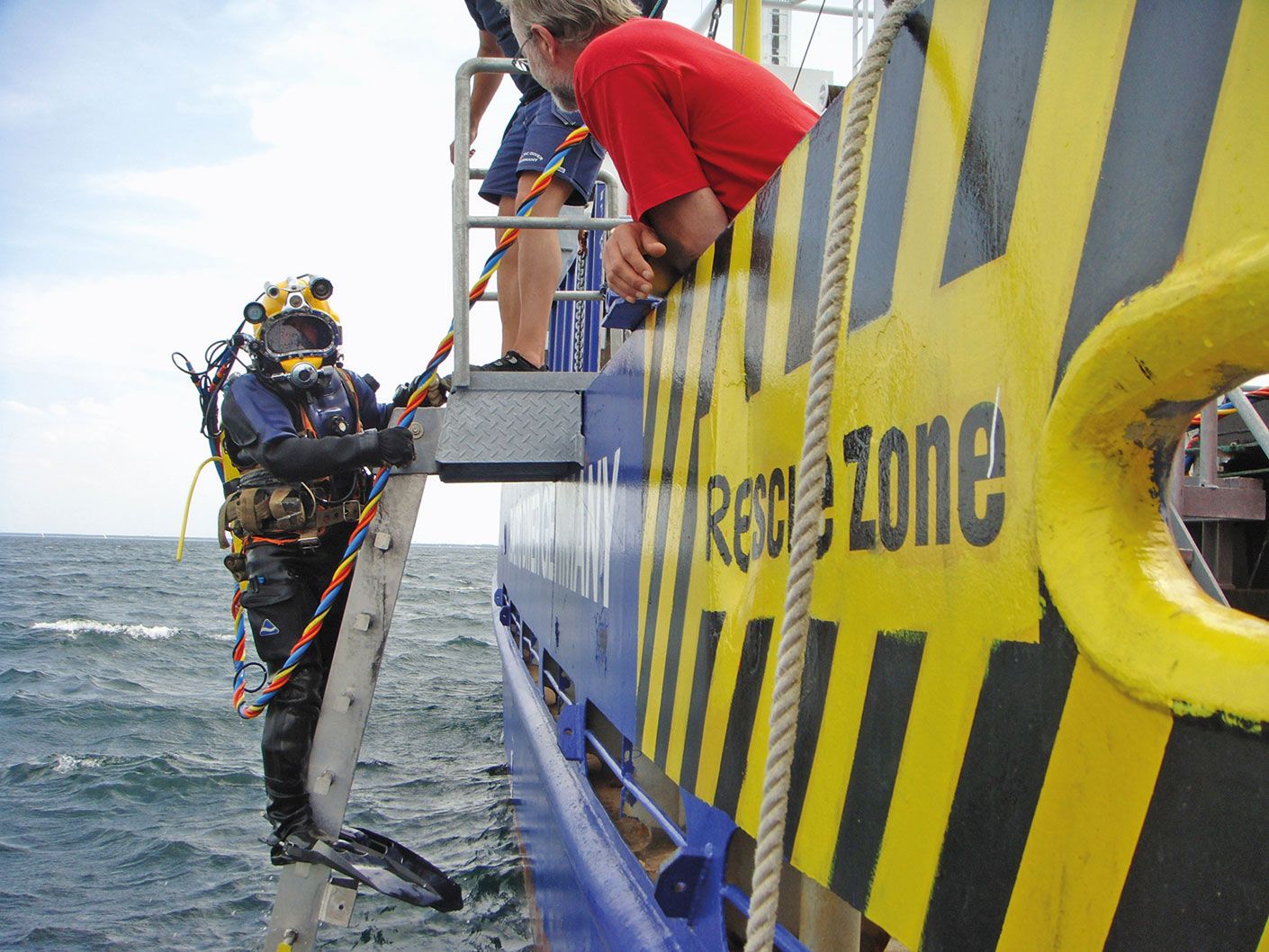
Diving Ladder
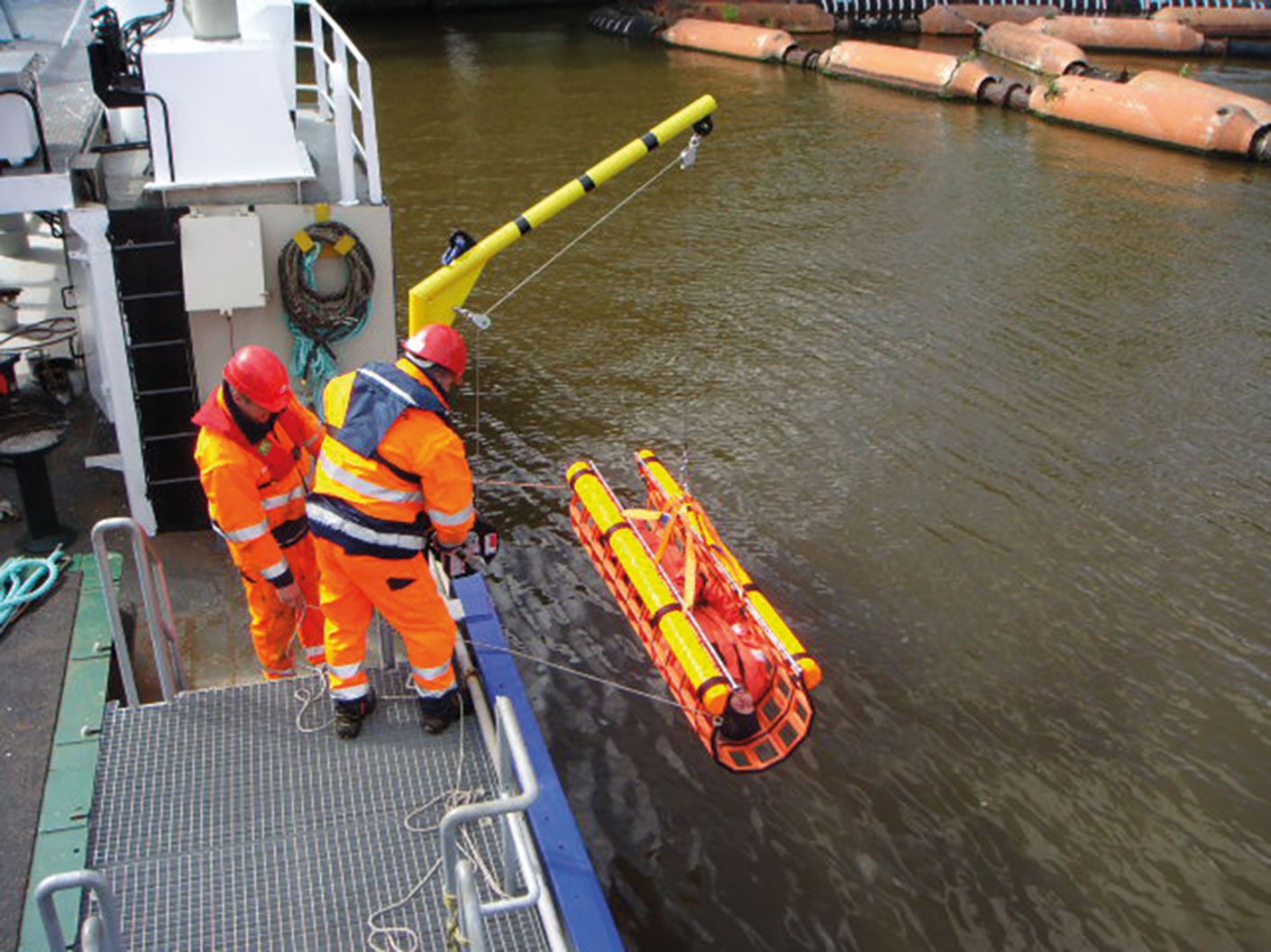
MOB-Davit with Jason`s Cradle

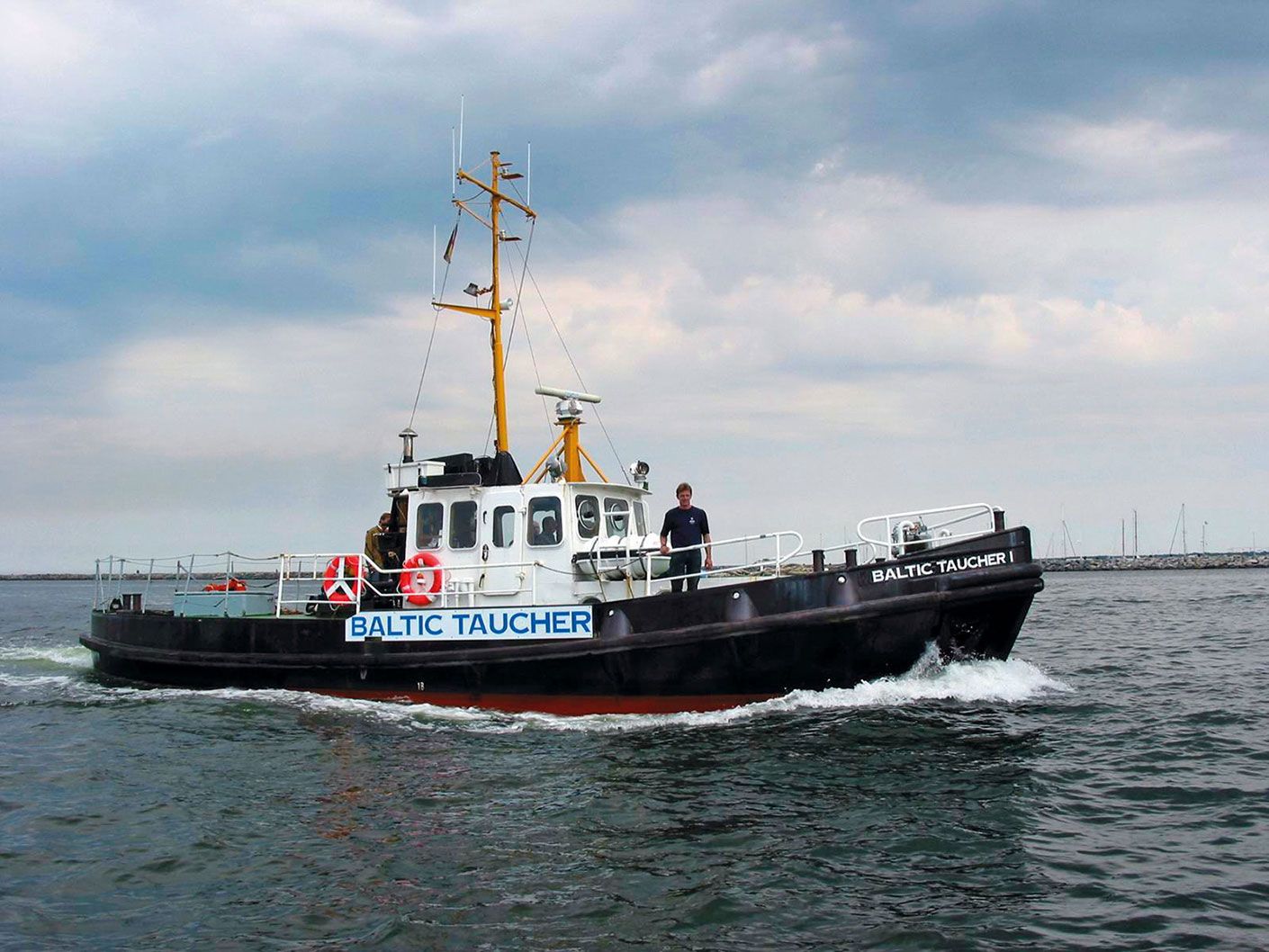
| Vessel type | Push tug/ multi purpose-/ dive support vessel |
| Year of built | 1967 |
| Yard | E.H. Arp. Schiffswerft, Germany |
| Port of registry | Rostock |
| Flag | Germany |
| Call sign | DCIM2 |
| IMO-No. | n.a. |
| Class | BG Verkehr |
| Length o.a. | 16.51 m |
| Breadth | 4.62 m |
| Draft | max. 1.9 m |
| Gross tonnage | 31 |
| Main engine | Deutz F8M 716 |
| Power | 158 kW |
| Propulsion | Fixed propeller |
| Inverter | 3 kW |
| Service speed | 6 kn |
| Max. speed | 8 kn |
| Average consumption | serv.: 15 l/h - max.: 30 l/h |
| Fuel oil | 3.6 m³ |
| Fresh water | 1.0 m³ |
| Main deck | 18 m² |
| Additional areas | n.a. |
| Crew | n.a. |
| Additional rooms | Office/mess room, galley, WC |
| Communication | GMDSS A1, GSM voice and data, 2 x UHF radio, portable VHF/UHF radio |
| Nautical | AIS, radar - ARPA, DGPS, echo sounder, chart plotter |
| Deck | Anchor capstan, diving equipment and diving ladder (optional) |
| Crane | out of service |

Independent project planning and execution of all kind of subsea operations. Our efficiency and quality-conscious work ethic has earned us an outstanding reputation amongst our clients as a valuable partner, both nationally and internationally.

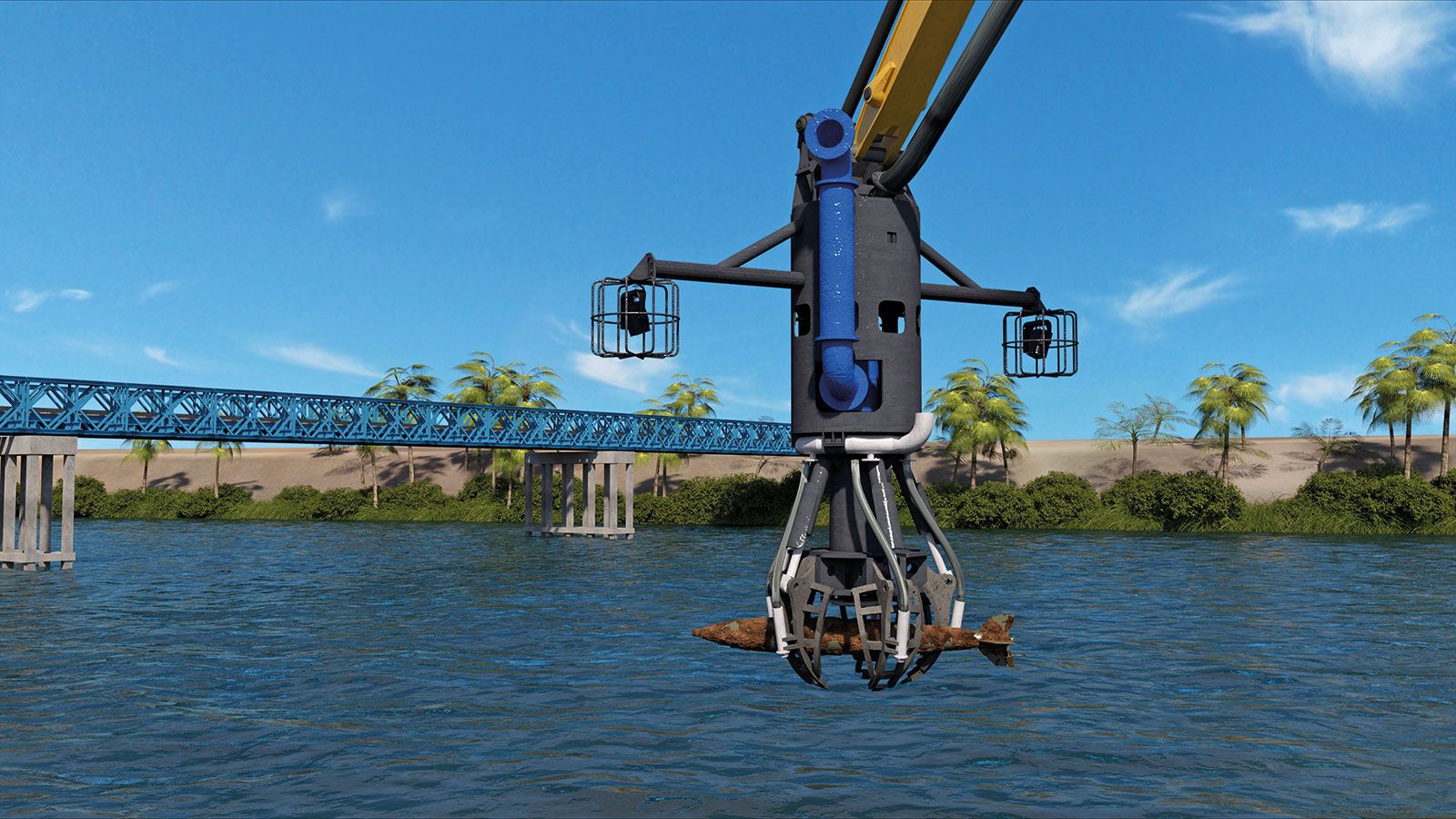
Bildunterschrift
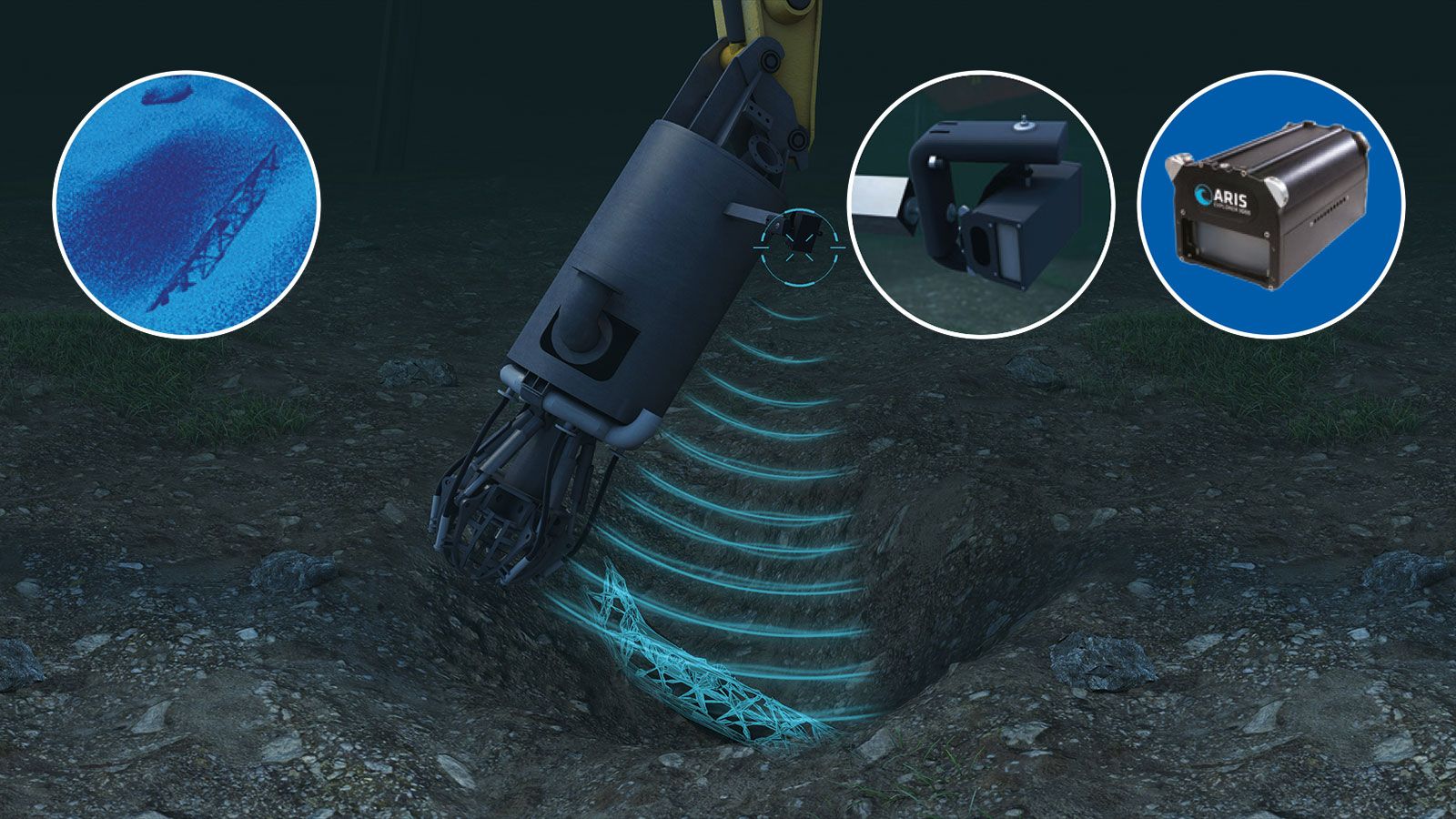
ARIS 3000 “Viewing with sound”
Bildunterschrift
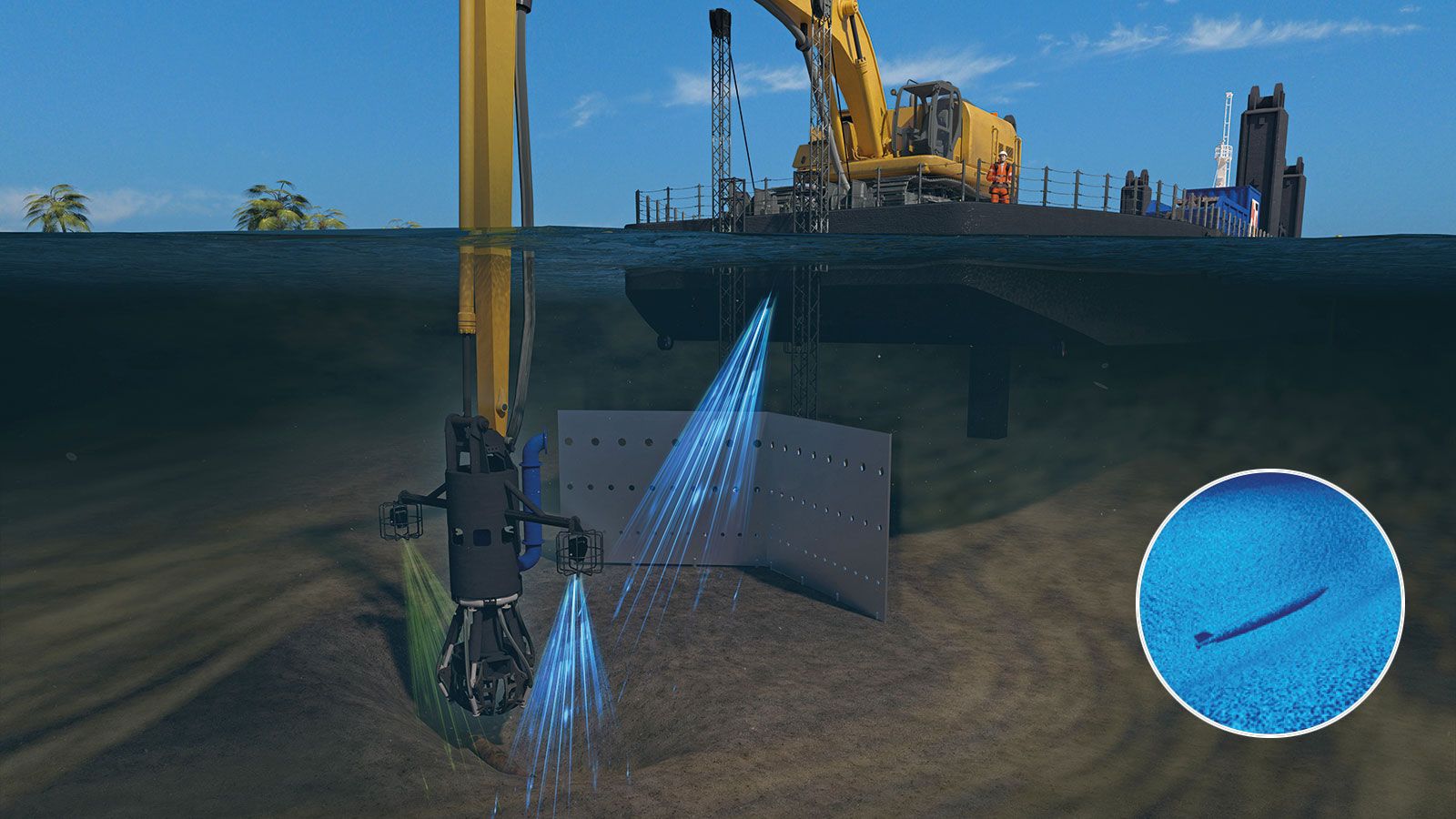
Bildunterschrift

Independent project planning and execution of all kind of subsea operations. Our efficiency and quality-conscious work ethic has earned us an outstanding reputation amongst our clients as a valuable partner, both nationally and internationally.

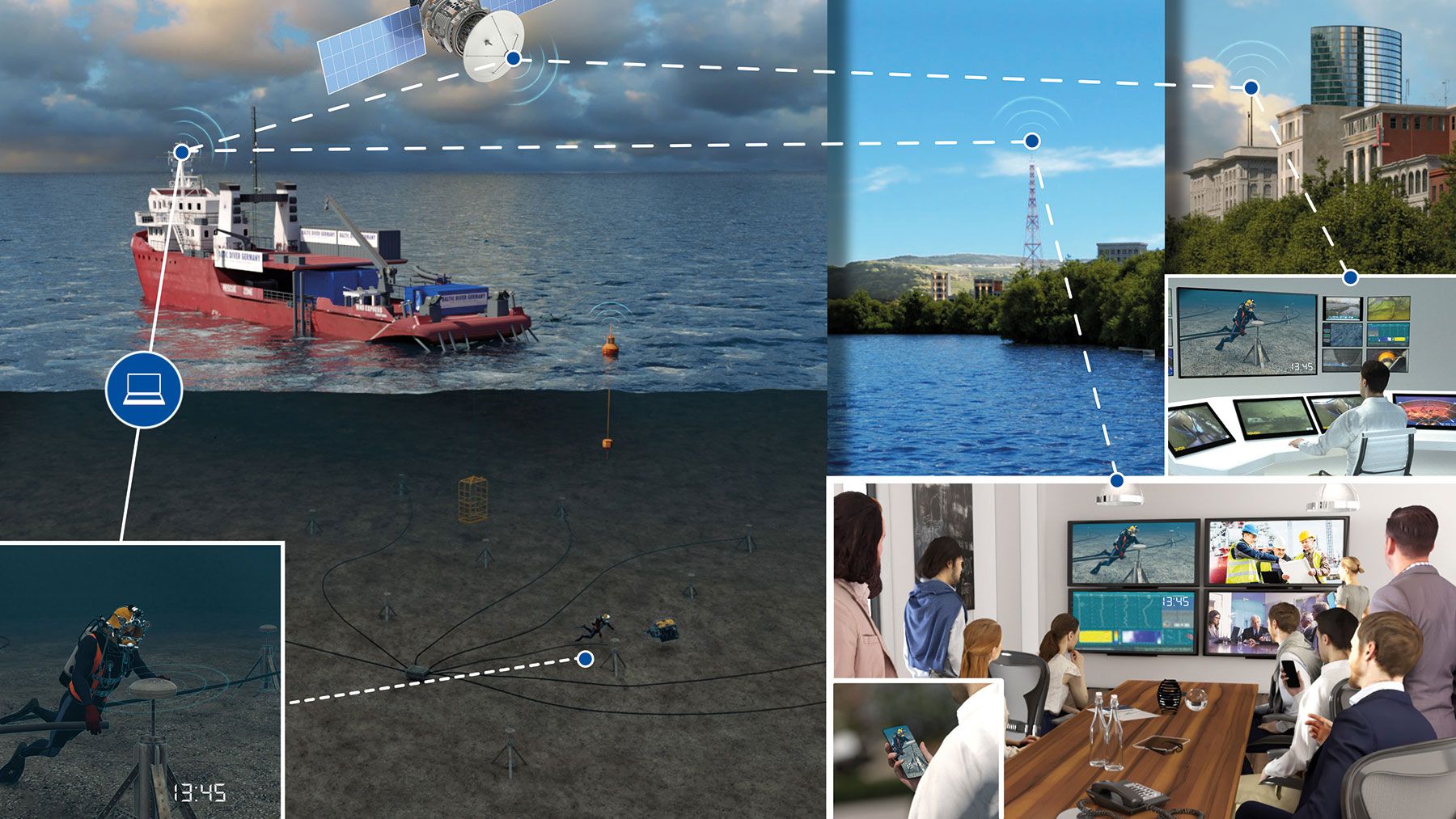
BalticStream is a flexible hard- and software solution for streaming live videos from remote places to anywhere in the world. It was developed by Baltic Diver Germany in cooperation with a Norwegian partner.
On-site almost any kind of live video input can be fed into BalticStream. The data is transferred via mobile telephone or satellite networks and streamed to an online video platform, which can be accessed from usual desktop PCs. In addition, the equipment enab- les a live communication between the workers on-site and the online participants. The on-site hardware is designed to be robust and lightweight and can be operated by any technician after a short introduction. The online platform is easy to access and to handle. This technology can be used in various scenarios.
In-water survey of vessels via diver or ROV: The class-surveyor does not need to be present on-site. He can access the survey from the office and directly talk to the operator and diver on-site.
Remote assistance: If a technician faces an unexpected challenge on-site, he might need support from a remote colleague or expert. No matter whether he is a mechanic in a wind turbine nacelle or a diver facing an UXO. Via BalticStream, the expert team can follow the task on-site on screen and provide the necessary remote support. Valuable time and travel costs are saved.
Many other client-specific scenarios are possible. The hard- and software can be adapted in-house for special requirements.
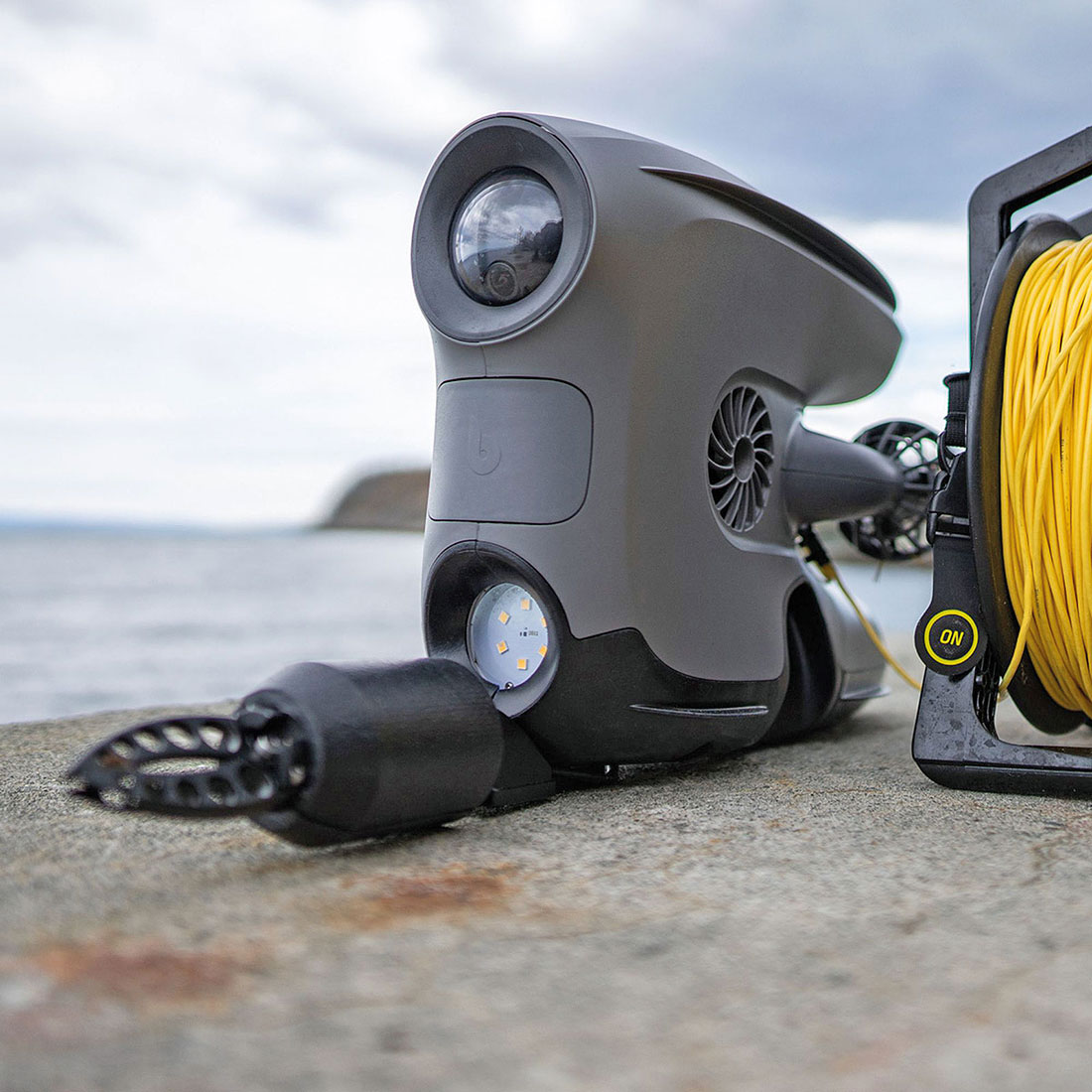
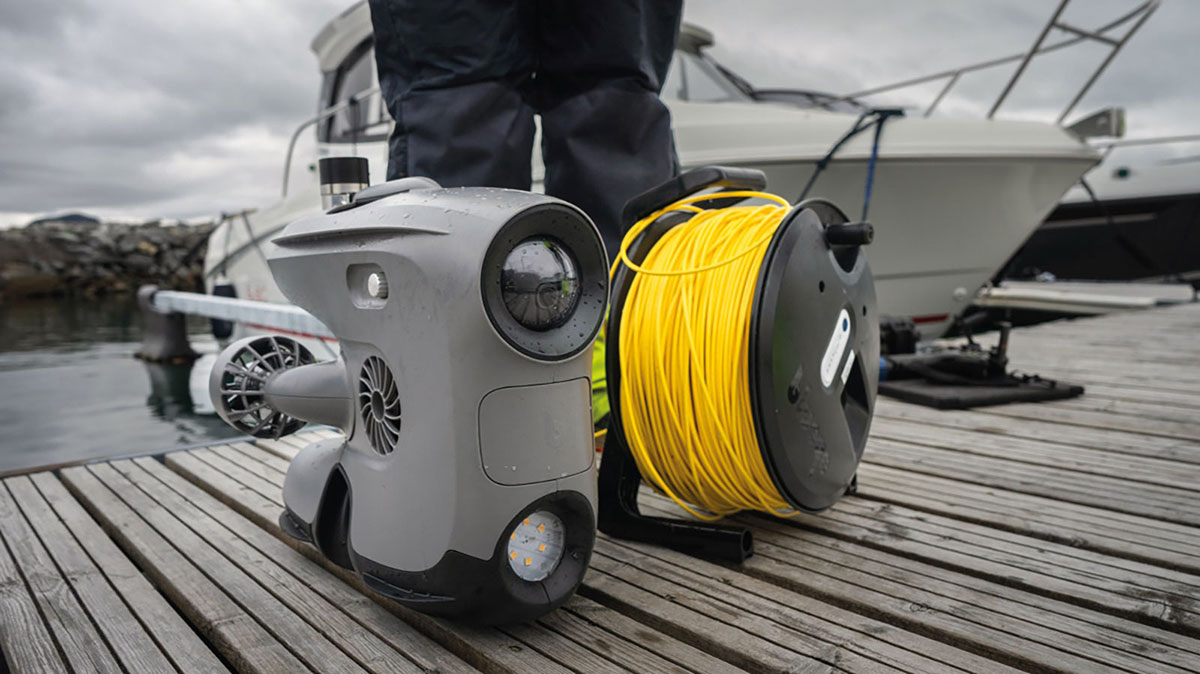
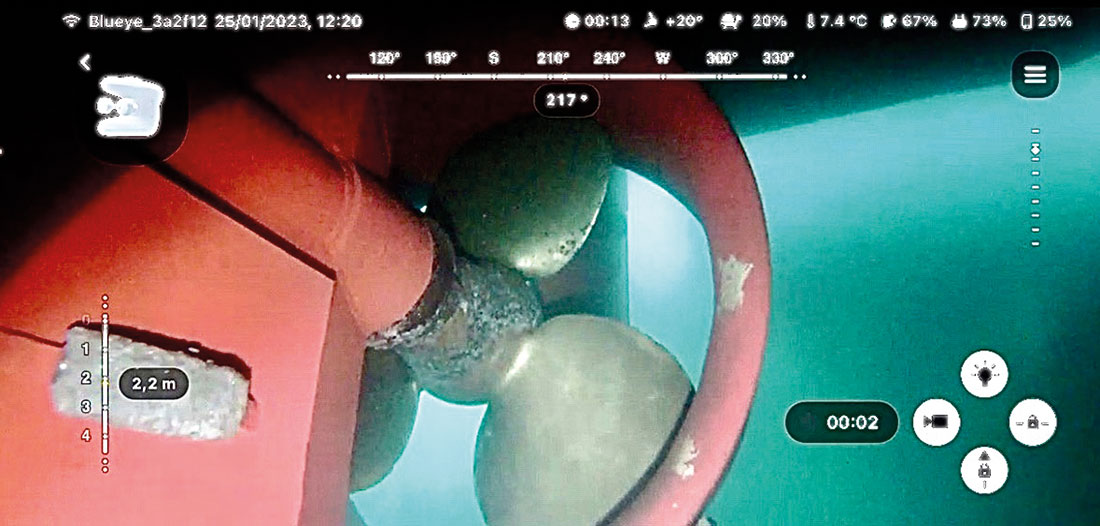

Independent project planning and execution of all kind of subsea operations. Our efficiency and quality-conscious work ethic has earned us an outstanding reputation amongst our clients as a valuable partner, both nationally and internationally.
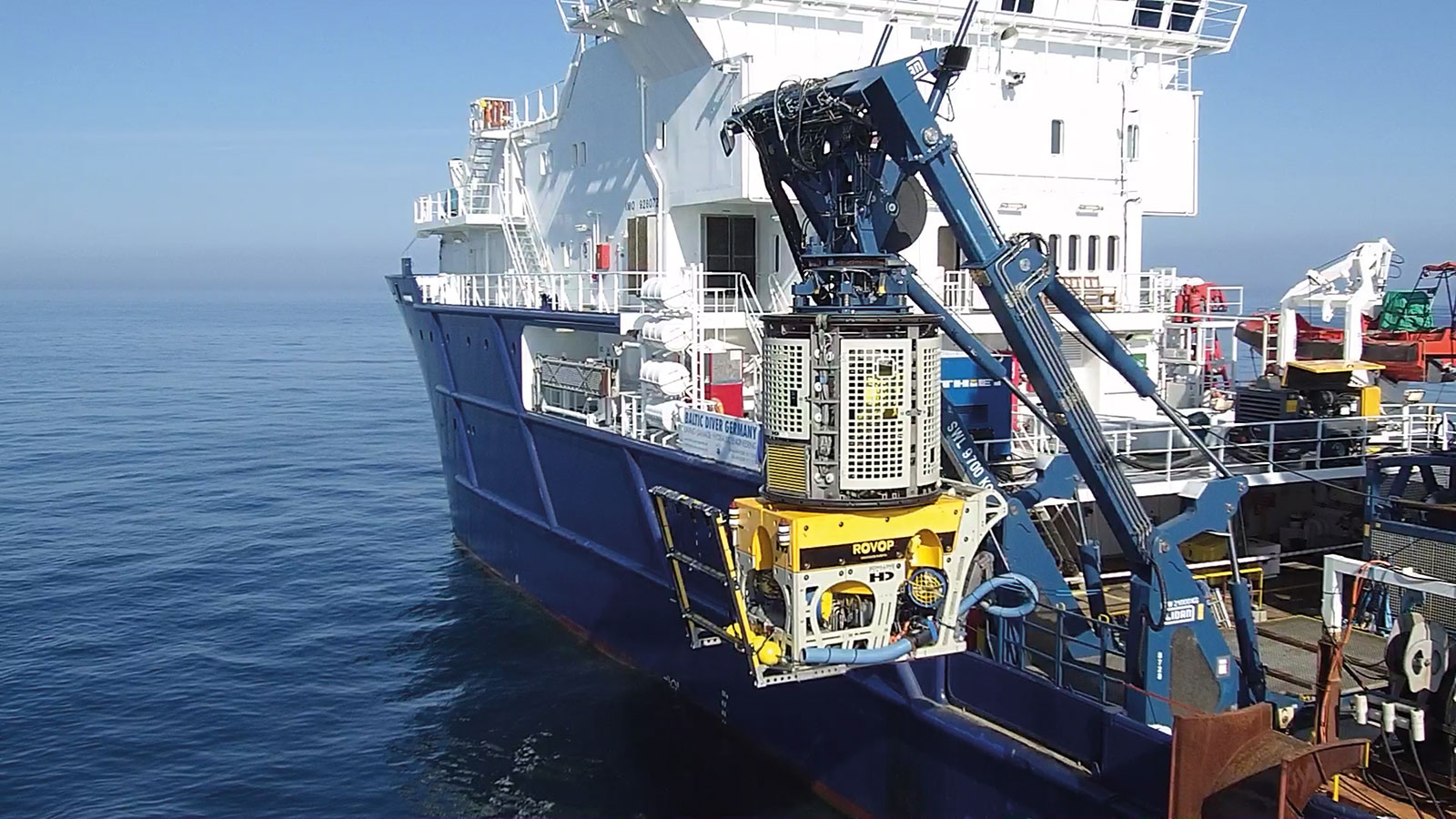
BALTIC Taucherei- und Bergungsbetrieb Rostock GmbH
BALTIC Taucherei- und Bergungsbetrieb Rostock GmbH
Alter Hafen S 3, 18069 Rostock
|
BASIC DATA
| |
|---|---|
|
Vessel type
|
Self-Propelled Crane Barge
|
|
Year of built
|
1974
|
|
Yard
|
Mützelfeldtwerft Cuxhaven
|
|
Port of registry
|
Rostock
|
|
Communication
|
GMDSS A1, UHF/VHF Radio, GSM /INMARSAT/SAT – Voice and Data, Internet
|
BALTIC Taucherei- und Bergungsbetrieb Rostock GmbH
BALTIC Taucherei- und Bergungsbetrieb Rostock GmbH
Alter Hafen S 3, 18069 Rostock
|
BASIC DATA
| |
|---|---|
|
Vessel type
|
Self-Propelled Crane Barge
|
|
Year of built
|
1974
|
|
Yard
|
Mützelfeldtwerft Cuxhaven
|
|
Port of registry
|
Rostock
|
|
Communication
|
GMDSS A1, UHF/VHF Radio, GSM /INMARSAT/SAT – Voice and Data, Internet
|
Der Schutz Ihrer persönlichen Daten ist uns ein besonderes Anliegen. Wir verarbeiten Ihre personenbezogenen Daten (kurz „Daten”) daher ausschließlich auf Grundlage der gesetzlichen Bestimmungen. Mit dieser Datenschutzerklärung wollen wir Sie über die Verarbeitung Ihrer Daten in unserem Unternehmen und die Ihnen zustehenden datenschutzrechtlichen Ansprüche und Rechte umfassend im Sinne des Art. 13 der Europäischen Datenschutz-Grundverordnung (DS-GVO) informieren.
1. Verantwortliche Stelle
Firmenname: BALTIC Taucherei- und Bergungsbetrieb Rostock GmbH
Anschrift: Alter Hafen Süd 3, 18069 Rostock
Telefon: +49 381 66096600
Fax: +49 381 66096610
eMail: info@baltic-taucher.de
vertreten durch: Eyk-Uwe Pap
Datenschutzbeauftragter
Prof. Ulf Glende, GLENDE.CONSULTING. GmbH & Co. KG, Friedrich-Barnewitz-Str. 7, 18119 Rostock
info@glende-consulting.de
2. Welche Daten werden verarbeitet und aus welchen Quellen stammen diese Daten?
Mit Ihrer Entscheidung, sich auf diese Stelle zu bewerben, übermitteln Sie neben Ihren persönlichen Daten auch Informationen über Ihren schulischen und beruflichen Werdegang.
Mit der übermittlung Ihrer Bewerbungsunterlagen per E-Mail werden diese automatisch erfasst. Hierbei werden alle mitgesendeten Dokumente (Anschreiben, Lebenslauf, Zeugnisse und sonstige Nachweise) sowie die darin enthaltenen Informationen gespeichert.
Sollten Sie uns Ihre Bewerbungsunterlagen noch persönlich oder auf dem Postweg übermitteln, digitalisieren wir diese zunächst und erfassen sie anschließend ebenfalls in unserem Bewerbermanagementsystem. Die Originalunterlagen senden wir Ihnen umgehend wieder zurück.
Unzulässige Inhalte
Sie sind allein für den Inhalt der eingestellten Texte verantwortlich. Bitte stellen Sie sicher, dass Sie uns keine Dateianhänge mit Viren oder Würmern zusenden. Persönliche Daten, die Sie an uns übermitteln, sollten in der Regel folgendes nicht enthalten:
• Informationen über Krankheiten,
• Informationen über eine eventuelle Schwangerschaft,
• Informationen über ethnische Herkunft,
• politische, religiöse oder philosophische überzeugungen,
• Gewerkschaftszugehörigkeit und sexuelle Ausrichtung,
• diffamierende oder entwürdigende Informationen,
• Informationen, die in keinem konkreten Zusammenhang mit Ihrer Bewerbung stehen.
Die Informationen, die Sie uns übermitteln, müssen der Wahrheit entsprechen, dürfen keine Rechte Dritter, öffentlich-rechtliche Vorschriften oder die guten Sitten verletzen (“Unzulässige Inhalte”). Beachten sie bitte auch, dass Sie uns gegen sämtliche Forderungen schadlos halten, die uns aufgrund von Informationen mit Unzulässigen Inhalten entstehen und die uns von Ihnen übermittelt wurden.
3. Für welche Zwecke und auf welcher Rechtsgrundlage werden die Daten verarbeitet?
Ihre Bewerbungsdaten werden ausschließlich beim Verantwortlichen für den Zweck Ihrer Bewerbung für ein Beschäftigungsverhältnis verarbeitet. Rechtsgrundlage ist dabei § 26 Abs. 1 i.V.m Abs. 8 S. 2 BDSG. Weiterhin können wir personenbezogene Daten über Sie verarbeiten, soweit dies zur Abwehr von geltend gemachten Rechtsansprüchen aus dem Bewerbungsverfahren gegen uns erforderlich ist. Rechtsgrundlage ist dabei Art. 6 Abs. 1, lit. f DSGVO, das berechtigte Interesse ist beispielsweise eine Beweispflicht in einem Verfahren nach dem Allgemeinen Gleichbehandlungsgesetz (AGG).
Soweit es zu einem Beschäftigungsverhältnis zwischen Ihnen und uns kommt, können wir gemäß § 26 Abs. 1 BDSG die bereits von Ihnen erhaltenen personenbezogenen Daten für Zwecke des Beschäftigungsverhältnisses weiterverarbeiten, wenn dies für die Durchführung oder Beendigung des Beschäftigungsverhältnisses oder zur Ausübung oder Erfüllung der sich aus einem Gesetz oder einem Tarifvertrag, einer Betriebs- oder Dienstvereinbarung (Kollektivvereinbarung) ergebenden Rechte und Pflichten der Interessenvertretung der Beschäftigten erforderlich ist.
Die Weitergabe der Daten an datenschutzrechtlich Dritte erfolgt nicht.
4. Wer verarbeitet meine Daten?
Ihre personenbezogenen Daten erhalten innerhalb unseres Unternehmens nur die Personen, die diese zur Erfüllung unserer vertraglichen und gesetzlichen Pflichten benötigen, wie die Personalabteilung, die Buchhaltung, der Fachbereich, der Betriebsrat oder die Schwerbehindertenvertretung. Ihre Daten behandeln wir selbstverständlich vertraulich und übermitteln diese nicht an Dritte. Ggf. setzen wir streng weisungsgebundene Dienstleister ein, die uns z. B. in den Bereichen EDV oder der Archivierung und Vernichtung von Dokumenten unterstützen und mit denen gesonderte Verträge zur Auftragsverarbeitung geschlossen wurden.
Außerhalb des Unternehmens übermitteln wir Ihre Daten an weitere Empfänger, soweit dies zur Erfüllung unserer vertraglichen und gesetzlichen Pflichten erforderlich ist. Hierbei handelt es sich insbesondere um die Sozialversicherungsträger, die Krankenkasse, die Rentenversicherung, berufsständische Versorgungseinrichtungen, die Agentur für Arbeit, die Berufsgenossenschaft, die Finanzbehörden, Unfall – und Haftpflichtversicherungen, Gerichte, Banken, zuständige Stellen, um Ansprüche aus der betrieblichen Altersversorgung oder vermögenswirksame Leistungen gewährleisten zu können, Drittschuldner im Falle von Lohn- und Gehaltspfändungen oder Insolvenzverwalter im Falle einer Privatinsolvenz.
5. Wie lange werden meine Daten gespeichert?
Soweit keine gesetzliche Aufbewahrungsfrist existiert, werden die Daten gelöscht, sobald eine Speicherung nicht mehr erforderlich, bzw. das berechtigte Interesse an der Speicherung erloschen ist. Sofern keine Einstellung erfolgt, ist dies regelmäßig spätestens sechs Monate nach Abschluss des Bewerbungsverfahrens der Fall. Die Dauer der Speicherung richtet sich dann nach den gesetzlichen Aufbewahrungspflichten bspw. aus der Abgabenordnung (6 Jahre) oder dem Handelsgesetzbuch (10 Jahre). Sofern es nicht zu einer Einstellung gekommen ist, Ihre Bewerbung aber weiterhin für uns interessant ist, fragen wir Sie, ob wir Ihre Bewerbung für künftige Stellenbesetzungen weiter vorhalten dürfen.
6. Werden personenbezogene Daten an ein Drittland übermittelt?
Grundsätzlich werden von uns keine Daten an ein Drittland übermittelt. Eine übermittlung findet im Einzelfall nur auf Grundlage eines Angemessenheitsbeschlusses der Europäischen Kommission, Standardvertragsklauseln, geeigneter Garantien oder Ihrer ausdrücklichen Zustimmung statt.
7. Welche Datenschutzrechte habe ich?
Sie haben jederzeit ein Recht auf Auskunft, Berichtigung, Löschung oder Einschränkung der Verarbeitung Ihrer gespeicherten Daten, ein Widerspruchsrecht gegen die Verarbeitung sowie ein Recht auf Datenübertragbarkeit und auf Beschwerde gemäß den Voraussetzungen des Datenschutzrechts.
Recht auf Auskunft:
Sie können von uns eine Auskunft verlangen, ob und in welchem Ausmaß wir Ihre Daten verarbeiten.
Recht auf Berichtigung:
Verarbeiten wir Ihre Daten, die unvollständig oder unrichtig sind, so können Sie jederzeit deren Berichtigung bzw. deren Vervollständigung von uns verlangen.
Recht auf Löschung:
Sie können von uns die Löschung Ihrer Daten verlangen, sofern wir diese unrechtmäßig verarbeiten oder die Verarbeitung unverhältnismäßig in Ihre berechtigten Schutzinteressen eingreift. Bitte beachten Sie, dass es Gründe geben kann, die einer sofortigen Löschung entgegenstehen, z.B. im Fall von gesetzlich geregelten Aufbewahrungspflichten. Unabhängig von der Wahrnehmung Ihres Rechts auf Löschung, werden wir Ihre Daten umgehend und vollständig löschen, soweit keine diesbezügliche rechtsgeschäftliche oder gesetzliche Aufbewahrungspflicht entgegensteht.
Recht auf Einschränkung der Verarbeitung:
Sie können von uns die Einschränkung der Verarbeitung Ihrer Daten verlangen, wenn
– Sie die Richtigkeit der Daten bestreiten, und zwar für eine Dauer, die es uns ermöglicht, die Richtigkeit der Daten zu überprüfen.
– die Verarbeitung der Daten unrechtmäßig ist, Sie aber eine Löschung ablehnen und stattdessen eine Einschränkung der Datennutzung verlangen,
– wir die Daten für den vorgesehenen Zweck nicht mehr benötigen, Sie diese Daten aber noch zur Geltendmachung oder Verteidigung von Rechtsansprüchen brauchen, oder
– Sie Widerspruch gegen die Verarbeitung der Daten eingelegt haben.
Recht auf Datenübertragbarkeit:
Sie können von uns verlangen, dass wir Ihnen Ihre Daten, die Sie uns bereitgestellt haben, in einem strukturierten, gängigen und maschinenlesbaren Format zur Verfügung stellen und dass Sie diese Daten einem anderen Verantwortlichen ohne Behinderung durch uns übermitteln können, sofern
– wir diese Daten aufgrund einer von Ihnen erteilten und widerrufbaren Zustimmung oder zur Erfüllung eines Vertrages zwischen uns verarbeiten, und
– diese Verarbeitung mithilfe automatisierter Verfahren erfolgt.
Bei technischer Machbarkeit können Sie von uns eine direkte übermittlung Ihrer Daten an einen anderen Verantwortlichen verlangen.
Widerspruchsrecht:
Verarbeiten wir Ihre Daten aus berechtigtem Interesse, so können Sie gegen diese Datenverarbeitung jederzeit Widerspruch einlegen; dies würde auch für ein auf diese Bestimmungen gestütztes Profiling gelten. Wir verarbeiten dann Ihre Daten nicht mehr, es sei denn, wir können zwingende schutzwürdige Gründe für die Verarbeitung nachweisen, die Ihre Interessen, Rechte und Freiheiten überwiegen oder die Verarbeitung dient der Geltendmachung, Ausübung oder Verteidigung von Rechtsansprüchen. Der Verarbeitung Ihrer Daten zum Zweck der Direktwerbung können Sie jederzeit ohne Angabe von Gründen widersprechen. Sollten Sie von Ihren oben genannten Rechten Gebrauch machen, prüfen wir, ob die gesetzlichen Voraussetzungen hierfür erfüllt sind.
Beschwerderecht:
Sind Sie der Meinung, dass wir bei der Verarbeitung Ihrer Daten gegen deutsches oder europäisches Datenschutzrecht verstoßen, so bitten wir Sie, mit uns Kontakt aufzunehmen, um Fragen aufklären zu können. Sie haben selbstverständlich auch das Recht, sich an die für Sie zuständige Aufsichtsbehörde, das jeweilige Landesamt für Datenschutzaufsicht, zu wenden.
Der Landesbeauftragte für Datenschutz und Informationsfreiheit Mecklenburg-Vorpommern
Werderstraße 74 a
19055 Schwerin
Telefon: 0385 59494 0
Telefax: 0385 59494 58
E-Mail: info@datenschutz-mv.de
Webseite: www.datenschutz-mv.de
Sofern Sie eines der genannten Rechte uns gegenüber geltend machen wollen, so wenden Sie sich bitte an unseren Datenschutzbeauftragten. Im Zweifel können wir zusätzliche Informationen zur Bestätigung Ihrer Identität anfordern.
8. Bin ich zur Bereitstellung von Daten verpflichtet?
Die Verarbeitung Ihrer Daten ist zur Bearbeitung Ihrer bei uns eingegangenen Bewerbung erforderlich. Wenn Sie uns diese Daten nicht zur Verfügung stellen, können wir Ihre Bewerbung nicht berücksichtigen. Sie sind jedoch nicht verpflichtet, hinsichtlich des Verfahrens der Bewerbung für nicht relevante bzw. gesetzlich nicht erforderlicher Daten eine Einwilligung zur Datenverarbeitung zu erteilen.
9. Automatisierte Entscheidungsfindung oder Profiling
Eine automatisierte Entscheidungsfindung einschließlich einer Profilierung wird von uns nicht genutzt.
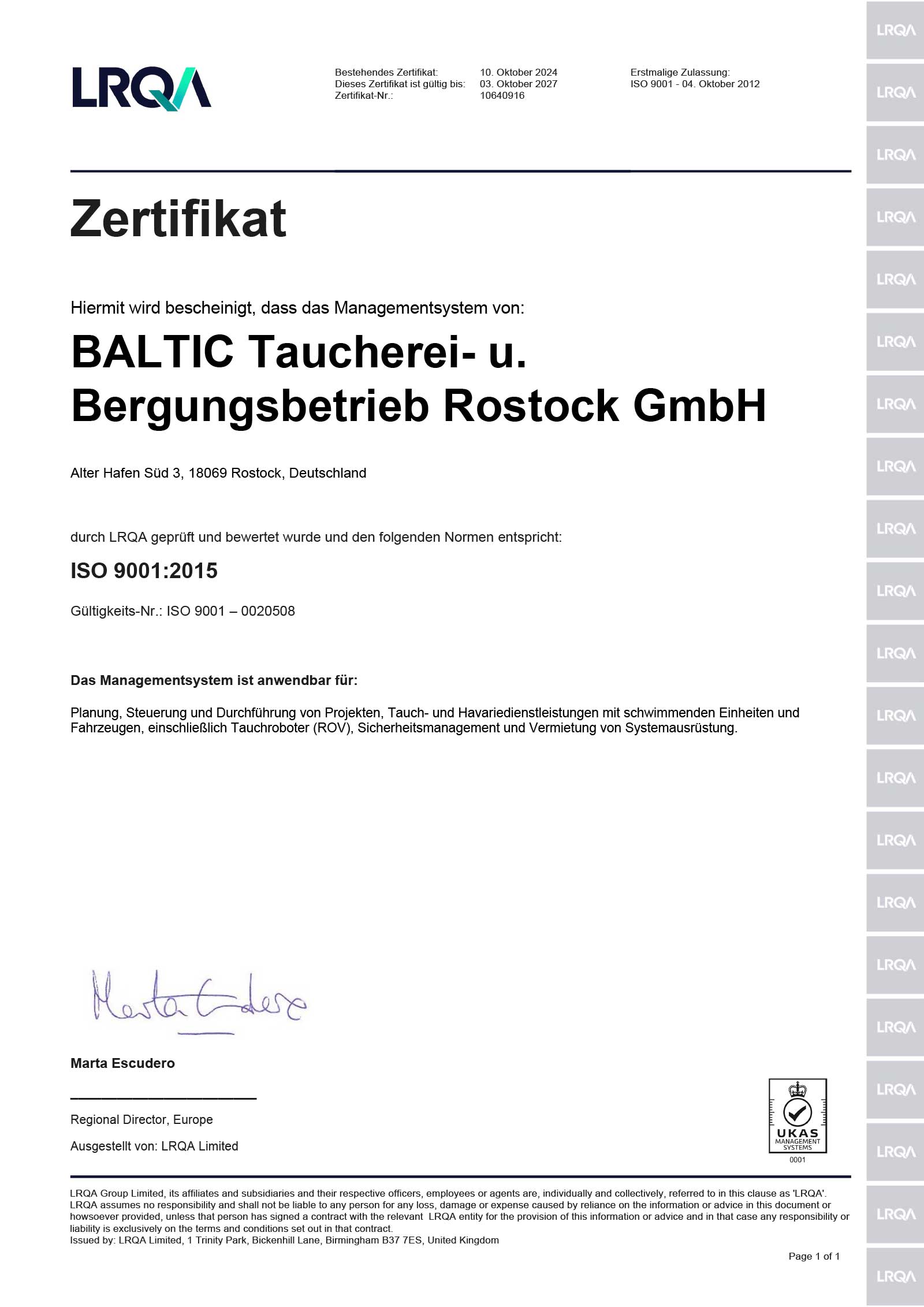
Certified quality and safety in practice are at the heart of Baltic Diver Germany. Our quality management system has been certified by Lloyd’s Register Quality Assurance in accordance with ISO 9001 since 2012 and covers the planning, control and execution of diving and ship salvage projects – including operations with seaworthy units, vehicles and ROVs – as well as safety management and the rental of system equipment.
Protecting people and the environment is a central component of our corporate management. At Baltic Taucher, health, safety and environmental protection are firmly anchored in all processes – from planning and implementation to follow-up work on our diving and ship salvage projects. Our aim is to consistently minimise risks, to foster a safe and healthy work culture and work conditions and avoid environmental pollution as far as possible.
For systematic control and continuous improvement, we operate an internal HSE (Health, Safety & Environment) management system in accordance with the requirements of ISO 14001 (environmental management) and ISO 45001 (occupational health and safety). This ensures that environmental and safety aspects are not only taken into account, but also actively managed and regularly reviewed.
Our employees and partners work under demanding conditions – especially in maritime operations. That is why we rely on clear safety standards and binding procedures, including:
Our projects are planned and implemented in such a way that environmental impacts are kept to a minimum. This includes in particular:
HSE is a team effort at our company. We promote safety awareness that is practised by everyone – on land, on board and underwater. We continuously develop our standards through regular reviews, internal audits and lessons learned from projects.
Our goal: safe operations, reliable processes and responsible treatment of our environment – at all times and in every project phase.
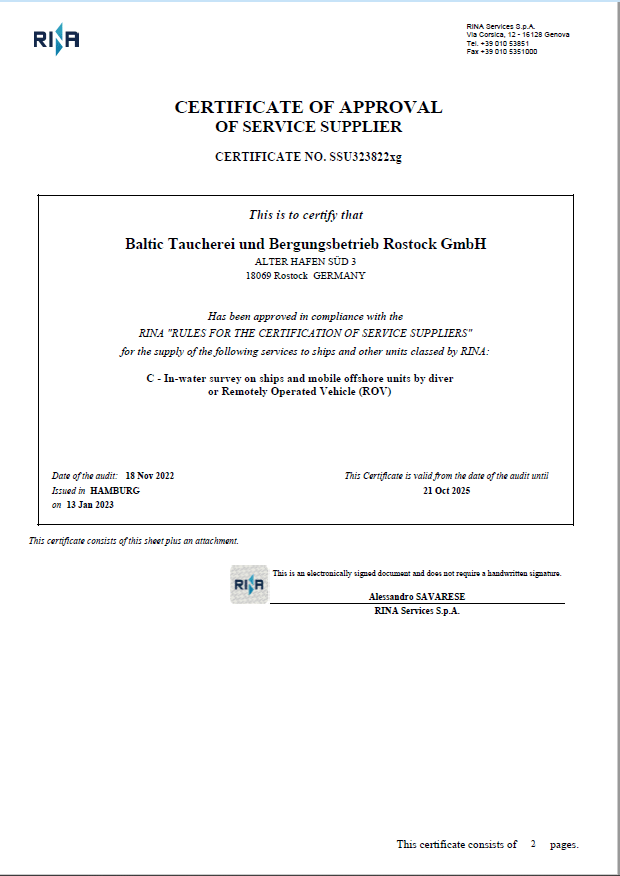
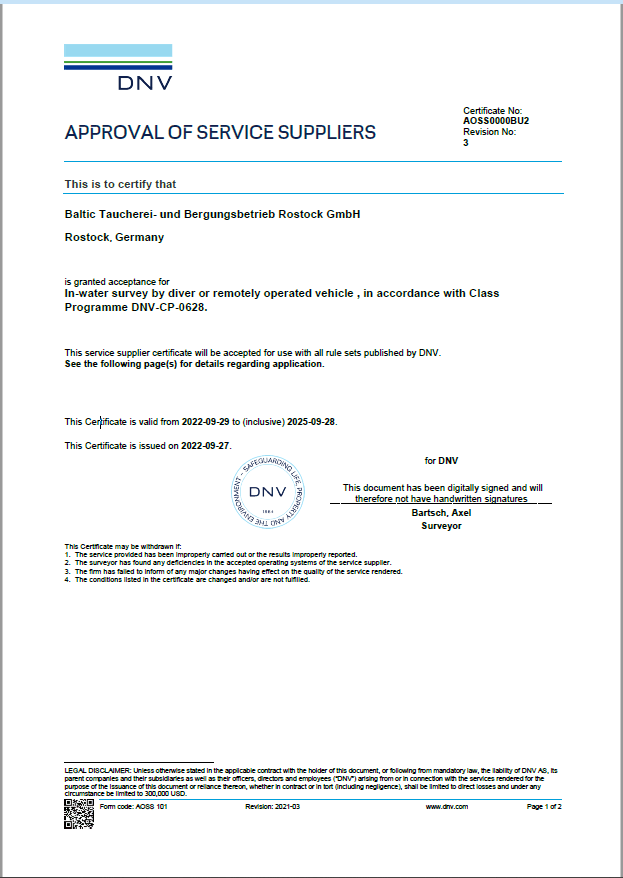
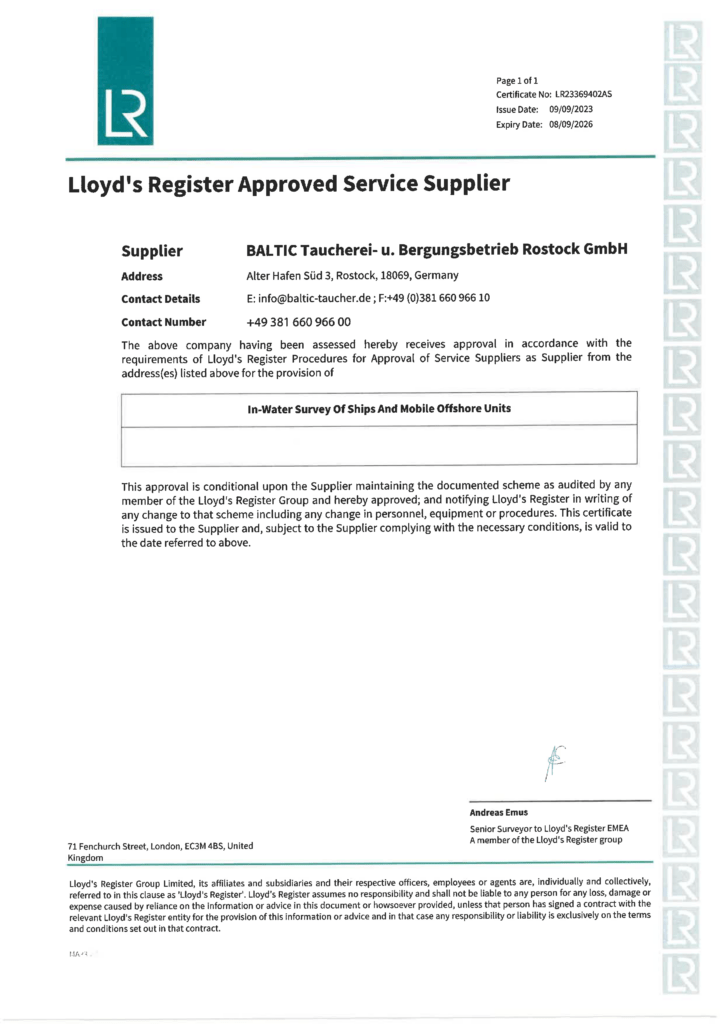
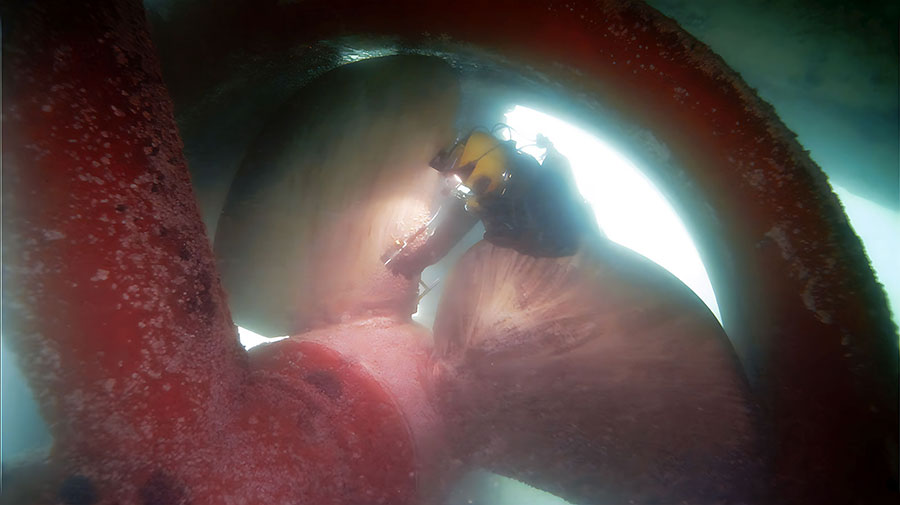
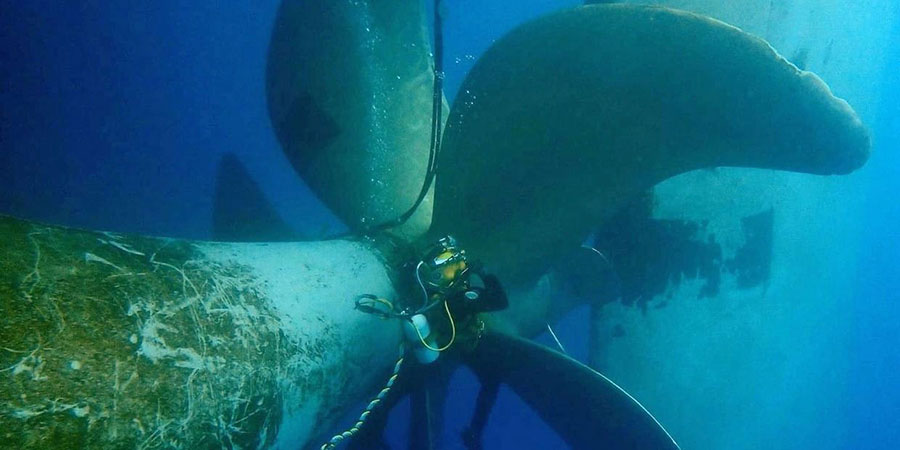
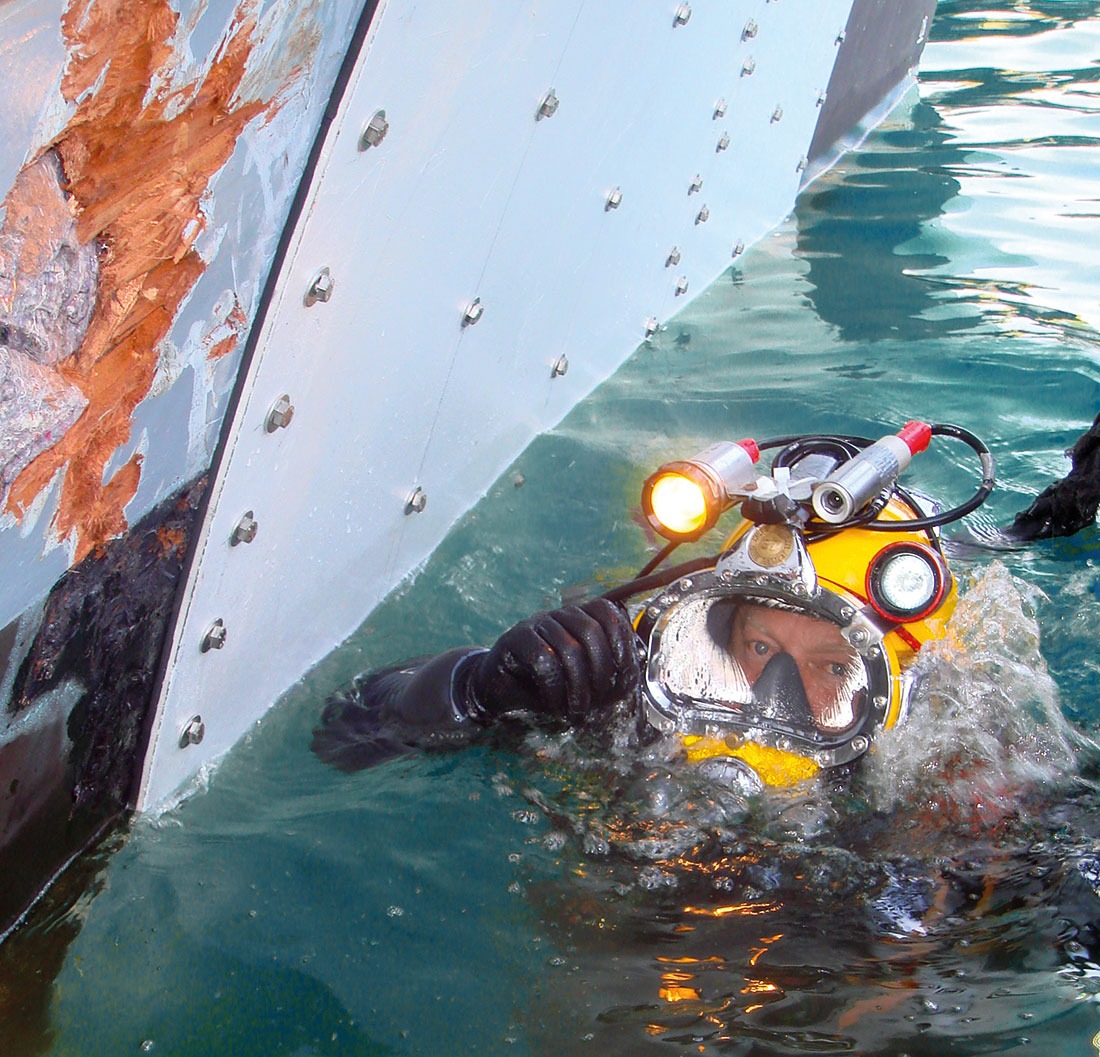
Baltic Diver Germany conducts in-water surveys (IWS) by commercial divers or remotely operated vehicles (ROVs) in accordance with the recognised class programmes of DNV, RINA and Lloyd’s Register. Our services enable reliable assessment of the condition of ships and maritime structures without the need for docking.
Through diver and ROV-assisted inspection procedures, we offer flexible, efficient and safe solutions – tailored to the respective class requirements, operating conditions and project-related framework conditions.
Our in-water surveys include, among other things:
Depending on requirements, inspections are carried out entirely by divers, entirely by ROV or as a combined operation.
We provide complete, class-compliant documentation consisting of:
Baltic Taucher stands for professional, efficient and class-compliant in-water surveys – carried out with experience, state-of-the-art technology and the highest quality and safety standards.


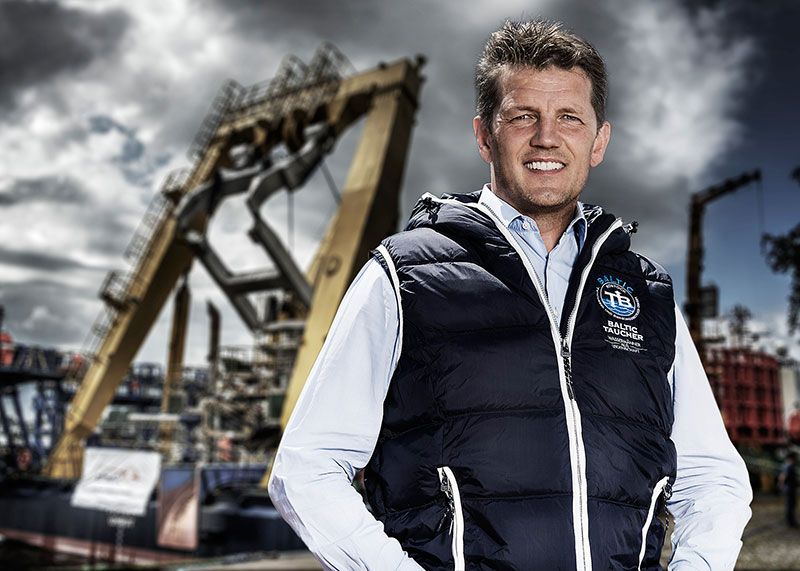
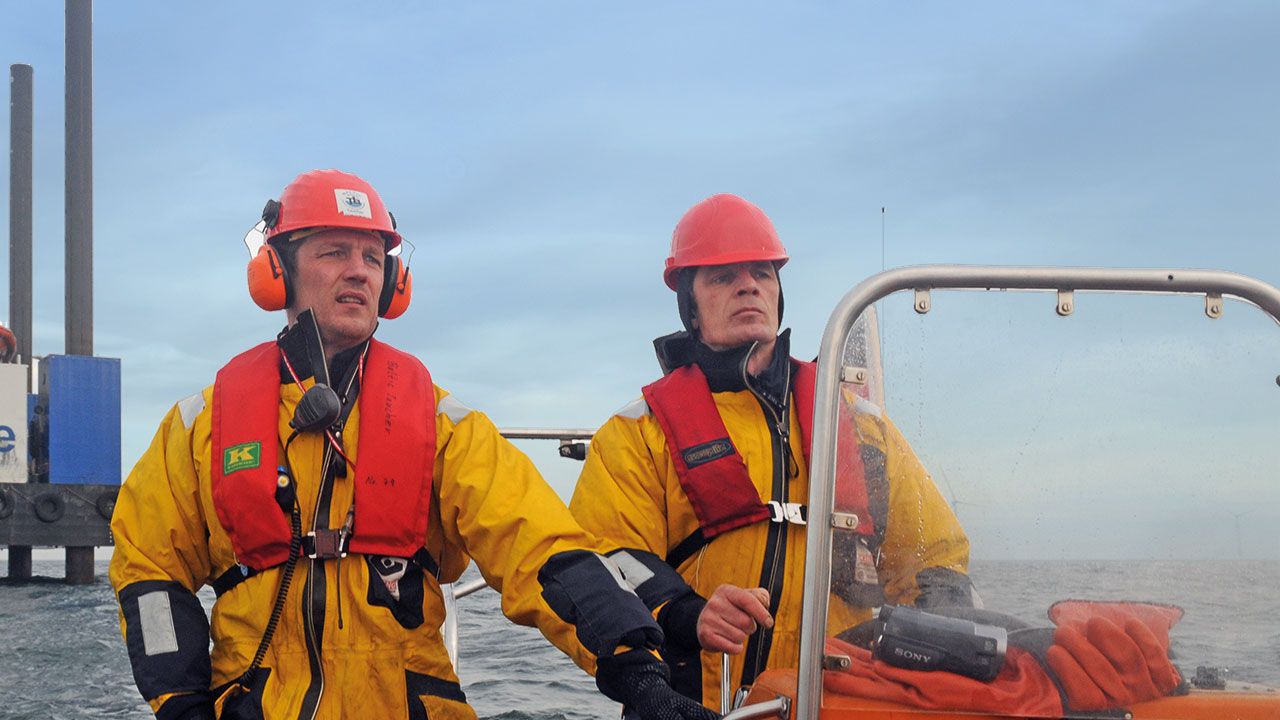
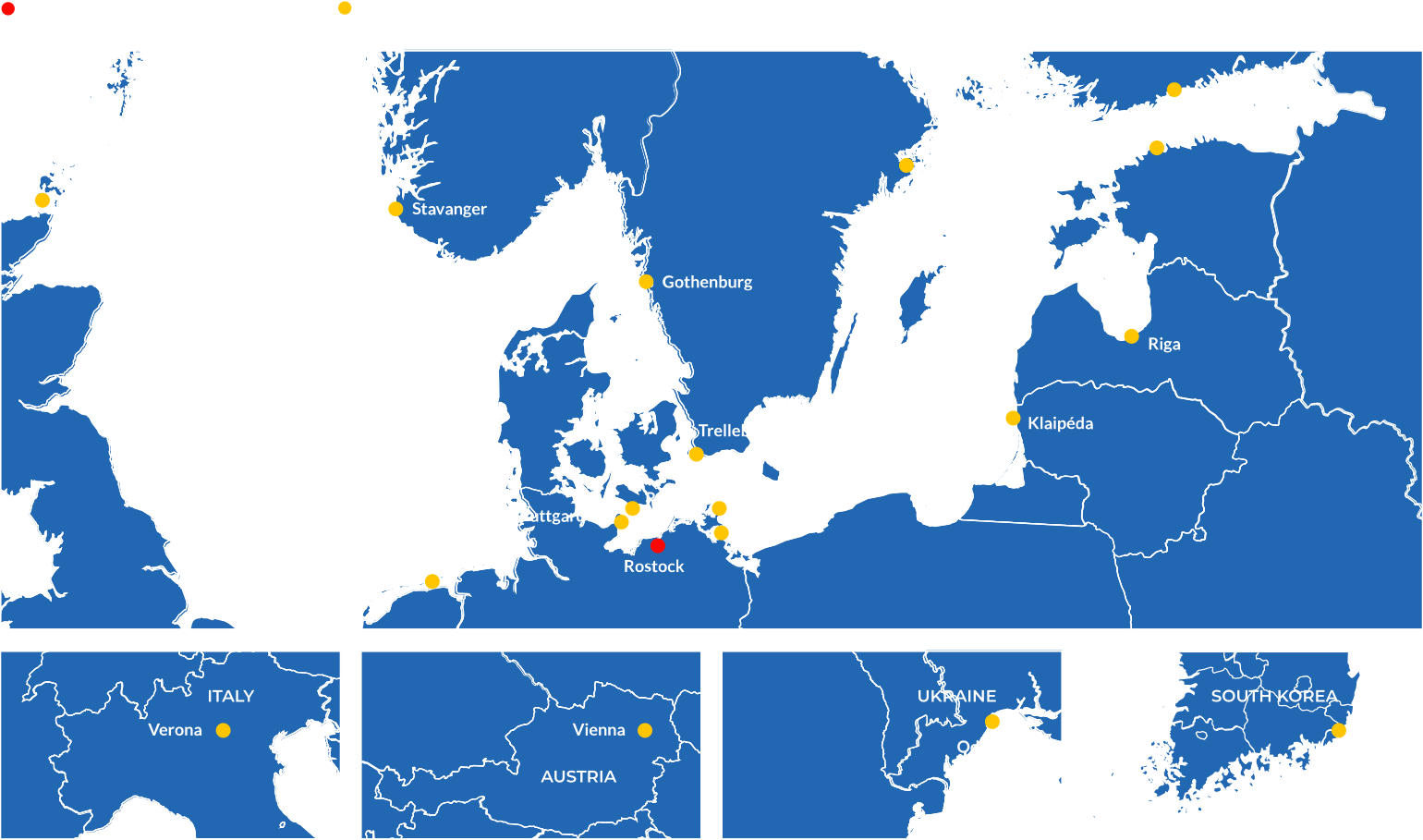
Baltic Diver Germany has successfully handled more than 10,000 individual projects for about 1000 different customers in more than 30 countries in the last 30 years.
Some stories are not drawn up on a drafting board – they begin where wind, waves and salt hang in the air. Baltic Diver Germany is one such story. Since 1993, the sea has shaped our everyday lives and our work. What once began as a small idea in Rostock-Warnemünde is now an internationally sought-after maritime specialist: over the last 30 years, we have successfully delivered over 10,000 projects for more than 1,000 clients in over 30 countries.

Info
Info
Info
Info
Info
Info
Info
Info
Info
Info
Info
Info
Info
Info
Info
Info
Info
Info
Info
Info
Info
Info
Info
Info
Info
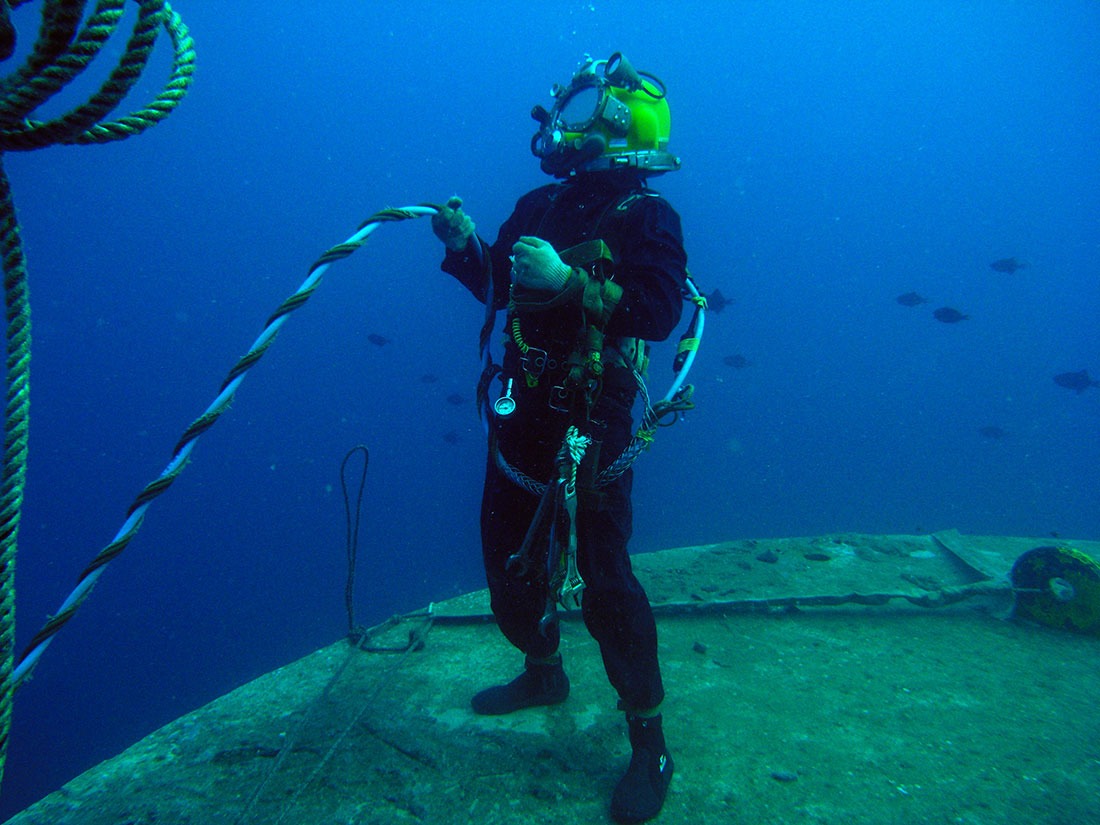
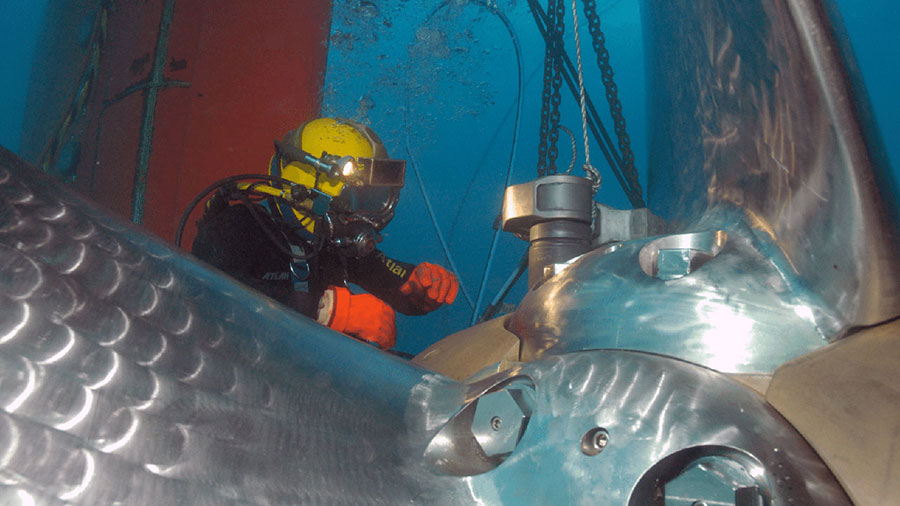
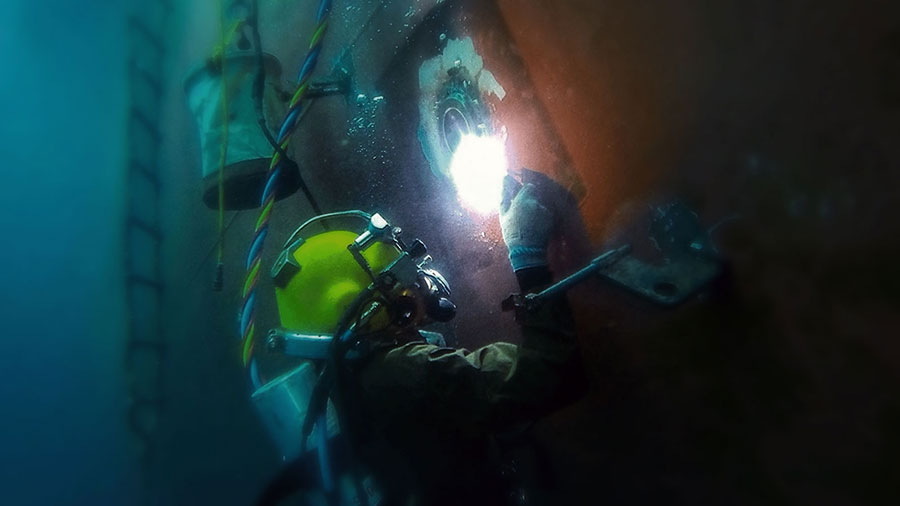
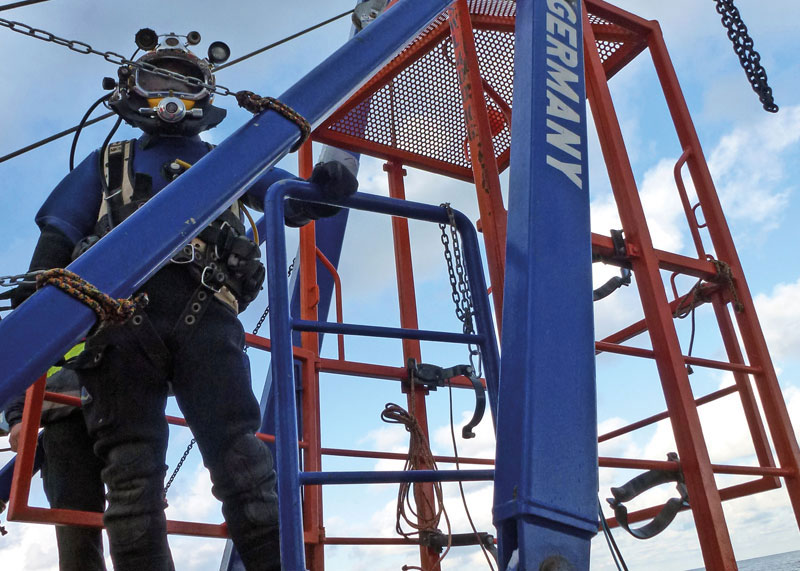
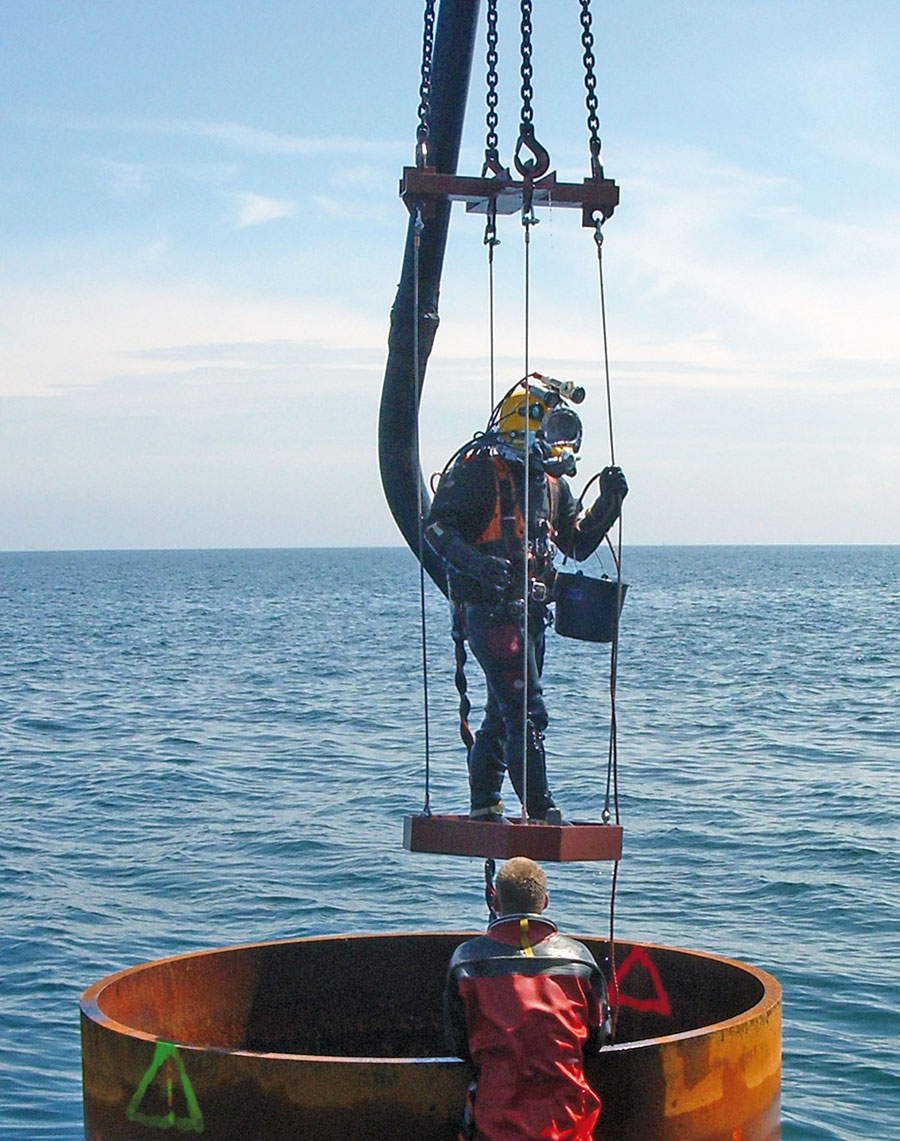
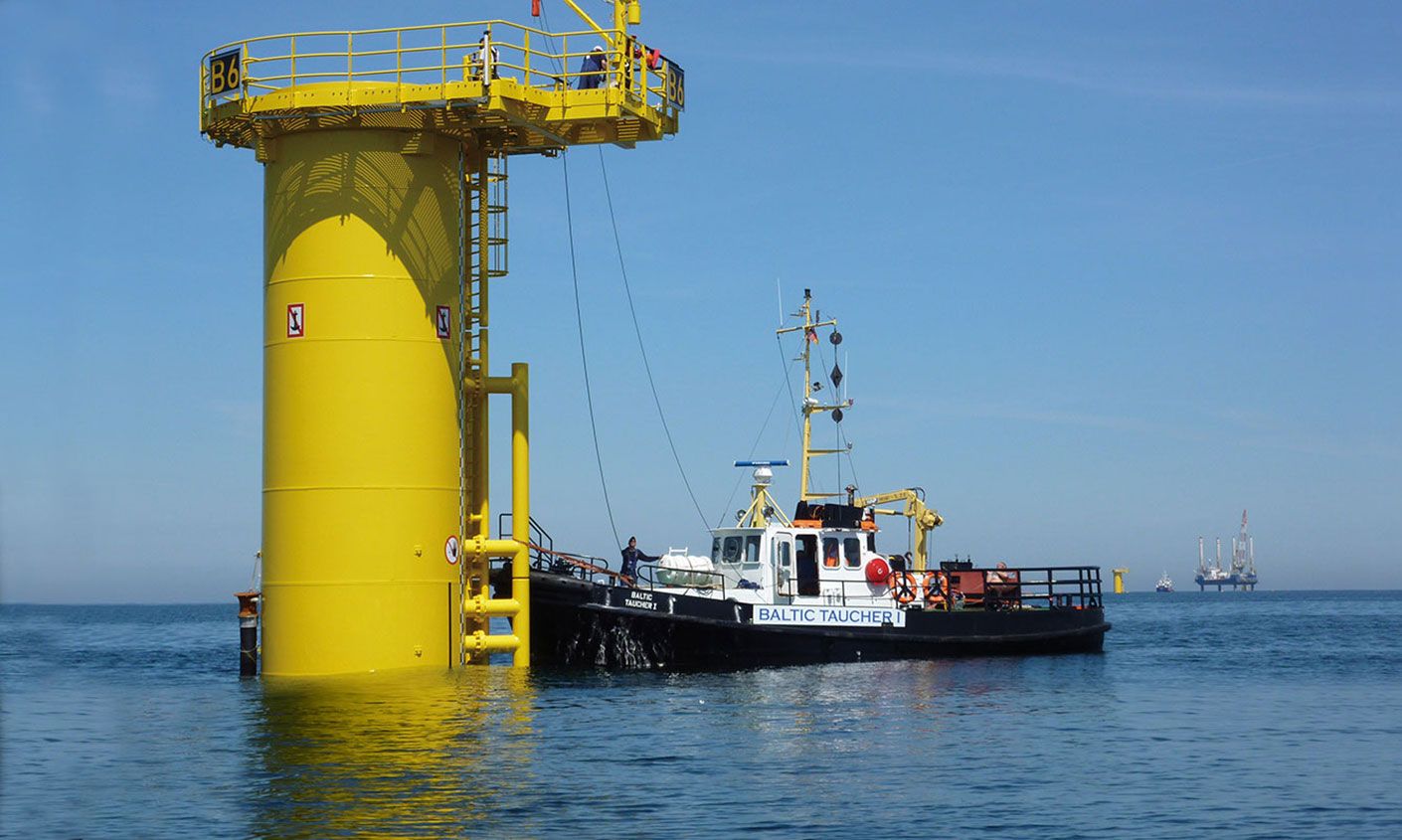
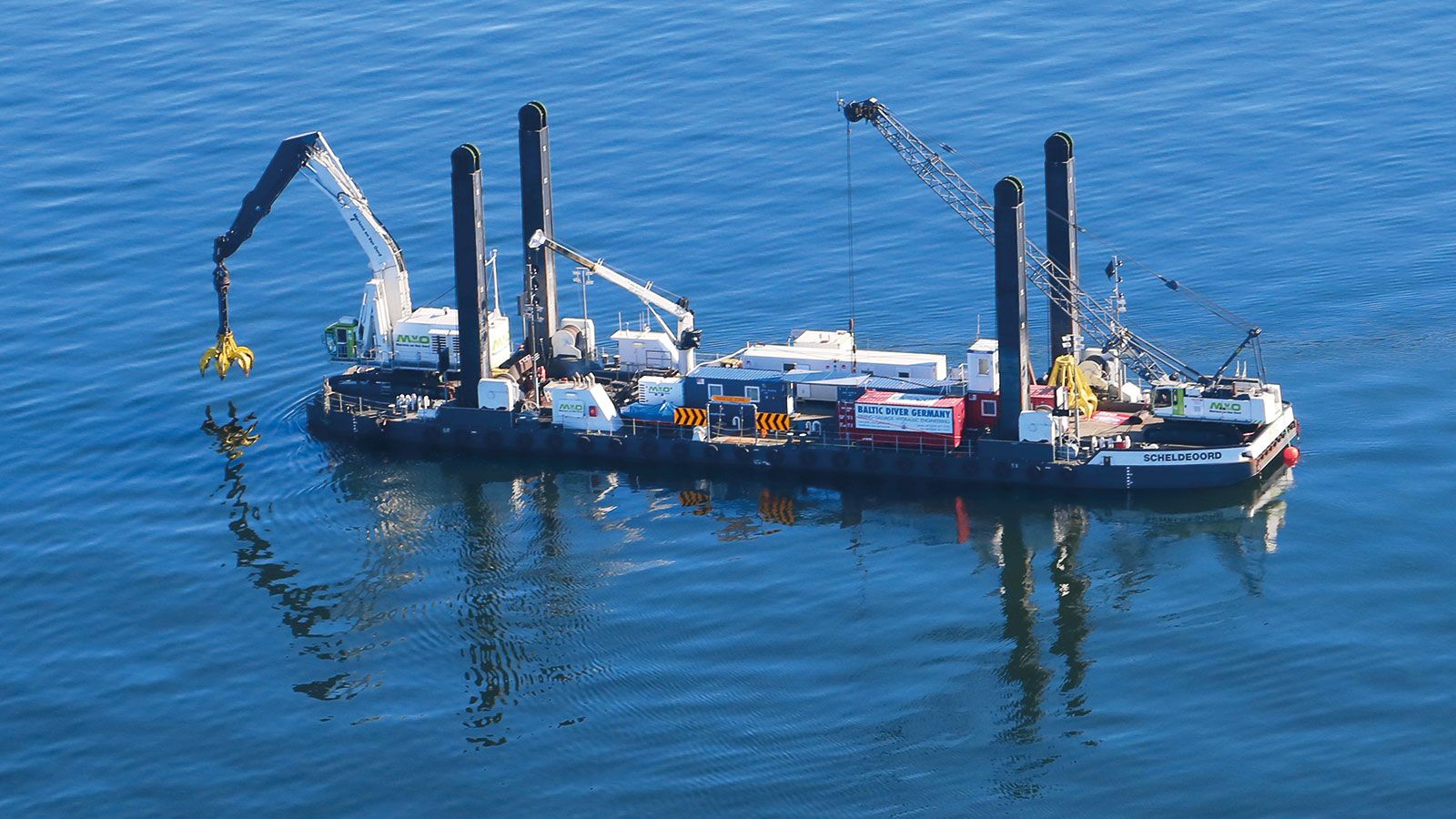
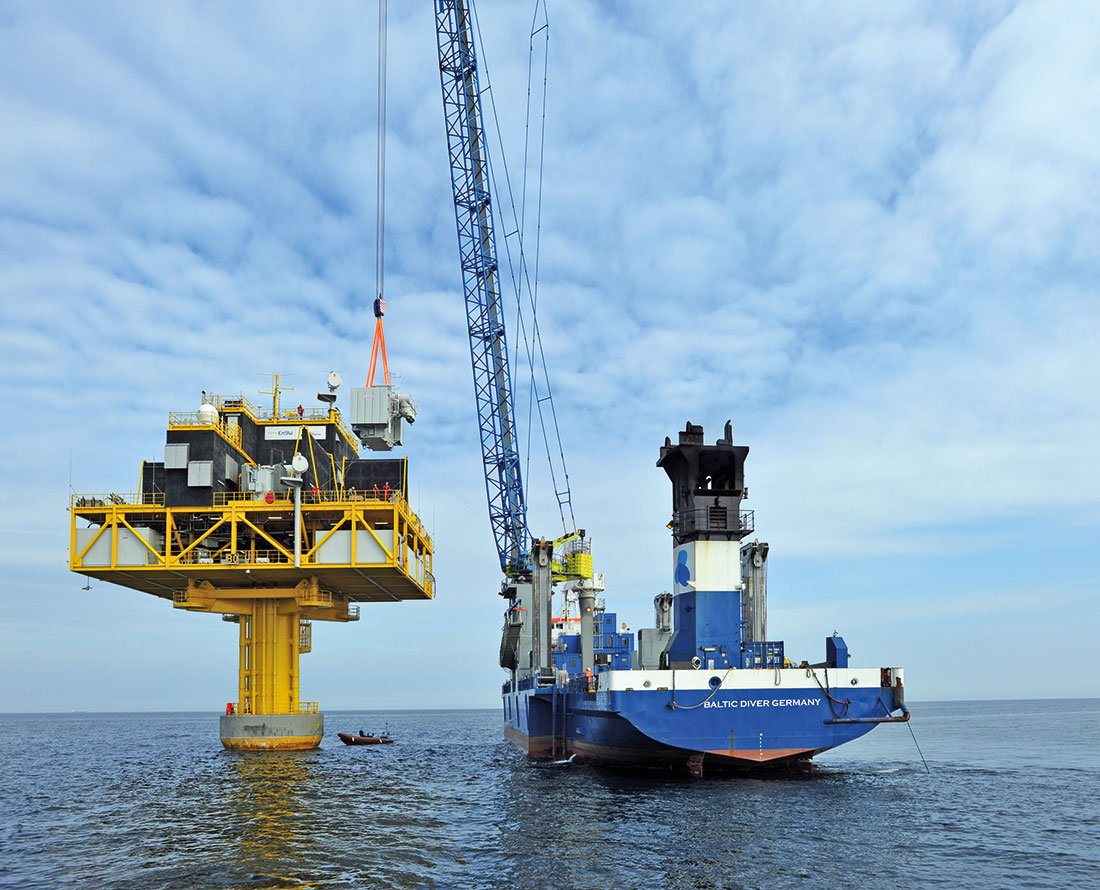
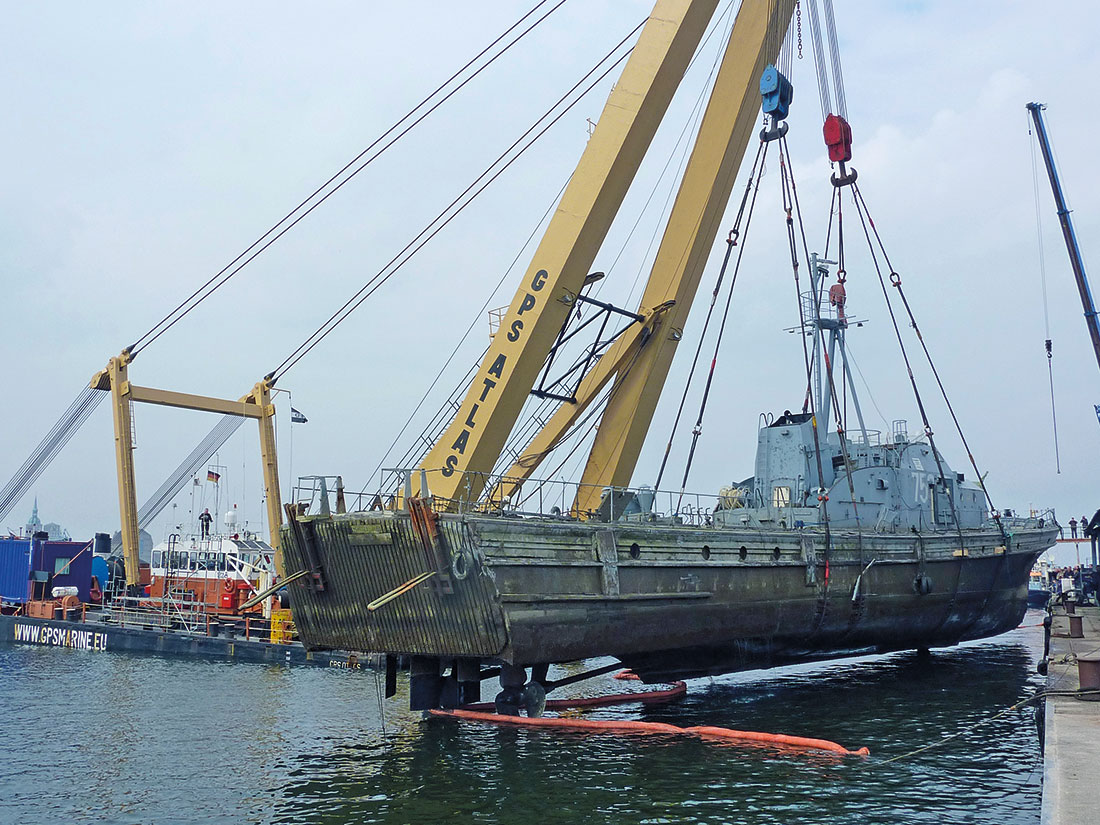
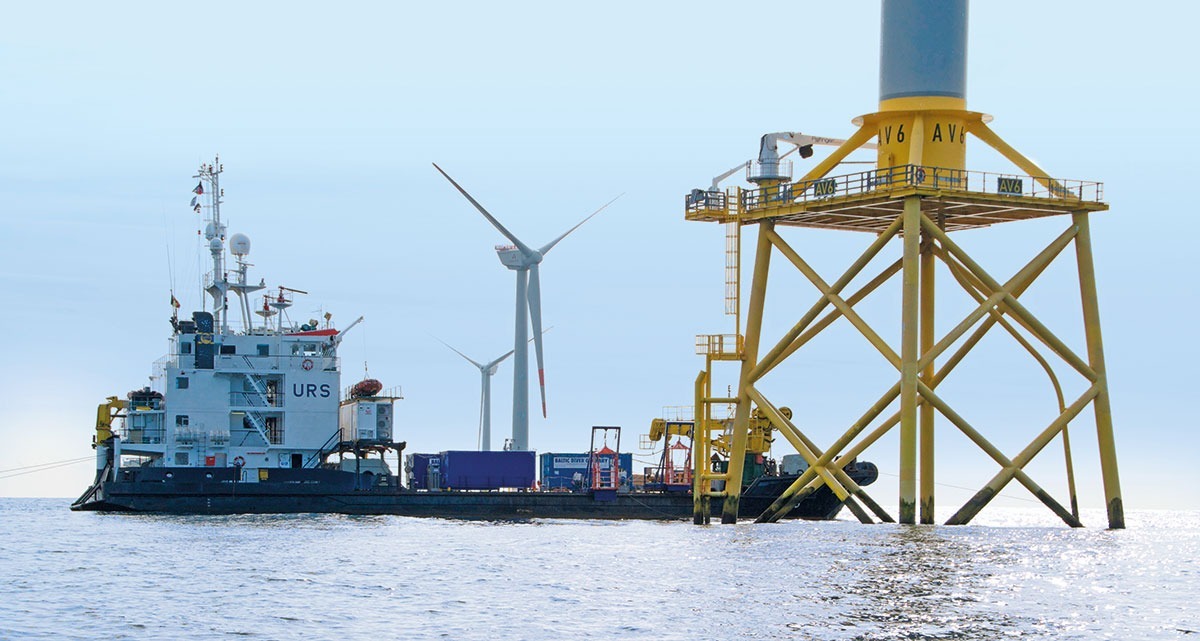
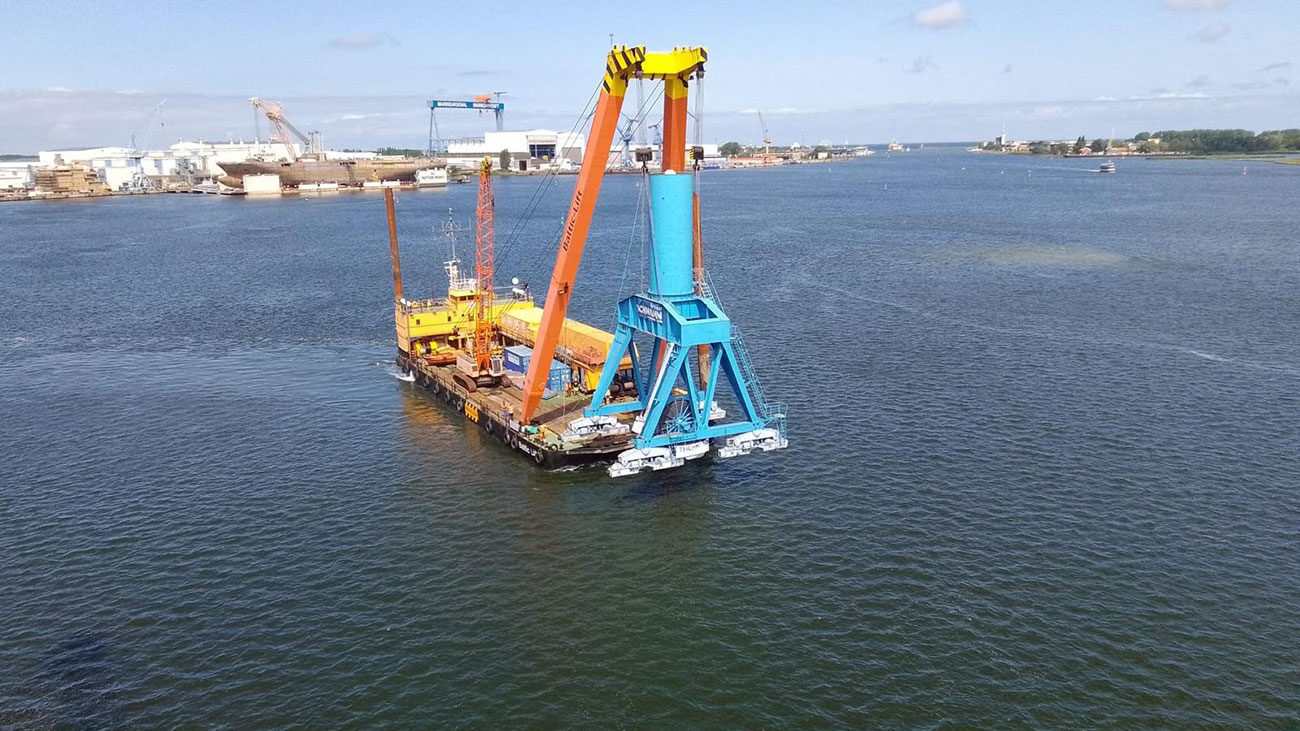
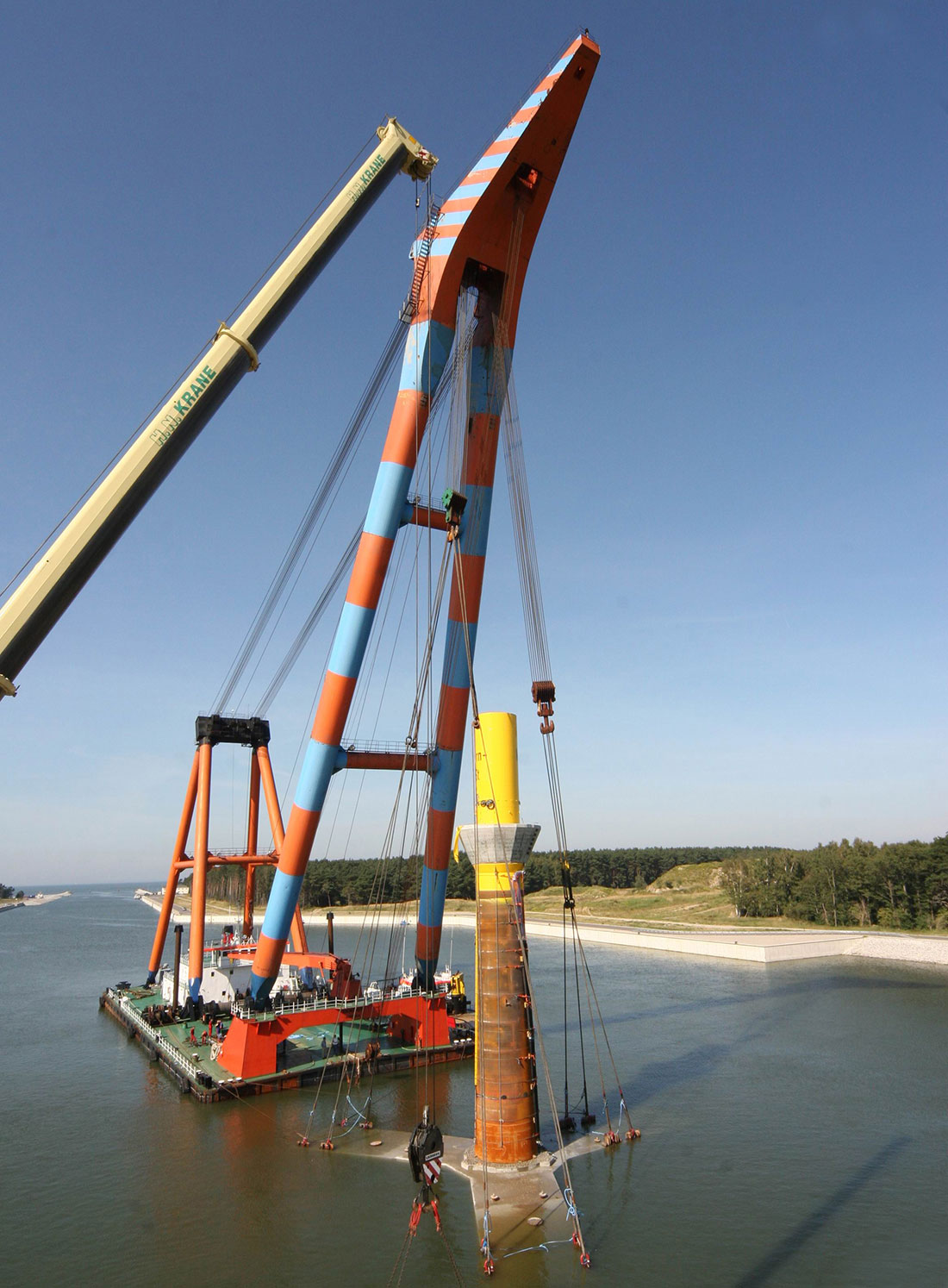
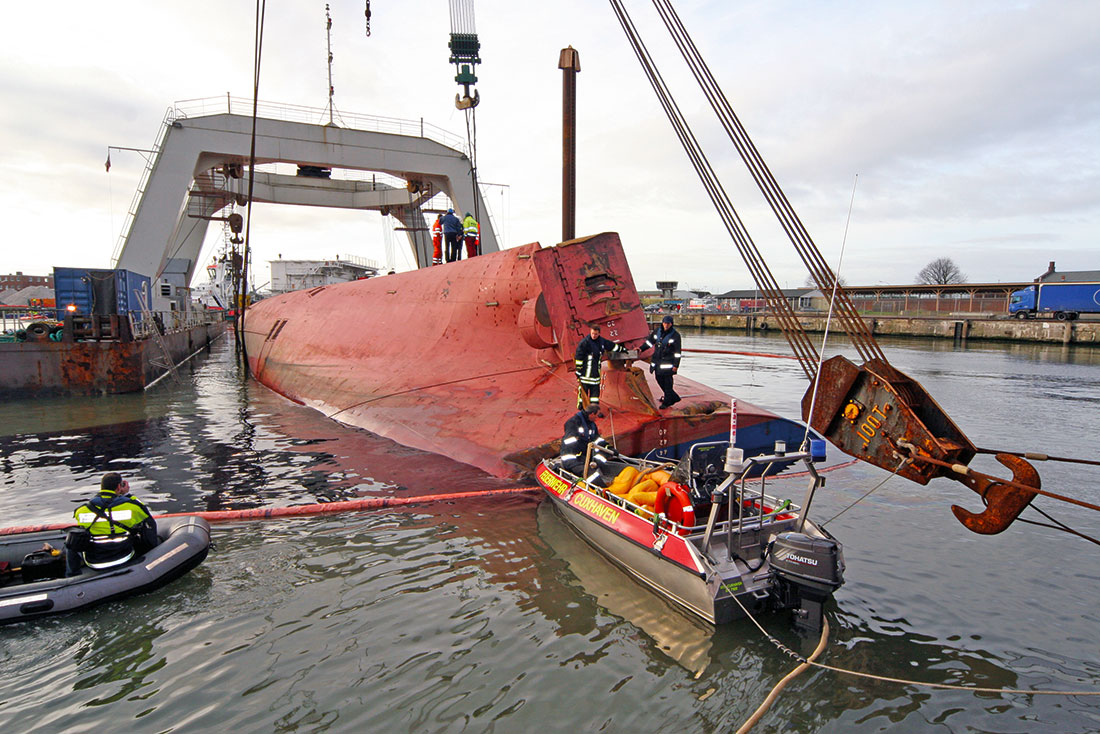
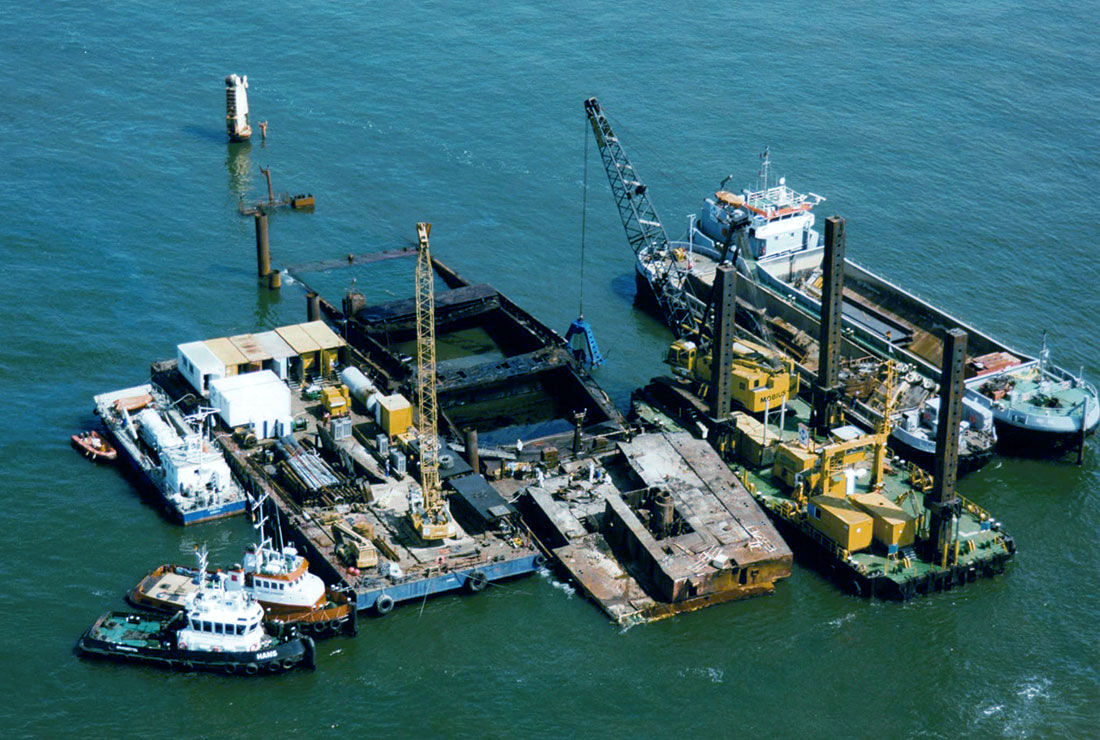
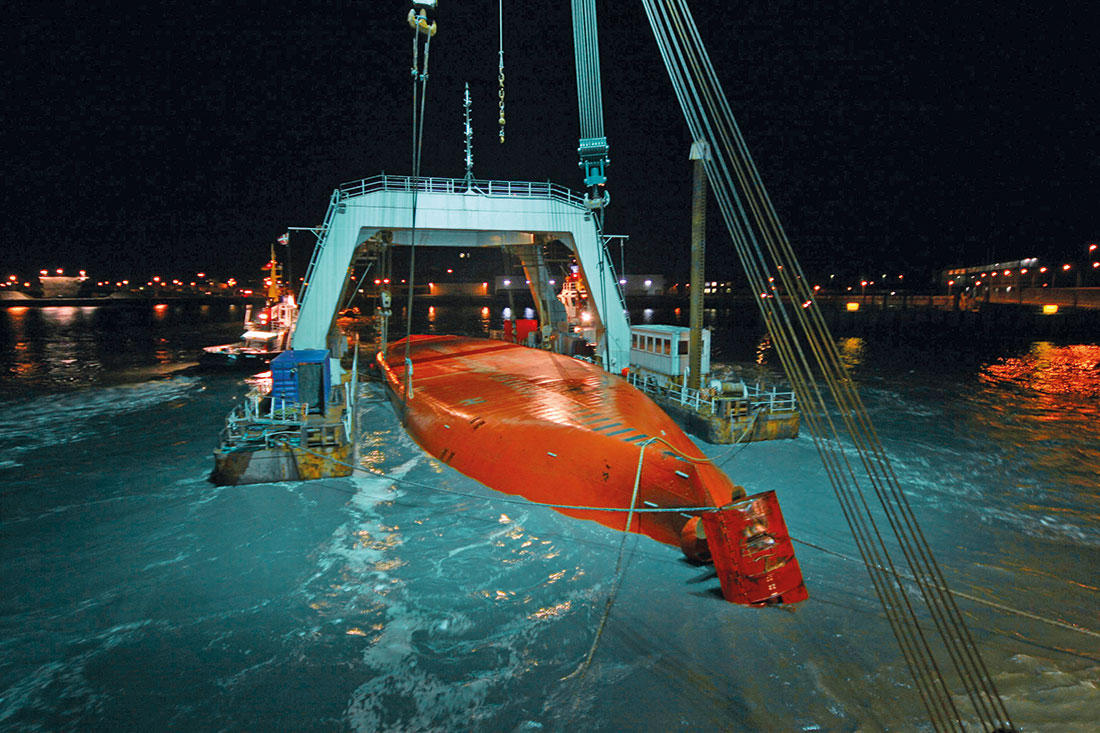
We work with state-of-the-art equipment and apply our expertise to a wide range of services: from IMCA-compliant diving operations at depths of up to 50 metres to diving and ROV operations for unexploded ordnance (UXO) clearance, boulder removal and heavy lift operations to salvage and wreck removal. In addition, we support the energy transition with projects in the field of renewable energies – reliably, efficiently and safely.
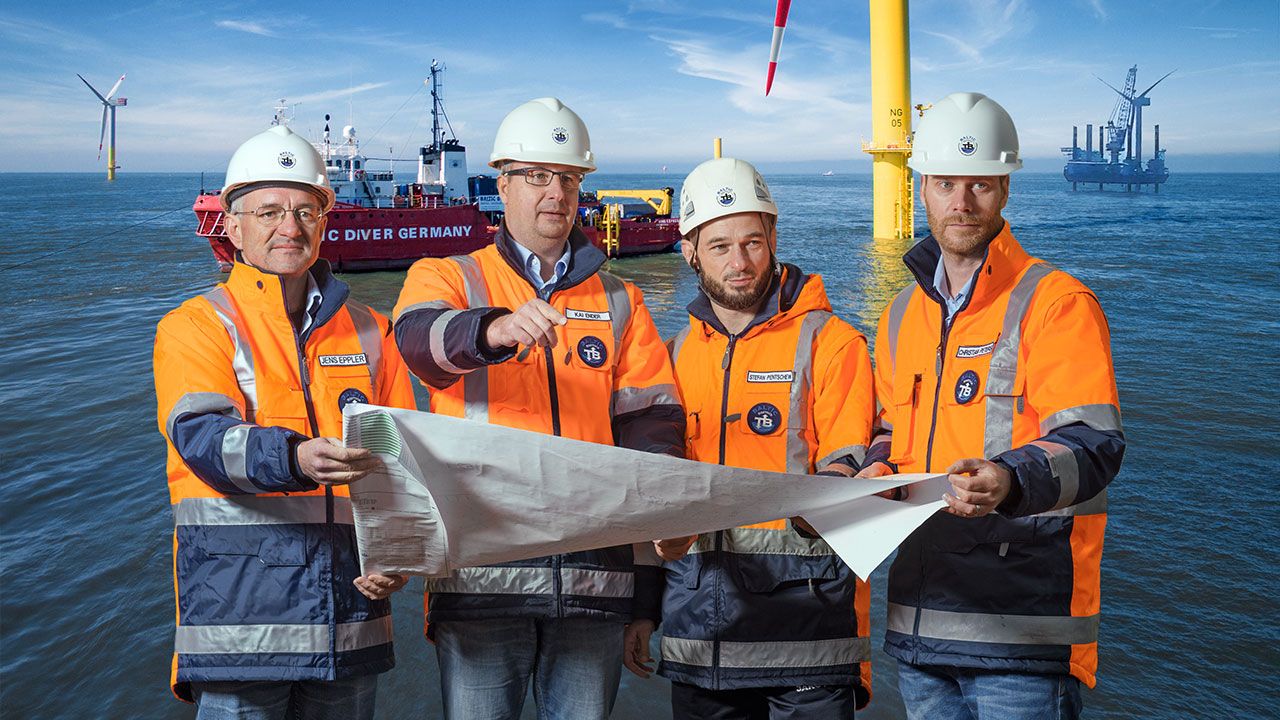
Engineering Service team







































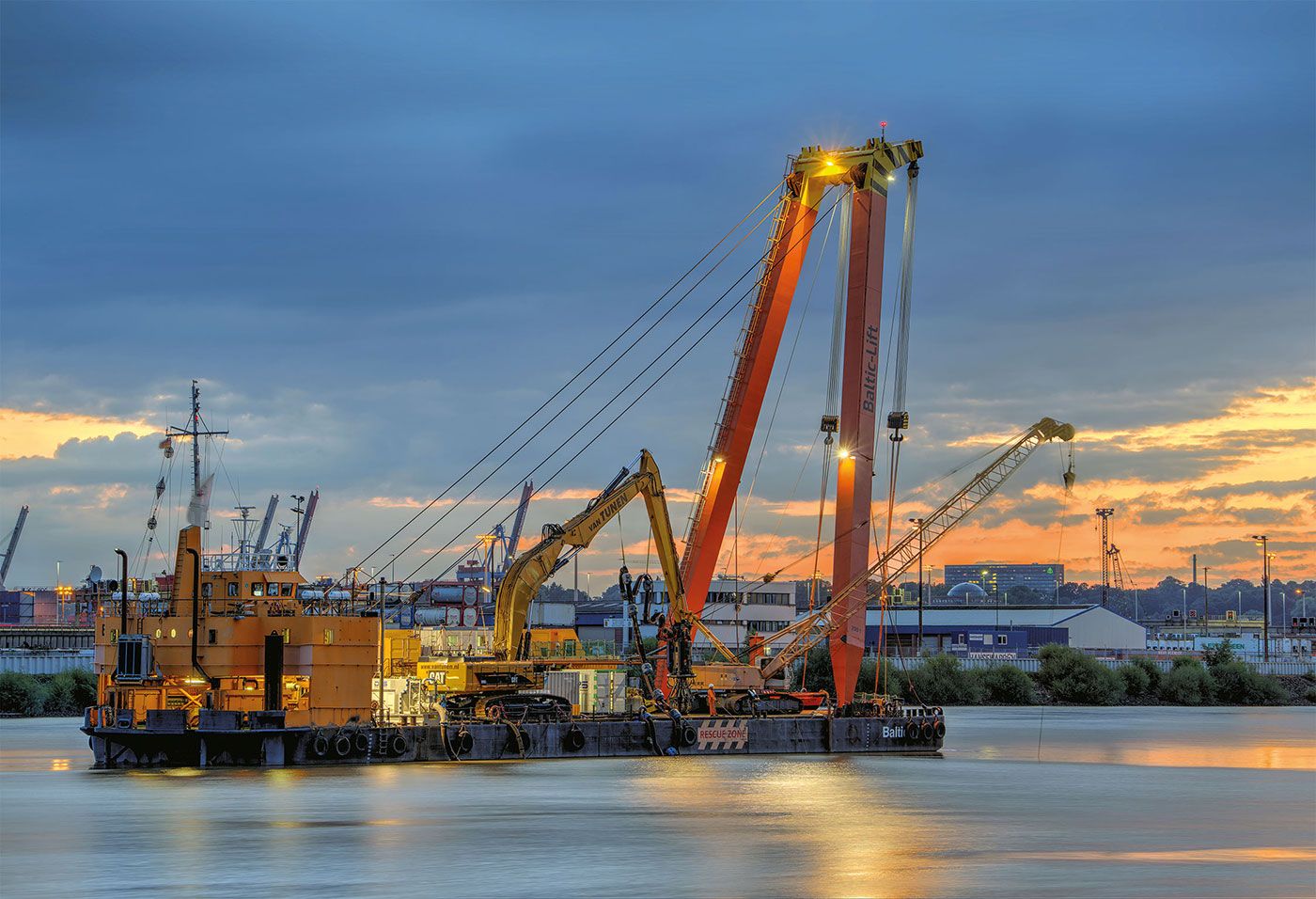
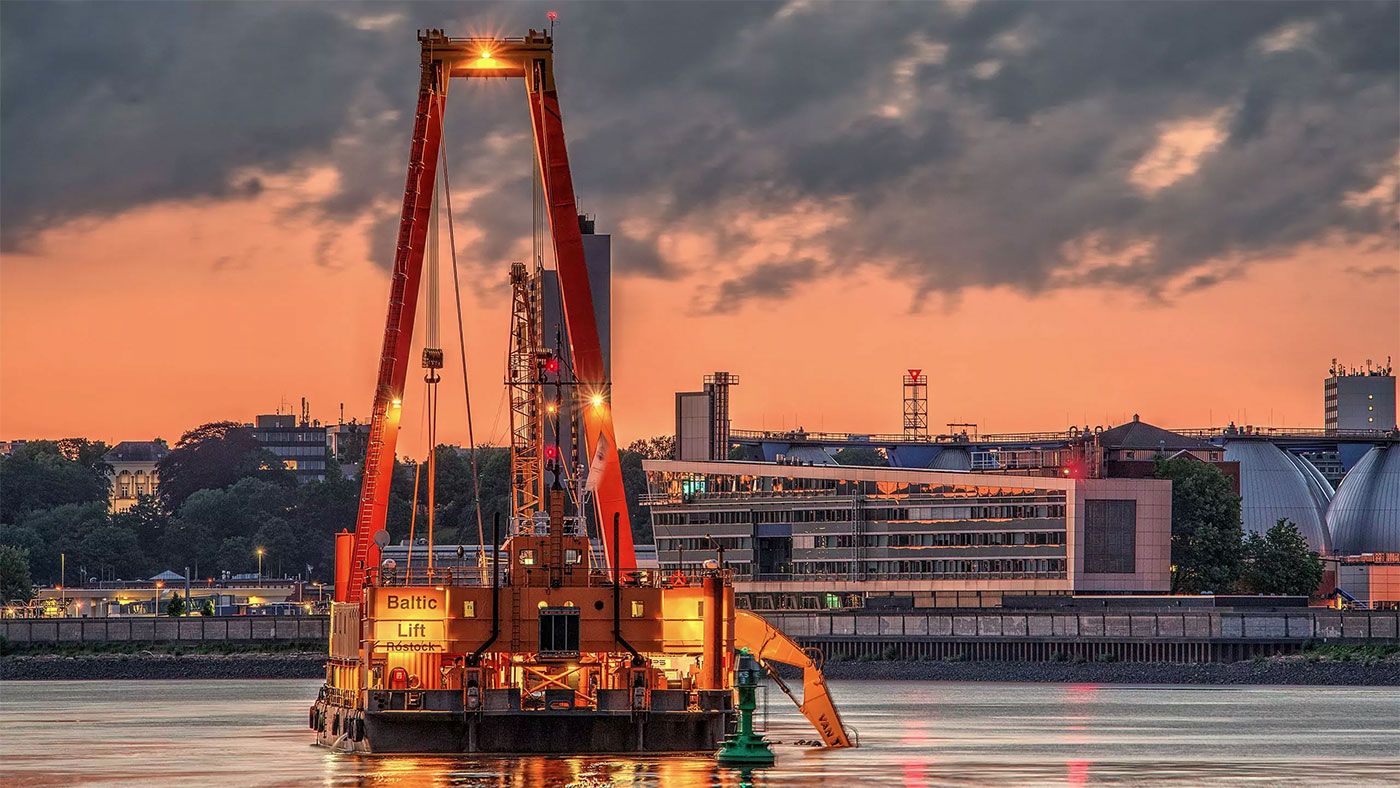
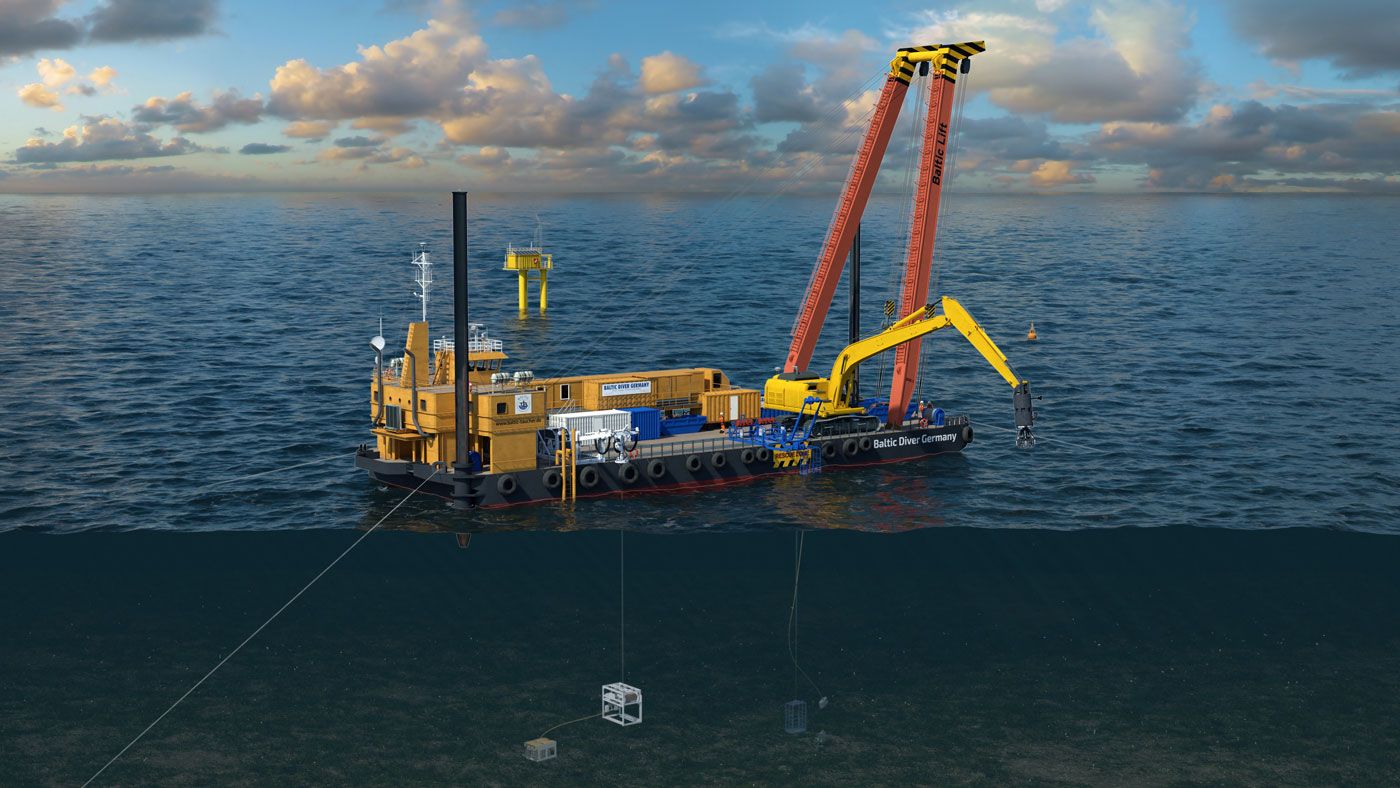
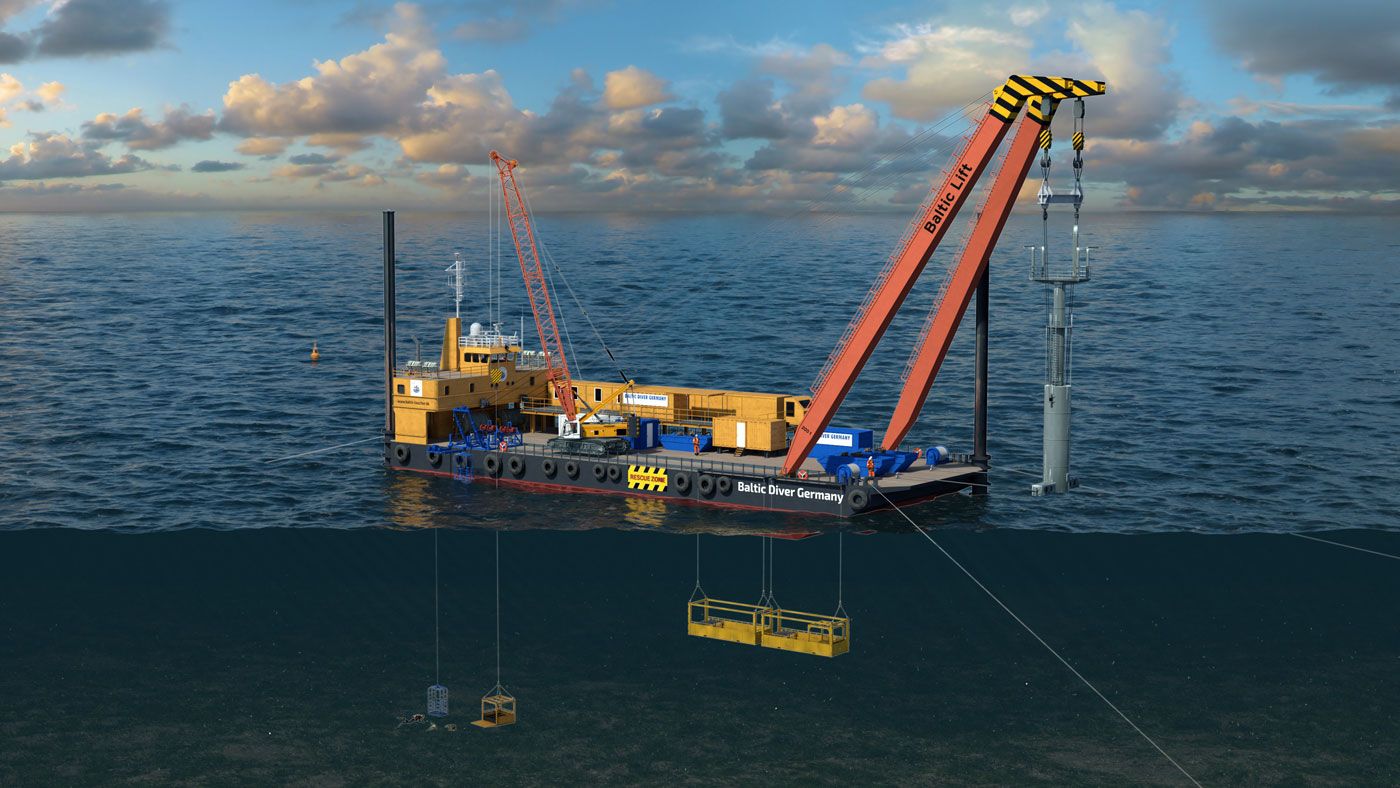
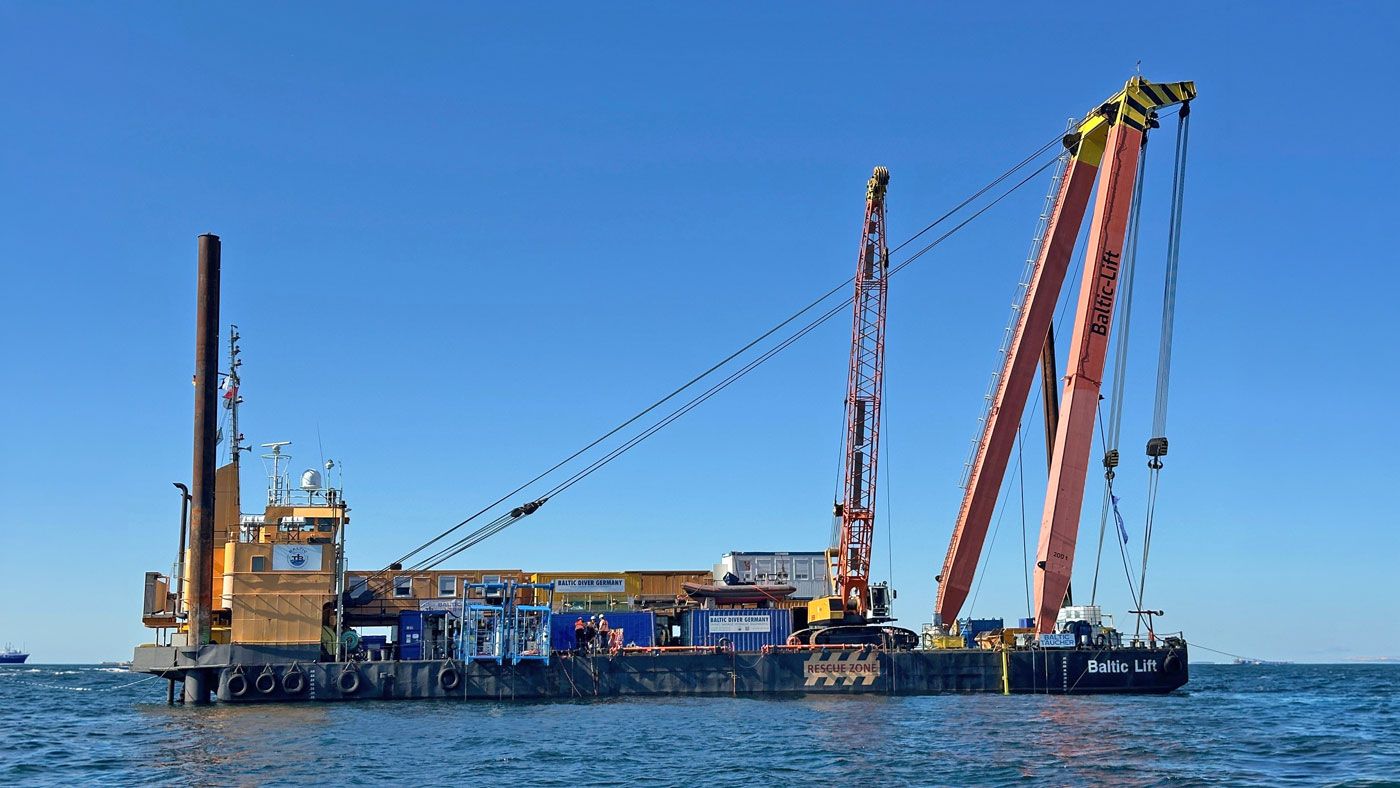


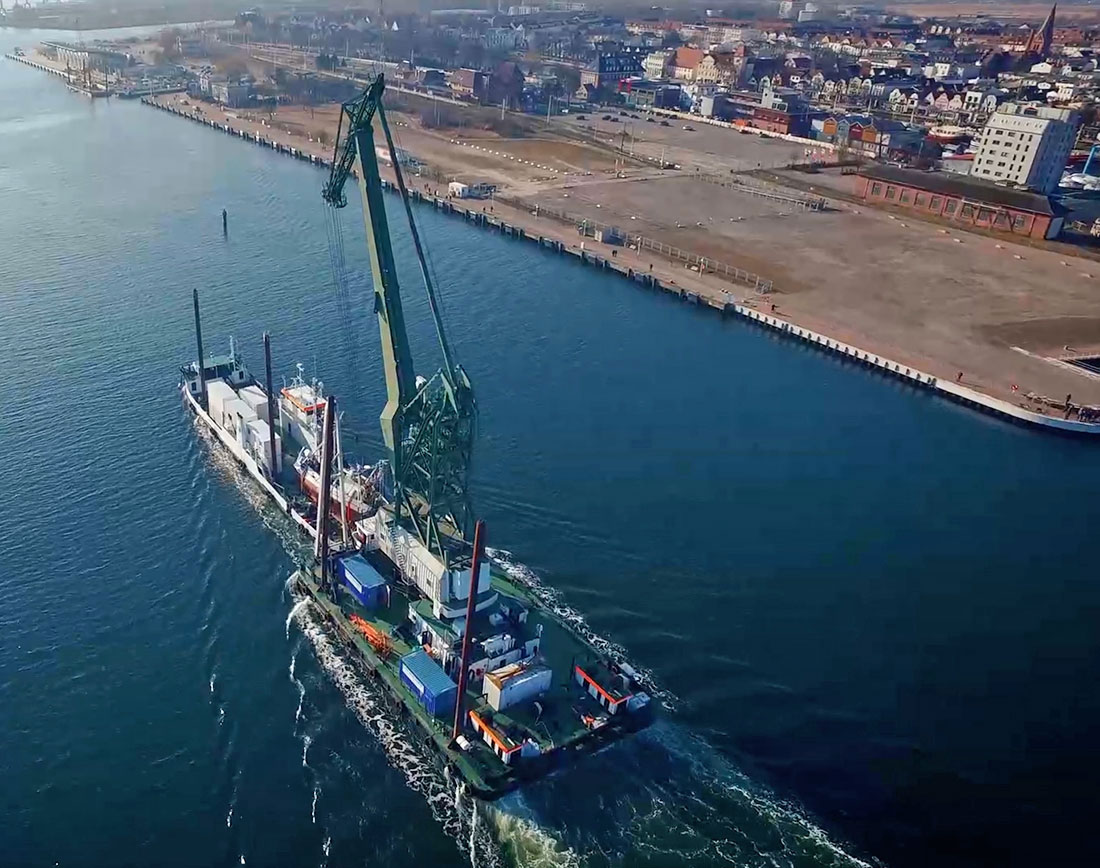
| Vessel type | Self-Propelled Crane Barge |
| Year of built | 1974 |
| Yard | Mützelfeldtwerft Cuxhaven |
| Port of registry | Rostock |
| Flag | German |
| Call sign | DFQC |
| IMO-No. | 8872796 |
| Class | DNV-GL (100A5K MC) |
| Length o.a. | 53,78 m |
| Breadth | 17,85 m |
| Depth | 4,55 m |
| Draft | min 1,90 m, max 2,40 m |
| Gross tonnage | 1.086 |
| Lift capacity A-frame | max. 200 t |
| Outreach | max. 18 m |
| Model | Liebherr HS 843 |
| Boom length | up to 32 m in stock, extendable to max. 53 m |
| Lift capacity | e.g. 23 t at 6,5 m with 32 m boom, see table |
| Main engine | 2 x Deutz SBF 12 M 716 |
| Power | 2 x 321 kW |
| Propulsion | 2 x 360° Schottel Rudderpropeller |
| Bow thruster | 1 x Cone Jet Schottel SKJ 142, 325 kW |
| Gensets | 2 x 580 kVA, 1x 75 kVA 380/220 V, ,50 Hz |
| Service speed | 4 kn |
| Max. speed | 6 kn |
| Average consumption | Service: 250 l/h |
| Fuel oil | 21,5 m³ |
| Fresh water | 15 m³ |
| Free deck space | 565 m³ |
| Deck strength | up to 10 t/m³ |
| Cabins | 12 Accommondation (5 x 1) / Living Containres (7 x 1) |
| Office | yes |
| Communication | GMDSS A1, UHF/VHF Radio, GSM /INMARSAT/SAT - Voice and Data, Internet |
| Nautical | AIS, ARPA Radar, ECS, RTK DGNSS, Echo Sounder, SAT-TV Raymarine, UKW Sailor 6000 + repeater |
| Sewage plant | yes |
| Winches | 1 x 20 t, 1 x 5 t |
| Compressor | t140 m³/h, 8 bar, Atlas Copco |
| Pumps | 3 x 455 m³/h, 7 bar |
| Work boats | steel boat (7 m), Offshore RIB (6m, 100 hp) |
| Dredging equipment | optional |
| Offshore dive equipment | optional |
| ROV Services | optional |
| Spud-legs | 2 x 26 m |
| 4-point-mooring | optional |
| Wadden sea | Ship can be grounded for low tide |
|
BASIC DATA
| |
|---|---|
|
Vessel type
|
Self-Propelled Crane Barge
|
|
Year of built
|
1974
|
|
Yard
|
Mützelfeldtwerft Cuxhaven
|
|
Port of registry
|
Rostock
|
|
Flag
|
Deutsch
|
|
Call sign
|
DFQC
|
|
IMO-No.
|
8872796
|
|
Class
|
DNV-GL (100A5K MC)
|

Independent project planning and execution of all kind of subsea operations. Our efficiency and quality-conscious work ethic has earned us an outstanding reputation amongst our clients as a valuable partner, both nationally and internationally.
Independent project planning and execution of all kind of subsea operations. Our efficiency and quality-conscious work ethic has earned us an outstanding reputation amongst our clients as a valuable partner, both nationally and internationally.
BALTIC Taucherei- und Bergungsbetrieb Rostock GmbH
BALTIC Taucherei- und Bergungsbetrieb Rostock GmbH
Alter Hafen S 3, 18069 Rostock
|
BASIC DATA
| |
|---|---|
|
Vessel type
|
Self-Propelled Crane Barge
|
|
Year of built
|
1974
|
|
Yard
|
Mützelfeldtwerft Cuxhaven
|
|
Port of registry
|
Rostock
|
|
Communication
|
GMDSS A1, UHF/VHF Radio, GSM /INMARSAT/SAT – Voice and Data, Internet
|
BALTIC Taucherei- und Bergungsbetrieb Rostock GmbH
BALTIC Taucherei- und Bergungsbetrieb Rostock GmbH
Alter Hafen S 3, 18069 Rostock
|
BASIC DATA
| |
|---|---|
|
Vessel type
|
Self-Propelled Crane Barge
|
|
Year of built
|
1974
|
|
Yard
|
Mützelfeldtwerft Cuxhaven
|
|
Port of registry
|
Rostock
|
|
Communication
|
GMDSS A1, UHF/VHF Radio, GSM /INMARSAT/SAT – Voice and Data, Internet
|
BALTIC Taucherei- und Bergungsbetrieb Rostock GmbH
BALTIC Taucherei- und Bergungsbetrieb Rostock GmbH
Alter Hafen S 3, 18069 Rostock
|
BASIC DATA
| |
|---|---|
|
Vessel type
|
Self-Propelled Crane Barge
|
|
Year of built
|
1974
|
|
Yard
|
Mützelfeldtwerft Cuxhaven
|
|
Port of registry
|
Rostock
|
|
Communication
|
GMDSS A1, UHF/VHF Radio, GSM /INMARSAT/SAT – Voice and Data, Internet
|
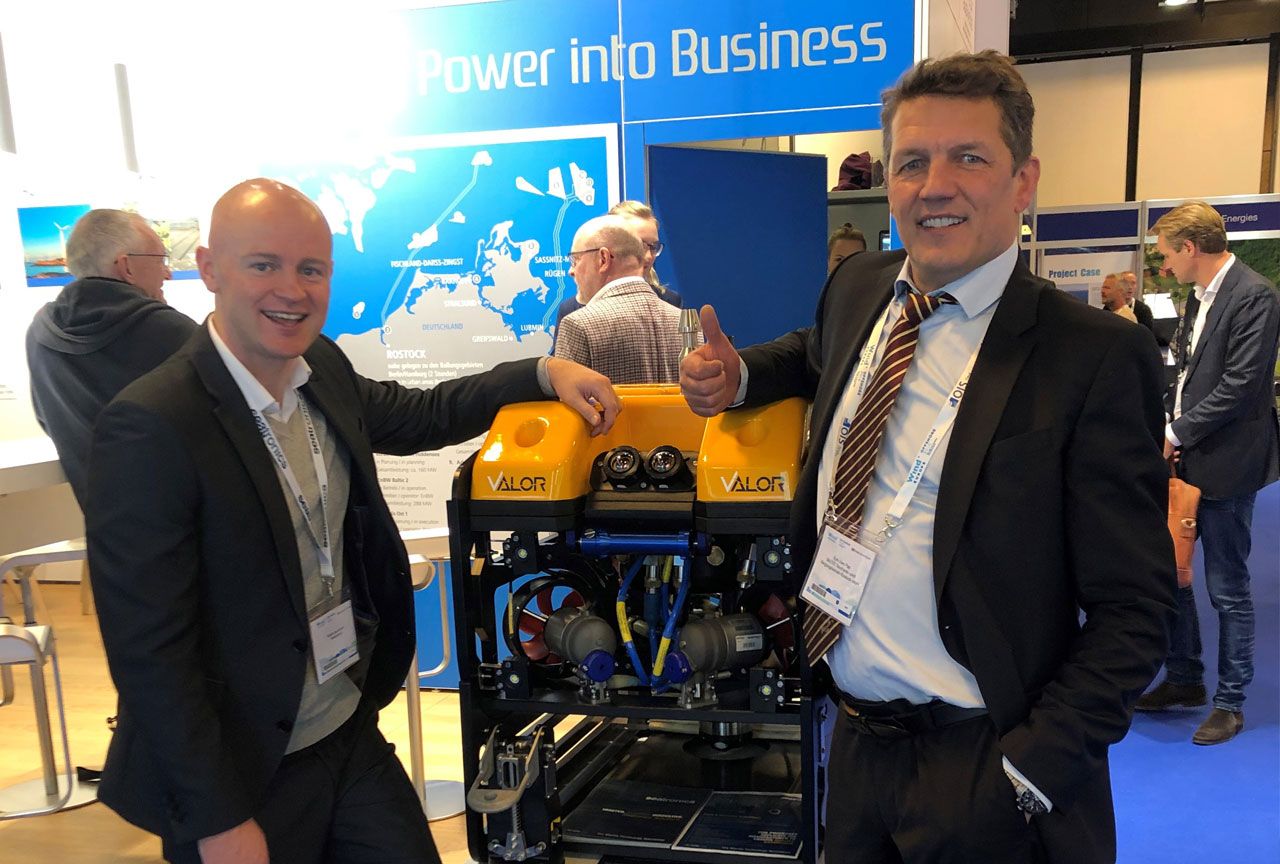
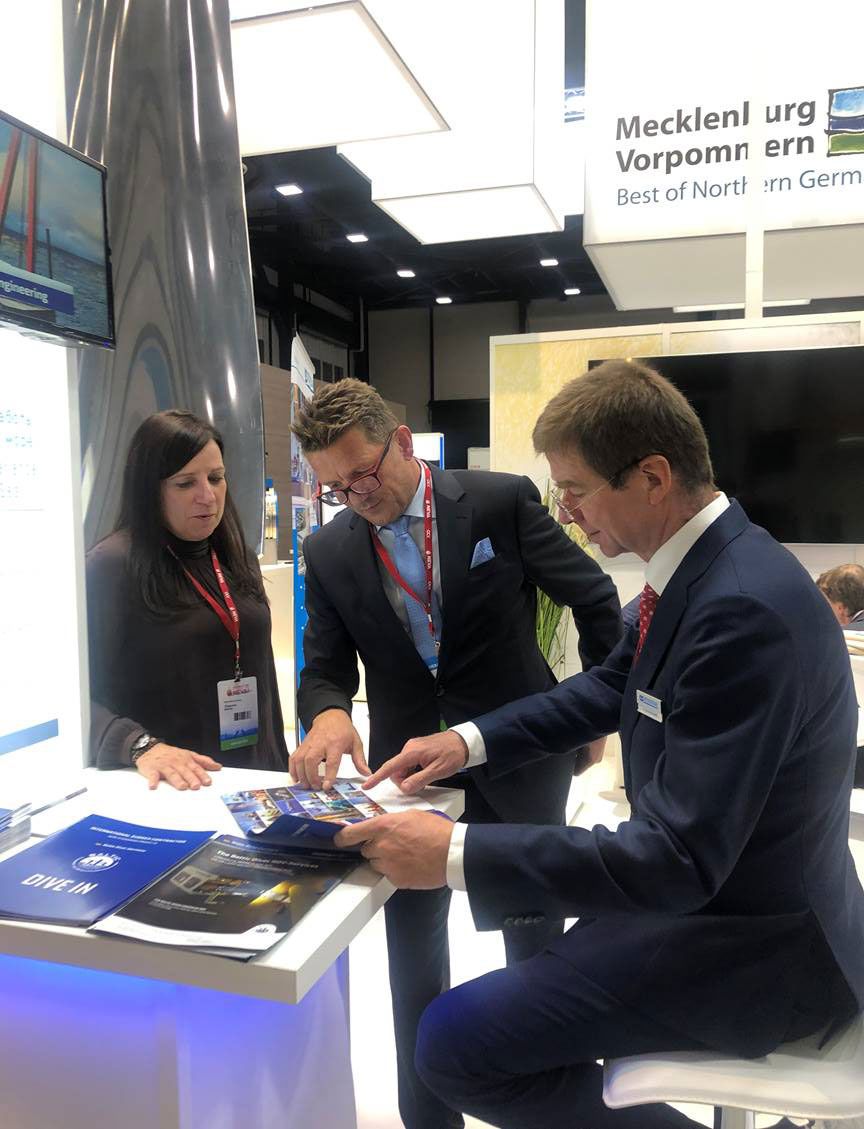
Kopenhagen, 26.11. – 28.11.2019: WindEurope Offshore
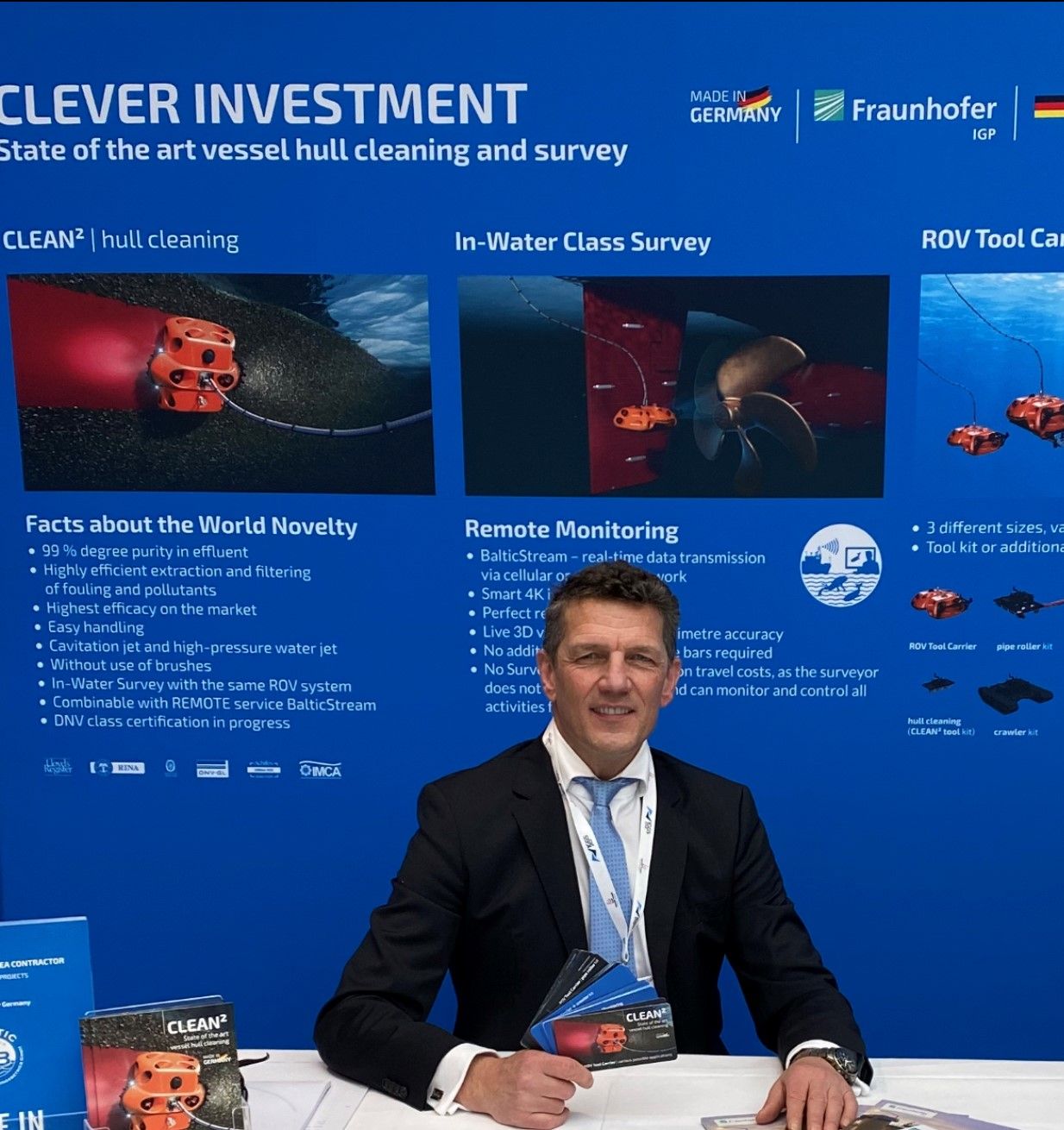
Vom 26.- 28. November 20109 traf sich die Offshore-Windbranche auf der WindEurope Offshore, der führenden internationale Branchenkonferenz, in Kopenhagen. Zusammen mit sechs weiteren Unternehmen war Baltic Taucher am Gemeinschaftsstand des WindEnergy Networks vertreten. Baltic Taucher hat die Gelegenheit genutzt, das neue VALOR ROV von Seatronics vorzustellen.
BALTIC Taucherei- und Bergungsbetrieb Rostock GmbH
BALTIC Taucherei- und Bergungsbetrieb Rostock GmbH
Alter Hafen S 3, 18069 Rostock
|
BASIC DATA
| |
|---|---|
|
Vessel type
|
Self-Propelled Crane Barge
|
|
Year of built
|
1974
|
|
Yard
|
Mützelfeldtwerft Cuxhaven
|
|
Port of registry
|
Rostock
|
|
Communication
|
GMDSS A1, UHF/VHF Radio, GSM /INMARSAT/SAT – Voice and Data, Internet
|
BALTIC Taucherei- und Bergungsbetrieb Rostock GmbH
BALTIC Taucherei- und Bergungsbetrieb Rostock GmbH
Alter Hafen S 3, 18069 Rostock
|
BASIC DATA
| |
|---|---|
|
Vessel type
|
Self-Propelled Crane Barge
|
|
Year of built
|
1974
|
|
Yard
|
Mützelfeldtwerft Cuxhaven
|
|
Port of registry
|
Rostock
|
|
Communication
|
GMDSS A1, UHF/VHF Radio, GSM /INMARSAT/SAT – Voice and Data, Internet
|